
From chickens to humans, animals think “bouba” sounds round
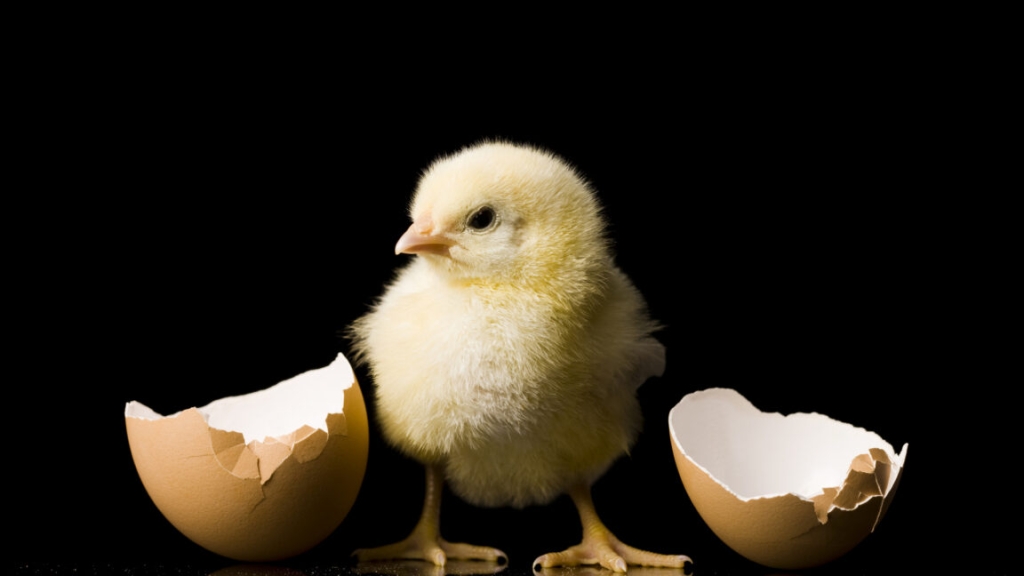
Chickens, Shapes, and the Mystery of Bouba and Kiki: A Scientific Tale That Defies Expectations
In the ever-expanding realm of cognitive science, few phenomena have captured the imagination of researchers quite like the bouba/kiki effect. At first glance, it seems almost whimsical—an arbitrary connection between sounds and shapes. But as decades of research have shown, this peculiar association may hold the key to understanding the deep-rooted cognitive architecture that underpins human language, perception, and even evolution itself. And now, in a twist that has left the scientific community both baffled and fascinated, a team of Italian researchers has discovered that this effect is not exclusive to humans—or even primates. In fact, it appears that newly hatched chickens also experience the bouba/kiki effect.
The Origins of a Curious Phenomenon
The story begins in 1947, when a German psychologist named Wolfgang Köhler conducted a simple yet groundbreaking experiment. He presented participants with two shapes—one rounded and bulbous, the other sharp and spiky—and asked them to match each shape to one of two nonsense words: “bouba” and “kiki.” The results were striking. Across cultures and languages, the vast majority of participants associated the rounded shape with “bouba” and the spiky shape with “kiki.” This phenomenon, now known as the bouba/kiki effect, has since been replicated countless times, cementing its place as one of the most intriguing findings in cognitive psychology.
Over the years, scientists have proposed numerous theories to explain this effect. Some suggested that the association might be rooted in the phonetic properties of the words themselves—perhaps “bouba” sounds round because of its soft, flowing vowels, while “kiki” sounds spiky due to its sharp, staccato consonants. Others speculated that the effect might be influenced by the visual appearance of the words when written, with “bouba” evoking curves and “kiki” suggesting angles. However, these theories were quickly debunked. Studies involving speakers of different languages and writing systems revealed that the bouba/kiki effect transcends linguistic and cultural boundaries. Even infants as young as four months old, who have yet to develop language skills, demonstrate the same associations.
The Primate Puzzle
Given its apparent universality among humans, researchers naturally wondered whether the bouba/kiki effect might be a uniquely human trait—a cognitive quirk that emerged as a byproduct of our capacity for complex language. To test this hypothesis, scientists turned to our closest evolutionary relatives: primates. If the effect were indeed tied to language, it should be absent in non-human primates, who lack the sophisticated linguistic abilities of humans.
However, the results were disappointing. Studies involving chimpanzees, gorillas, and other primates failed to find any evidence of the bouba/kiki effect. This led some researchers to speculate that the phenomenon might be a uniquely human adaptation, perhaps linked to the evolution of speech or symbolic thought. But as it turns out, the story was far from over.
Enter the Chickens
In a bold and unconventional move, a team of Italian researchers—Maria Loconsole, Silvia Benavides-Varela, and Lucia Regolin—decided to take the investigation in a completely new direction. Instead of focusing on primates, they turned their attention to a species that is, on the surface, about as far removed from humans as one can get: chickens.
At first glance, this choice might seem bizarre. After all, chickens are not known for their linguistic prowess or cognitive sophistication. But as the researchers pointed out, chickens offer a unique advantage: unlike human infants, who are largely immobile and dependent on caregivers, newly hatched chicks are immediately capable of interacting with their environment. This made them an ideal subject for studying the bouba/kiki effect in a species that lacks the complexities of human language and culture.
The Experiment
The researchers designed a series of experiments to test whether newly hatched chicks (aged just one to three days) would show a preference for associating certain sounds with specific shapes. The chicks were placed in a controlled environment and presented with two shapes—one rounded and one spiky—while simultaneously being exposed to the sounds “bouba” and “kiki.” The researchers then observed the chicks’ behavior to see if they showed any preference for one shape over the other in response to the sounds.
The results were astonishing. Just like human infants and adults, the chicks consistently associated the rounded shape with “bouba” and the spiky shape with “kiki.” This finding was particularly surprising because chickens, unlike humans, do not possess the neural structures associated with language processing. If the bouba/kiki effect were solely a product of language, it should not have appeared in chickens. Yet, there it was—clear and undeniable.
Implications and Interpretations
So, what does this mean? The discovery that chickens experience the bouba/kiki effect challenges long-held assumptions about the origins of this phenomenon. It suggests that the effect is not a uniquely human trait, nor is it necessarily tied to language or advanced cognitive abilities. Instead, it may be a more fundamental aspect of perception—a cross-modal association that exists across species and is rooted in the basic architecture of the brain.
One possibility is that the bouba/kiki effect reflects a universal principle of sensory integration, whereby the brain naturally links certain auditory and visual stimuli based on their shared properties. For example, both rounded shapes and the sound “bouba” might be processed in a similar way by the brain, leading to their association. This would explain why the effect appears in such diverse species, from humans to chickens.
Another intriguing possibility is that the bouba/kiki effect is an evolutionary adaptation that enhances survival. In the natural world, certain shapes and sounds are often associated with specific threats or opportunities. For instance, rounded shapes might be linked to safe, edible objects, while spiky shapes could signal danger. By associating sounds with shapes, animals may be better equipped to navigate their environment and make quick, intuitive decisions.
The Broader Context
The discovery of the bouba/kiki effect in chickens is just the latest chapter in a long and fascinating story of scientific inquiry. It underscores the importance of thinking outside the box—or, in this case, outside the primate family tree. By expanding the scope of their research to include non-traditional subjects, the Italian team has opened up new avenues for understanding the fundamental mechanisms of perception and cognition.
This finding also highlights the interconnectedness of all living things. Despite the vast differences between humans and chickens, we share certain cognitive tendencies that transcend species boundaries. It’s a humbling reminder that, in the grand tapestry of life, we are all bound by the same basic principles of perception and behavior.
What’s Next?
The discovery of the bouba/kiki effect in chickens raises as many questions as it answers. For one, it’s unclear whether this effect is present in other non-primate species, such as fish, reptiles, or insects. Future research could explore whether the effect is a widespread phenomenon or if it is limited to certain groups of animals. Additionally, scientists may investigate the neural mechanisms underlying the effect, seeking to identify the specific brain structures and processes that give rise to these cross-modal associations.
Another intriguing avenue for research is the potential evolutionary origins of the bouba/kiki effect. By studying its presence in a wide range of species, scientists may be able to trace its development over time and uncover its role in the evolution of perception and cognition.
Conclusion
The discovery that newly hatched chickens experience the bouba/kiki effect is a testament to the power of scientific curiosity and the importance of challenging assumptions. It reminds us that even the most seemingly arbitrary aspects of perception may have deep evolutionary roots, and that the boundaries between species are often more fluid than we imagine. As researchers continue to unravel the mysteries of the bouba/kiki effect, one thing is clear: the story is far from over. In the words of the Italian researchers, “The bouba/kiki effect is not just a human quirk—it’s a window into the universal principles of perception and cognition.”
And so, the next time you hear the word “bouba,” take a moment to consider the humble chicken. In its simple, unassuming way, it may hold the key to understanding one of the most profound mysteries of the mind.
Tags: bouba/kiki effect, cognitive science, chickens, perception, evolution, neuroscience, psychology, cross-modal associations, animal cognition, scientific discovery, viral science, mind-blowing research, evolutionary biology, sensory integration, universal principles
Viral Sentences:
- “Chickens experience the bouba/kiki effect—science just got weirder!”
- “Newly hatched chicks prefer ‘bouba’ for round shapes—what does this mean for human cognition?”
- “The bouba/kiki effect isn’t just human—it’s universal!”
- “From humans to chickens, the bouba/kiki effect defies expectations.”
- “This study will change how you think about perception forever.”
- “Chickens and humans share a surprising cognitive link—bouba and kiki!”
- “Science just proved that chickens are more like us than we thought.”
- “The bouba/kiki effect in chickens: a mind-blowing discovery!”
- “Why do chickens prefer ‘bouba’ for round shapes? The answer will surprise you.”
- “This study is the most unexpected twist in cognitive science this year.”
,


Leave a Reply
Want to join the discussion?Feel free to contribute!