
Fusion startup Helion hits blistering temps as it races toward 2028 deadline
Fusion Breakthrough: Helion Hits 150 Million Degrees, Eyes 2028 Power Grid Debut
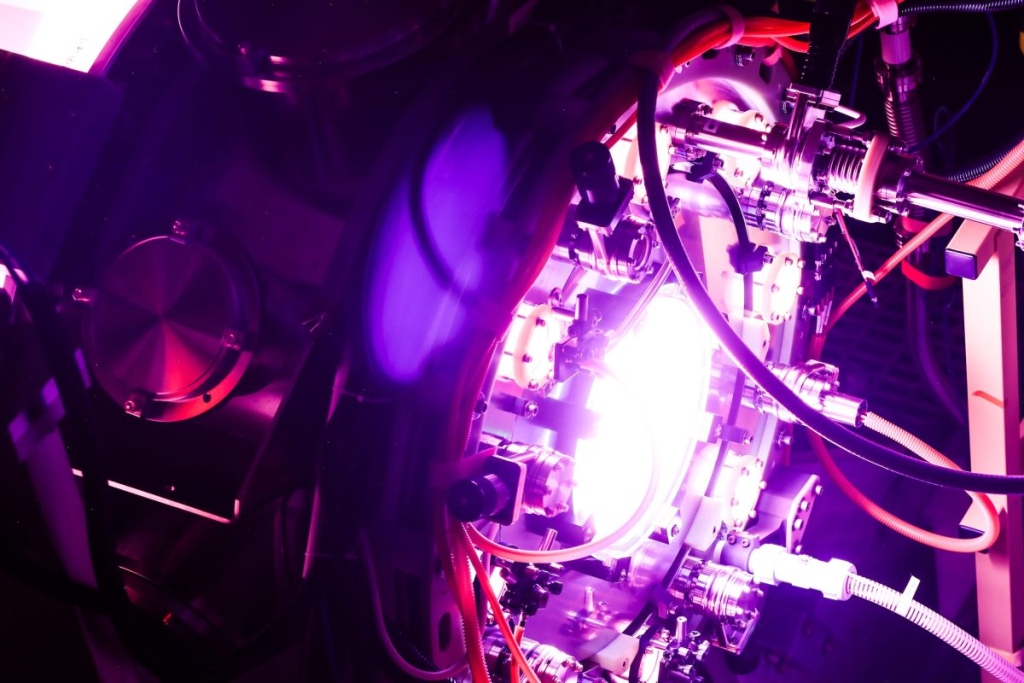
In a major leap toward commercial fusion energy, Helion Energy has achieved a pivotal milestone that has the tech and energy worlds buzzing. The Everett, Washington-based startup announced that its Polaris prototype reactor has successfully heated plasma to a scorching 150 million degrees Celsius—three-quarters of the way toward the 200 million degrees the company believes will be required for a viable fusion power plant.
“This is a huge step forward,” said David Kirtley, Helion’s co-founder and CEO, in an exclusive interview with TechCrunch. “We’re obviously really excited to be able to get to this place.”
What makes this achievement even more remarkable is that Helion is now the first fusion company to operate using deuterium-tritium fuel—a mixture of two hydrogen isotopes. “We were able to see the fusion power output increase dramatically as expected in the form of heat,” Kirtley added.
Helion is now in a high-stakes race with several other fusion startups, all vying to unlock the holy grail of clean energy: fusion power. This technology promises virtually unlimited, zero-carbon electricity, and investors are pouring billions into the sector. Just this week, Inertia Enterprises announced a staggering $450 million Series A round led by Bessemer and Alphabet’s GV. In January, Type One Energy revealed it was raising $250 million, while last summer Commonwealth Fusion Systems secured $863 million from backers including Google and Nvidia. Helion itself raised $425 million last year, with Sam Altman, Mithril, Lightspeed, and SoftBank among its investors.
While most competitors are targeting the early 2030s for grid deployment, Helion has a bold contract with Microsoft to deliver electricity starting in 2028—a timeline that has many in the industry raising eyebrows. However, that power will come from Helion’s larger commercial reactor, Orion, which is already under construction, not from Polaris.
Helion’s approach stands apart from its rivals. While Commonwealth Fusion Systems, for example, uses a tokamak—a doughnut-shaped device that relies on powerful magnets to contain plasma—Helion employs a field-reversed configuration. Its reactor chamber resembles an hourglass, with fuel injected at both ends, turned into plasma, and then accelerated toward each other by magnetic fields. When the plasmas merge, they start at around 10–20 million degrees Celsius, but powerful magnets compress them further, reaching 150 million degrees in under a millisecond.
Instead of extracting energy as heat like most fusion designs, Helion generates electricity directly from the fusion reaction’s magnetic field. Each pulse pushes back against the reactor’s magnets, inducing electrical current that can be harvested. This direct conversion method could make Helion’s system significantly more efficient than its competitors.
Over the past year, Helion has refined its reactor circuits to boost electricity recovery, a critical factor in making fusion economically viable. The company plans to eventually switch from deuterium-tritium to deuterium-helium-3 fuel, which produces more charged particles and is better suited for direct electricity generation. While helium-3 is rare on Earth, it’s abundant on the Moon—though Helion intends to produce its own fuel by fusing deuterium nuclei and recycling the helium-3 produced during operation.
Kirtley hinted that other fusion companies might follow Helion’s lead in adopting helium-3 fuel, especially as they recognize the efficiency gains of direct electricity recovery. “As they come along and recognize that they want to do this approach… they will want to be using helium-3 fuel as well,” he said.
While Helion is making headlines with Polaris, the company’s ultimate goal is Orion, a 50-megawatt fusion reactor designed to fulfill its Microsoft contract. “Our ultimate goal is not to build and deliver Polaris,” Kirtley emphasized. “That’s a step along the way towards scaled power plants.”
Helion’s rapid progress and ambitious timeline have injected fresh energy into the fusion race, but questions remain. Can the company truly deliver on its 2028 promise? Will its direct electricity generation method prove as efficient as hoped? And can fusion finally escape the long shadow of being “the energy of the future” to become the energy of today?
One thing is certain: with Helion pushing the boundaries of what’s possible, the dream of limitless, clean power is closer than ever.
Tags: fusion energy, Helion Energy, 150 million degrees, deuterium-tritium fuel, field-reversed configuration, direct electricity generation, clean energy, Microsoft contract, 2028 power grid, fusion race, helium-3 fuel, unlimited power, zero-carbon electricity, breakthrough technology, energy revolution
Viral Sentences:
- “Helion hits 150 million degrees—three-quarters of the way to fusion glory!”
- “First to use deuterium-tritium fuel—Helion rewrites the fusion rulebook.”
- “2028 power grid debut? Helion’s bold bet on fusion energy.”
- “Direct electricity from fusion? Helion’s game-changing approach.”
- “The race for limitless clean energy just got real.”
- “Helion’s hourglass reactor: where plasma meets destiny.”
- “Fusion’s future is now—Helion is lighting the way.”
- “From lab to grid in record time—Helion’s fusion sprint.”
- “Helium-3 fuel: the secret sauce for fusion’s next leap.”
- “Microsoft’s 2028 fusion deal: a vote of confidence in Helion’s vision.”
,

Leave a Reply
Want to join the discussion?Feel free to contribute!