
Galaxy S26 Ultra vs. Pixel 10 Pro XL: Same phones, different year
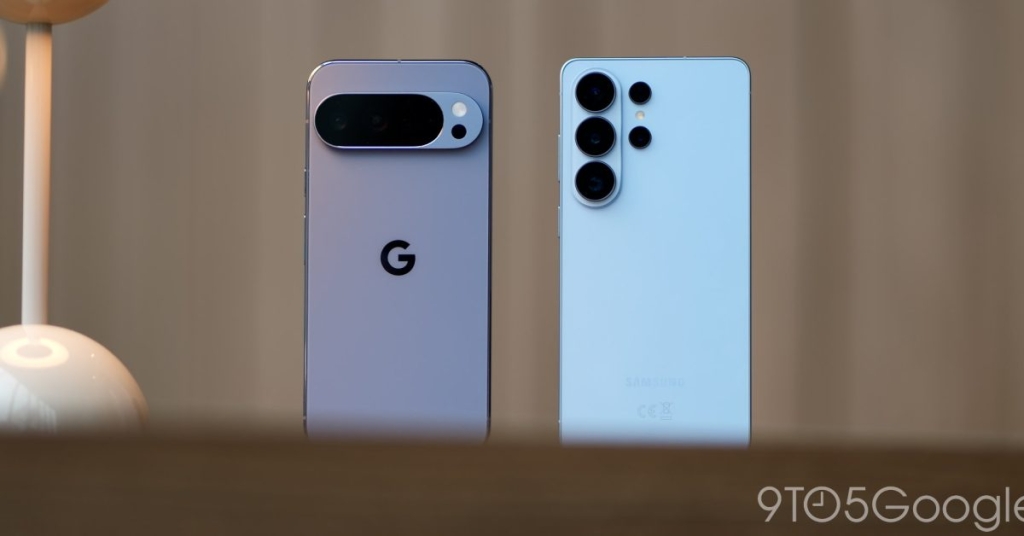
Pixel 10 Pro XL vs. Galaxy S26 Ultra: The Ultimate Android Showdown
The battle for Android supremacy rages on, and this year, Google’s Pixel 10 Pro XL and Samsung’s Galaxy S26 Ultra face off in a clash of titans that will determine which phone truly deserves the crown. Both devices represent the pinnacle of their respective ecosystems, but which one delivers the superior Android experience?
Design: Form Meets Function
Let’s address the elephant in the room first: the Pixel 10 Pro XL’s design. While it’s marginally easier to handle than Samsung’s behemoth, it doesn’t quite match the premium feel of the S26 Ultra’s svelte 7.9mm frame. Most cases only exacerbate the Pixel’s thickness, making it feel bulkier by comparison. However, Google has absolutely nailed the core color palette this time around—refined, sophisticated choices that, while simpler than Samsung’s online exclusives like Silver Shadow and Pink Gold, exude a certain understated elegance.
The S26 Ultra’s display is still the gold standard. Despite not being a 10-bit panel (Samsung, we’re looking at you), it remains the best display on any phone to date for sheer usability and consistency. The anti-glare Gorilla Armor 2 technology is absolute magic in direct sunlight, and even with a screen protector, glare is noticeably reduced compared to the Pixel. The 6.9-inch Dynamic LTPO AMOLED 2X panel features smaller bezels and a slightly higher resolution (1440 x 3120) than the Pixel’s 6.8-inch Super Actua. That extra 0.1 inch might seem negligible, but it translates to more screen real estate for your apps, videos, and games.
One feature that deserves special mention is the S26 Ultra’s Privacy Display, which limits viewing angles to hide sensitive information. After a week of use, the initial wow factor has diminished slightly—it doesn’t completely obscure content, but rather makes it extremely difficult for prying eyes to decipher what you’re viewing. It’s a thoughtful addition for privacy-conscious users who frequently use their phones in public spaces.
The ultrasonic fingerprint scanners on both devices perform similarly, but the Pixel edges ahead with its haptic feedback when unlocking—those little “Google-y” touches that make a difference in daily use.
Software: The Soul of the Experience
This is where the rubber meets the road. If you want day-one (or close to it) updates, the Pixel is unequivocally the only way to go. Samsung has made tremendous strides in update frequency, but Google’s direct control over both hardware and software ensures the fastest rollout of new features and security patches.
One UI 8.5, while visually similar to its predecessor, does introduce some much-needed Quick Settings panel options. It retains Samsung’s reputation for feature-rich Android skins, but it lacks the character and approachability of Google’s Material 3 Expressive design language. The duplication of Galaxy apps remains a sore point—it feels like Samsung is settling rather than leading in software refinement.
Performance-wise, the S26 Ultra’s Snapdragon 8 Elite Gen 5 chip is going to blow the Pixel away in raw benchmarks. Until apps learn to better utilize RAM, the Pixel 10 Pro XL will load things slower in almost all cases. Despite having 16GB of RAM, the Tensor G5 still feels like it’s a step behind due to slower processing. That said, this is a nitpick that’s becoming increasingly significant in my book—Samsung’s flagship can simply do more without breaking a sweat.
However, we’re firmly in Gemini’s world now. Both devices are leaning heavily into AI, but the Pixel 10 Pro XL integrates Gemini Nano more tightly into the workflow, while Samsung is leveraging the Snapdragon’s NPU for features like its new AI-powered screenshot analyzer and “ProScaler” for display sharpening.
Camera: The Photography Powerhouse
The Pixel relies heavily on post-processing—the “Google look” is alive and well with its 50MP wide and dual 48MP secondary sensors. However, Galaxy S26 Ultra images from the 200MP f/1.4 main sensor are cleaner out of the camera and have more character this year. Due to pixel-binning, main sensor images are very similar despite tuning variances. I believe the Samsung is arguably better for most people, thanks to its wider aperture, which captures more light.
Taking a quick snap is still the strong suit of the Pixel 10 Pro XL—it’s better at capturing the moment in stasis, while the Galaxy S26 Ultra regularly has issues with shutter lag (though this is actually due to how Galaxy phones take the image after the shutter button is released, not when it’s pressed). Despite having more hardware, the Pixel 10 Pro XL is a more reliable companion. Ultimately, which is subjectively better is up to you—it’s a toss-up in most situations.
Where Google pulls ahead is with Pro Res Zoom. Yes, it’s AI-powered, but the added detail makes a huge difference to “bad” zoom photos. Video Boost is great on the Google Pixel 10 Pro XL, and it helps paper over some power-user discrepancies. If you care about video more broadly, Samsung is still the king. It’s a better phone for video recording with higher quality on-device capture modes, 8K at 30fps, and the new professional-grade APV video codec for lossless quality. You can now record to an SSD natively in the Samsung camera application for the first time, which is fantastic for budding videographers.
Battery and Charging: Power to the People
It’s honestly a joke that the Samsung Galaxy S26 Ultra hasn’t increased the battery size or technology. The only saving grace is that it supports 60W charging, which is quite a bit faster than the 45W on the Pixel 10 Pro XL. Samsung claims a 0 to 75% charge in 30 minutes, whereas the Pixel hits 70% in the same timeframe.
The Pixel 10 Pro XL actually features Qi2-certified “Pixelsnap” wireless charging at 25W, which is more useful than Samsung’s implementation if you want that magnetic alignment without a specialized case.
The real shocker is that the Pixel can actually outlast the Samsung, given the larger 5,200mAh battery compared to Samsung’s 5,000mAh. In my testing, the Pixel’s efficiency for daily tasks has been a breath of fresh air, even if it charges slightly slower.
The Verdict: Which Android King Reigns Supreme?
Like the Pixel 10 Pro XL, the Galaxy S26 Ultra isn’t a quantum leap over its predecessor. It’s more of the same. That’s good because the S25 Ultra was (and still is) a great package. It’s bad or majorly frustrating because it’s still 95% of the same thing and feels a bit complacent from the company that is responsible for carrying the Android can in practically every global market.
The Pixel 10 Pro XL is objectively a “worse” device on a spec sheet, but it does very well with a lot less in the tank. Google is prioritizing holistic experiences and deep Gemini integration, while Samsung is adamant that a power bump, new privacy technology, and the S Pen are enough to keep the crown.
If you want the absolute best hardware and raw power, you go with Samsung. If you want a phone that feels more “human” and integrated into your life, the Pixel is the one.
Tags & Viral Phrases
Pixel 10 Pro XL, Galaxy S26 Ultra, Android showdown, smartphone battle, best Android phone, Google vs Samsung, flagship killer, camera comparison, display technology, AI integration, Gemini Nano, Snapdragon 8 Elite Gen 5, Tensor G5, battery life test, charging speed, Privacy Display, S Pen functionality, Material 3 Expressive, One UI 8.5, Pro Res Zoom, Video Boost, smartphone upgrade, tech review 2026, Android ecosystem, smartphone photography, mobile gaming performance, wireless charging, Qi2 certification, smartphone design, tech enthusiasts, Android supremacy, flagship features, smartphone comparison, mobile technology, cutting-edge specs, user experience, software updates, hardware innovation, tech trends, smartphone evolution, mobile photography, display excellence, battery efficiency, charging technology, privacy features, AI capabilities, smartphone ecosystem, tech innovation, mobile performance, design excellence, feature-rich experience, holistic integration, human-centered design, power efficiency, charging innovation, display technology, photography excellence, video capabilities, software refinement, hardware optimization, user-centric design, technology leadership, mobile innovation, smartphone excellence, Android dominance, tech revolution, mobile future, smartphone perfection, cutting-edge technology, next-gen features, mobile excellence, tech evolution, smartphone innovation, Android leadership, mobile revolution, technology advancement, smartphone supremacy, tech excellence, mobile leadership, Android innovation, smartphone technology, tech breakthrough, mobile advancement, smartphone leadership, Android excellence, tech progress, mobile excellence, smartphone breakthrough, Android progress, tech leadership, mobile progress, smartphone progress, Android advancement, tech excellence, mobile advancement, smartphone advancement, Android leadership, tech innovation, mobile innovation, smartphone innovation, Android innovation, tech revolution, mobile revolution, smartphone revolution, Android revolution, tech evolution, mobile evolution, smartphone evolution, Android evolution, tech transformation, mobile transformation, smartphone transformation, Android transformation, tech development, mobile development, smartphone development, Android development, tech growth, mobile growth, smartphone growth, Android growth, tech expansion, mobile expansion, smartphone expansion, Android expansion, tech improvement, mobile improvement, smartphone improvement, Android improvement, tech enhancement, mobile enhancement, smartphone enhancement, Android enhancement, tech upgrade, mobile upgrade, smartphone upgrade, Android upgrade, tech update, mobile update, smartphone update, Android update, tech refresh, mobile refresh, smartphone refresh, Android refresh, tech renewal, mobile renewal, smartphone renewal, Android renewal, tech revitalization, mobile revitalization, smartphone revitalization, Android revitalization, tech rejuvenation, mobile rejuvenation, smartphone rejuvenation, Android rejuvenation, tech renaissance, mobile renaissance, smartphone renaissance, Android renaissance, tech rebirth, mobile rebirth, smartphone rebirth, Android rebirth, tech revival, mobile revival, smartphone revival, Android revival, tech resurgence, mobile resurgence, smartphone resurgence, Android resurgence, tech comeback, mobile comeback, smartphone comeback, Android comeback, tech return, mobile return, smartphone return, Android return, tech re-emergence, mobile re-emergence, smartphone re-emergence, Android re-emergence, tech reappearance, mobile reappearance, smartphone reappearance, Android reappearance, tech resurgence, mobile resurgence, smartphone resurgence, Android resurgence, tech revival, mobile revival, smartphone revival, Android revival, tech renewal, mobile renewal, smartphone renewal, Android renewal, tech refresh, mobile refresh, smartphone refresh, Android refresh, tech update, mobile update, smartphone update, Android update, tech upgrade, mobile upgrade, smartphone upgrade, Android upgrade, tech improvement, mobile improvement, smartphone improvement, Android improvement, tech enhancement, mobile enhancement, smartphone enhancement, Android enhancement, tech development, mobile development, smartphone development, Android development, tech growth, mobile growth, smartphone growth, Android growth, tech expansion, mobile expansion, smartphone expansion, Android expansion, tech progress, mobile progress, smartphone progress, Android progress, tech advancement, mobile advancement, smartphone advancement, Android advancement, tech evolution, mobile evolution, smartphone evolution, Android evolution, tech transformation, mobile transformation, smartphone transformation, Android transformation, tech breakthrough, mobile breakthrough, smartphone breakthrough, Android breakthrough, tech innovation, mobile innovation, smartphone innovation, Android innovation, tech revolution, mobile revolution, smartphone revolution, Android revolution, tech excellence, mobile excellence, smartphone excellence, Android excellence, tech leadership, mobile leadership, smartphone leadership, Android leadership, tech supremacy, mobile supremacy, smartphone supremacy, Android supremacy, tech dominance, mobile dominance, smartphone dominance, Android dominance, tech superiority, mobile superiority, smartphone superiority, Android superiority, tech preeminence, mobile preeminence, smartphone preeminence, Android preeminence, tech ascendancy, mobile ascendancy, smartphone ascendancy, Android ascendancy, tech primacy, mobile primacy, smartphone primacy, Android primacy, tech paramountcy, mobile paramountcy, smartphone paramountcy, Android paramountcy, tech pre-eminence, mobile pre-eminence, smartphone pre-eminence, Android pre-eminence, tech ascendancy, mobile ascendancy, smartphone ascendancy, Android ascendancy, tech supremacy, mobile supremacy, smartphone supremacy, Android supremacy, tech dominance, mobile dominance, smartphone dominance, Android dominance, tech superiority, mobile superiority, smartphone superiority, Android superiority, tech preeminence, mobile preeminence, smartphone preeminence, Android preeminence, tech primacy, mobile primacy, smartphone primacy, Android primacy, tech paramountcy, mobile paramountcy, smartphone paramountcy, Android paramountcy, tech pre-eminence, mobile pre-eminence, smartphone pre-eminence, Android pre-eminence
,

Leave a Reply
Want to join the discussion?Feel free to contribute!