
GeekWire Podcast in Fremont: Seahawks, AI, and Seattle’s future
Seattle’s Tech Pulse: From Seahawks Dreams to Fremont’s Rise as a Startup Powerhouse
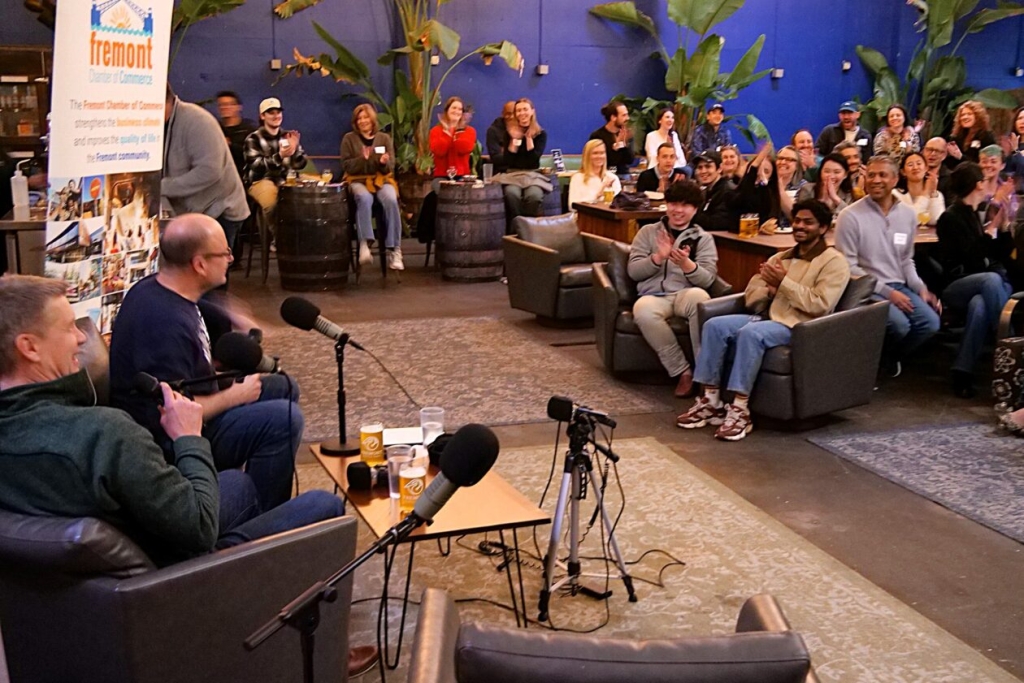
The GeekWire Podcast took a triumphant homecoming this week, broadcasting live from the heart of Seattle’s most eccentric neighborhood—Fremont—affectionately dubbed the “Center of the Universe.” Just blocks from GeekWire’s headquarters, the team gathered at Fremont Brewing for what became more than just another podcast recording: it was a celebration of Seattle’s tech ecosystem, complete with craft beer, passionate locals, and conversations that cut straight to the core of the city’s technological identity.
The event, presented by the Fremont Chamber of Commerce, drew a packed house of tech enthusiasts, entrepreneurs, and curious onlookers eager to weigh in on Seattle’s most pressing questions. The atmosphere crackled with the residual energy from the Seahawks’ recent Super Bowl victory, creating the perfect backdrop for discussions about sports ownership, urban development, and the future of technology in the Emerald City.
The Billionaire Sports Owner Fantasy Draft
Fresh off the Seahawks’ championship run, the conversation naturally turned to who might eventually take the reins of Seattle’s beloved football franchise—or perhaps even bring back the Sonics. The speculation ran wild, with hosts John Cook and Todd Bishop leading a spirited debate about which tech titans and business moguls could realistically step into these coveted roles.
The discussion took fascinating turns, with names like Jeff Bezos and Lauren Sanchez entering the conversation alongside more surprising candidates. The idea of Costco’s legendary co-founder Jim Sinegal potentially owning a team sparked particular enthusiasm among the audience. “Imagine walking into Lumen Field and grabbing a $1.50 hot dog while watching Russell Wilson throw touchdowns,” Bishop mused, drawing laughter and nods of agreement from the crowd.
But beyond the fantasy scenarios, the conversation touched on deeper questions about civic responsibility and the role of wealthy individuals in shaping a city’s cultural landscape. Should tech billionaires be expected to invest in local sports teams as part of their civic duty? What does it mean for a city when its most valuable assets—both cultural and economic—are controlled by a handful of ultra-wealthy individuals?
Cleveland’s Warning: Seattle’s Future at a Crossroads
The mood shifted dramatically as the discussion turned to one of the most provocative pieces published on GeekWire in recent months. Angel investor Charles Fitzgerald’s column, “A warning to Seattle: Don’t become the next Cleveland,” had sent shockwaves through the local tech community when it first appeared. The piece painted a stark picture of what happens when a city fails to adapt to changing economic realities—using Cleveland as a cautionary tale of industrial decline and population loss.
The column argued that Seattle faces similar challenges: an overreliance on a few massive tech companies, skyrocketing housing costs pushing out middle-class workers, and a failure to diversify its economic base. Fitzgerald’s warning was clear: without significant changes, Seattle could follow Cleveland’s path from thriving metropolis to struggling post-industrial city.
But the conversation didn’t end there. Cleveland Mayor Justin Bibb responded with his own perspective, offering a nuanced view of his city’s challenges and opportunities. The resulting dialogue, published on GeekWire, transformed what could have been a simple warning into a rich exploration of urban economics, technological adaptation, and the responsibilities of city leadership.
During the podcast recording, this exchange sparked intense debate among the audience. Some argued that Seattle’s tech ecosystem was fundamentally different from Cleveland’s manufacturing base, while others pointed out concerning parallels in housing affordability and economic inequality. The conversation highlighted how cities across America are grappling with similar questions: How do you maintain economic vitality while ensuring broad-based prosperity? What role should technology companies play in addressing urban challenges?
Fremont: Where Quirk Meets Innovation
Perhaps the most illuminating segment came when Fremont Chamber Executive Director Pete Hanning joined the discussion. Hanning brought a wealth of data and anecdotes about why Fremont has become one of Seattle’s most successful tech corridors, despite—or perhaps because of—its famously eccentric character.
Hanning revealed that Fremont is seeing some of the highest return-to-office rates on the entire West Coast, a statistic that runs counter to the broader trend of remote work. The neighborhood’s unique blend of creative energy, established infrastructure, and community identity has created an environment where tech workers actually want to come to the office.
“Fremont proves that you don’t have to choose between being a serious business district and maintaining your quirky identity,” Hanning explained. “In fact, our quirkiness is part of what makes this neighborhood economically successful. Companies want to be here because their employees want to be here.”
The discussion explored how Fremont has managed to attract major tech players while preserving its artistic soul. From the massive Fremont Troll sculpture to the annual Summer Solstice Parade, the neighborhood has maintained its countercultural roots even as it becomes increasingly central to Seattle’s tech economy. This balance, Hanning argued, is precisely what makes Fremont attractive to the type of innovative companies that are shaping the future of technology.
Trivia, Audience Q&A, and Todd’s Confession
The evening concluded with a Fremont-themed tech trivia competition that tested even the most knowledgeable Seattle tech enthusiasts. Questions ranged from historical facts about early tech companies in the neighborhood to obscure details about local startups that had gone on to achieve national prominence.
The audience Q&A session proved equally engaging, with attendees raising questions about everything from Seattle’s affordable housing crisis to the future of artificial intelligence in local startups. One particularly memorable moment came when Todd Bishop made a candid confession about his relationship with Claude, Anthropic’s AI assistant, sparking a broader discussion about how journalists and tech professionals are integrating AI tools into their daily workflows.
The Future of Seattle Tech: Challenges and Opportunities
Throughout the evening, several themes emerged repeatedly: the tension between growth and affordability, the importance of maintaining Seattle’s unique character while attracting global talent, and the need for the tech community to engage more deeply with broader civic issues.
The live recording at Fremont Brewing wasn’t just entertainment—it was a microcosm of the larger conversations happening throughout Seattle’s tech ecosystem. As the city continues to evolve, events like this provide crucial forums for debate, networking, and collective problem-solving.
What became clear is that Seattle stands at a pivotal moment. The decisions made in the coming years about housing policy, transportation infrastructure, economic development, and community engagement will determine whether the city follows Fitzgerald’s cautionary Cleveland scenario or charts a different path toward inclusive, sustainable growth.
The energy in the room that evening suggested that Seattle’s tech community is ready for these challenges. The combination of serious policy discussion, playful speculation about sports ownership, and genuine community engagement demonstrated that Seattle’s tech scene remains vibrant, thoughtful, and deeply connected to the broader civic fabric.
As the podcast wrapped up and attendees lingered to continue conversations over more craft beer, one thing was certain: the Center of the Universe had once again proven itself to be exactly that—a place where big ideas, local character, and technological innovation collide to create something truly special.
Tags: Seattle tech news, Fremont tech corridor, GeekWire Podcast, Seattle Seahawks ownership, Cleveland economic warning, return to office trends, tech billionaire speculation, urban development, Seattle startups, Fremont Brewing event, Northwest tech ecosystem, AI in journalism, sports team ownership, economic diversification, Seattle housing crisis, tech community engagement, Center of the Universe, local tech trivia, Anthropic Claude, civic tech responsibility
Viral Phrases: “Center of the Universe,” “$1.50 hot dogs at Lumen Field,” “Don’t become the next Cleveland,” “Quirkiness is economic success,” “The Seahawks just won the Super Bowl,” “Todd’s relationship with Claude,” “Fremont’s return-to-office miracle,” “Tech titans and sports teams,” “Seattle’s pivotal moment,” “Billionaire sports owner fantasy draft,” “Cleveland’s cautionary tale,” “The future of Seattle tech,” “Craft beer and big ideas,” “Live from Fremont Brewing,” “Pete Hanning’s data drop,” “Seattle’s tech identity crisis,” “The Fremont Troll and tech innovation,” “Justin Bibb’s response,” “Charles Fitzgerald’s warning,” “Seattle’s economic crossroads,” “Quirky meets serious business,” “The GeekWire homecoming”
,

Leave a Reply
Want to join the discussion?Feel free to contribute!