
Gene editing that spreads within the body could cure more diseases
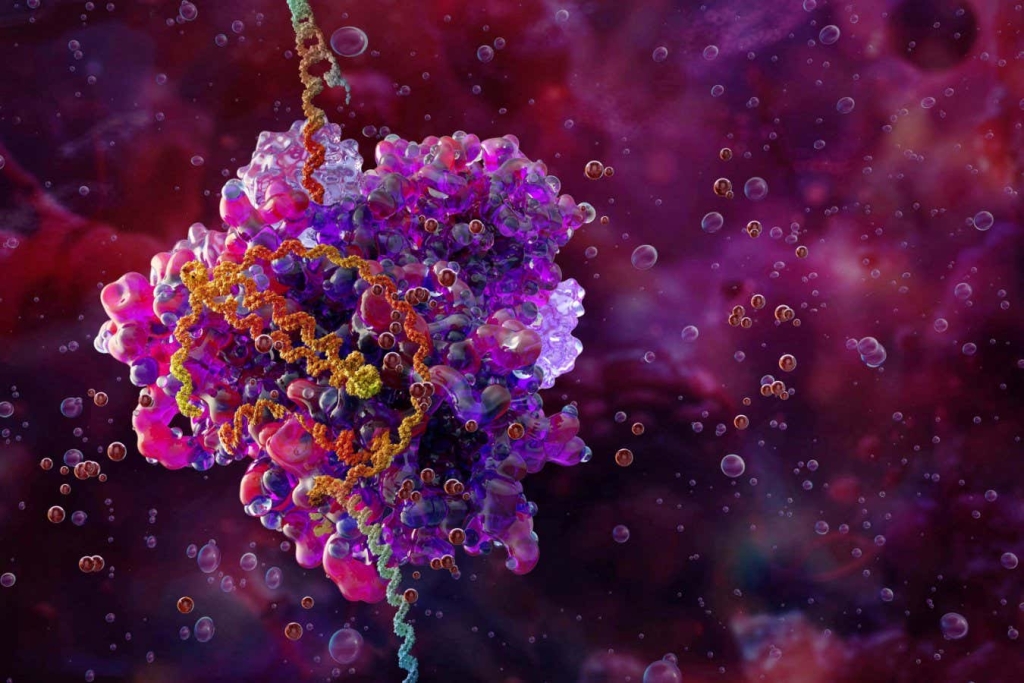
CRISPR’s Viral Secret: Gene Editing Gets a Boost from Cellular Copy Machines
In a breakthrough that could revolutionize gene therapy, researchers have developed a method to dramatically amplify CRISPR’s reach inside the body—turning each treated cell into a microscopic factory that produces and distributes gene-editing tools to its neighbors.
The innovation, led by Wayne Ngo at the University of California, Berkeley, in collaboration with CRISPR pioneer Jennifer Doudna, borrows a clever trick from nature: the way viruses hijack cellular machinery to spread. Instead of relying on a single delivery of CRISPR components to reach enough target cells, this new approach creates a cascading effect where one treated cell can pass the editing machinery to many others.
“Think of it like a chain letter at the cellular level,” explains Ngo. “We’re teaching the first cell that receives our instructions to package the CRISPR components into little lipid bubbles, then ship them off to neighboring cells. That first cell becomes a production hub.”
In mouse liver experiments, this amplification strategy tripled the number of successfully edited cells—jumping from 4% with direct delivery to 12% overall when amplification was included. While this might sound modest, in the precision world of gene therapy, tripling efficacy could mean the difference between a failed treatment and a cure.
The timing couldn’t be better. The first approved CRISPR treatment—for sickle cell disease—requires extracting, editing, and replacing a patient’s own blood stem cells. This personalized approach, while effective, costs millions and remains inaccessible to most patients worldwide. Direct in-body editing promises to be cheaper and more widely available, but has struggled with delivery efficiency.
“For curing sickle cell disease, we need to edit about 20% of blood stem cells,” says Ngo. “That 20% has been very, very hard to hit.”
The amplification system works by attaching viral “budding” proteins to the CRISPR-Cas9 complex. These proteins naturally aggregate at cell membranes, forming vesicles—tiny bubble-like packages—that can fuse with other cells. When CRISPR is packaged inside these vesicles, it travels between cells like a microscopic postal service, delivering genetic instructions far beyond the original treatment site.
Beyond reaching more cells, this approach could allow doctors to use lower doses of CRISPR components, potentially reducing side effects and making treatments safer. It’s a bit like being able to shout across a crowded room by first whispering to a few people who then pass the message along.
The concept isn’t entirely new—scientists have explored vesicle-based delivery for decades—but Ngo’s team appears to be the first to demonstrate it working effectively for gene editing in living animals. However, experts urge caution. Gaetan Burgio at the Australian National University notes that more rigorous controls are needed to confirm the findings.
“This is promising, but proper validation is essential,” Burgio says. “We need to be certain we’re seeing true amplification and not some other effect.”
The research also builds on existing self-amplifying mRNA vaccine technology, where delivered mRNA codes for machinery that produces more copies of itself. However, unlike vaccines where the extra mRNA stays put, this gene-editing approach sends the CRISPR machinery on the move.
For patients with genetic diseases, this amplification strategy could be transformative. Conditions that once seemed untreatable due to delivery challenges might suddenly become within reach. The approach could work for liver diseases, blood disorders, and potentially even some cancers where precise genetic modifications are needed in specific cell populations.
The team is already exploring ways to boost the amplification even further. “Threefold amplification is a great place to start,” Ngo says. “But more could be better, and we’re actively working on strategies to increase that efficiency.”
As gene therapy moves from the laboratory to the clinic, innovations like this one—that make treatments more effective, safer, and potentially more affordable—could help fulfill CRISPR’s enormous promise. The dream of curing genetic diseases with a single treatment may finally be within reach, thanks to a little help from nature’s own packaging system.
Tags: CRISPR, gene editing, Jennifer Doudna, Wayne Ngo, viral proteins, gene therapy, amplification, medical breakthrough, genetic diseases, liver cells, vesicle budding, medical innovation, biotechnology, DNA editing, Nobel Prize winner
Viral Phrases: Gene editing gets viral boost, CRISPR’s cellular copy machine, Nature’s packaging system revolutionizes gene therapy, From lab to living body: CRISPR amplification breakthrough, The future of medicine is copying itself, Scientists turn cells into gene-editing factories, Breakthrough could make gene therapy cheaper and safer, Nobel winner’s team triples gene editing success, Medical innovation borrows from virus playbook, The postal worker strategy for curing genetic diseases, Amplification could be the key to affordable gene therapy, Scientists achieve threefold improvement in gene editing efficiency, The chain letter approach to curing disease, Breakthrough brings us closer to one-time genetic cures, Gene therapy’s delivery problem may finally be solved
,


Leave a Reply
Want to join the discussion?Feel free to contribute!