
Germany’s online gambling reckoning draws closer with landmark Tipico case
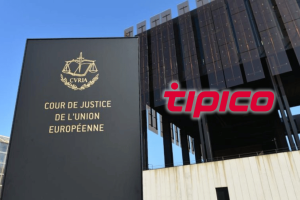
Germany’s Online Gambling Reckoning Draws Closer with Landmark Tipico Case
In a courtroom drama that’s gripping the European iGaming industry, a landmark legal battle is unfolding in Germany that could fundamentally reshape the landscape of online gambling across the European Union. The case, officially known as C-530/24, DK v Tipico Co. Ltd, centers on a seemingly straightforward question that carries billion-euro implications: should Tipico refund wagers placed between 2013 and 2020 when the operator held a Malta-issued license but not a German one?
The stakes couldn’t be higher. This isn’t just about one operator or one disgruntled player—it’s about testing the very foundations of how cross-border gambling services operate within the EU’s complex regulatory framework. At its core, the case examines whether Germany’s gambling laws, particularly those governing the validity of contracts with unlicensed operators, align with the fundamental principles of the European Union’s single market, specifically Article 56 of the Treaty on the Functioning of the European Union (TFEU), which governs the free movement of services.
The Legal Battlefield: Why This Case Matters
The plaintiff, identified only as DK, lost substantial sums gambling with Tipico during the seven-year period in question. When DK attempted to recover these losses through German courts, the case quickly evolved from a simple consumer protection matter into a constitutional challenge that could redefine the relationship between national gambling regulations and EU law.
Tipico’s defense strategy has been both bold and controversial. Rather than simply arguing that they shouldn’t be liable, the operator has mounted a broader challenge to the German regulatory framework itself, arguing that the system was so restrictive and procedurally flawed that it violated EU principles of free movement and non-discrimination.
“The German regulatory framework was too rigid, restrictive, and incompatible with EU law,” Tipico’s legal team contends, pointing to the effective monopoly created by limiting sports betting licenses to just 20 operators and the complete absence of new license issuances between 2012 and 2020.
This regulatory vacuum created what one industry observer called “a perfect storm of legal uncertainty.” German consumers could access international gambling sites, but German operators like Tipico were effectively locked out of their home market unless they secured one of the precious few licenses—licenses that simply weren’t being issued.
The Historical Context: Germany’s Gambling Quagmire
To understand why this case has become such a flashpoint, one must appreciate the Byzantine complexity of Germany’s gambling regulations. The State Treaty on Gambling (2012) established that gambling contracts are void if the operator lacks a German license for conducting public gambling activities. This provision was designed with dual purposes: protecting consumers from potentially harmful gambling practices and creating a bulwark against black market operators who might operate outside any regulatory oversight.
However, the practical implementation of these noble intentions created a regulatory paradox. While the law theoretically prohibited unlicensed operators from offering services, the licensing process itself was so dysfunctional that no new licenses were issued for nearly a decade. This created an impossible situation where operators like Tipico, holding perfectly valid licenses from other EU member states, were effectively barred from serving German customers despite the EU’s fundamental principle of mutual recognition of licenses.
“The licensing process had its flaws,” admits one regulatory expert familiar with the German system. “No licenses were issued between 2012 and 2020 due to delays with the award process, which inadvertently created a ban on new entrants, including EU-based operators such as Tipico.”
This regulatory failure didn’t just affect operators—it created confusion for consumers who might reasonably assume that a company operating legally in one EU country could serve customers in another. The DK v Tipico case forces courts to confront this fundamental tension between national consumer protection and EU market integration.
The CJEU Referral: Why National Courts Defer to European Justice
The case’s journey to the Court of Justice of the European Union (CJEU) represents a crucial procedural step that underscores its significance. After the German Federal Court of Justice heard initial arguments, it recognized that the case raised questions of EU law that required clarification from the highest European judicial authority.
This referral process, known as a “preliminary ruling procedure,” allows national courts to ask the CJEU to interpret EU law when they believe a case depends on such interpretation. In this instance, the German court sought clarity on whether German law’s treatment of contracts with unlicensed operators was compatible with EU principles, particularly given the procedural failures in the German licensing system.
A German lawyer speaking to ReadWrite on condition of anonymity provided crucial insight into the potential ramifications: “If the CJEU concludes that contracts remain void regardless of defects in the licensing system, this would reinforce the legal basis for player repayment claims covering long periods prior to the current regulatory regime.”
The lawyer continued, painting a picture of potential industry upheaval: “It would significantly increase civil liability exposure and would likely accelerate ongoing mass litigation before German courts.” The phrase “mass litigation” is particularly telling—this isn’t an isolated case but potentially the first domino in a cascade of similar claims that could collectively run into billions of euros.
The Counterfactual: What If the CJEU Rules Differently?
However, the legal landscape isn’t predetermined. The CJEU could take a different approach, one that places responsibility for the regulatory failure squarely on the German state rather than on individual operators who attempted to navigate an impossible system.
Our source elaborated on this alternative scenario: “If the EU Justice Court rules that EU law precludes such nullity where the licensing procedure violated EU principles, this would substantially weaken restitution claims based solely on the absence of a license.”
This interpretation would shift the legal and financial burden away from operators like Tipico and toward the regulatory system that failed to provide a functional licensing framework. It would recognize that operators who obtained access to the market through available procedures—even if those procedures were flawed—shouldn’t bear the full consequences of systemic regulatory failures.
The Broader Industry Context: Tipico’s Strategic Positioning
Interestingly, this high-stakes legal battle coincides with Tipico’s strategic evolution within the European gambling industry. This week, Tipico was welcomed into the European Gaming and Betting Association (EGBA) as its newest member, a move that signals the operator’s commitment to shaping industry standards and regulatory frameworks across Europe.
This membership provides Tipico with a powerful platform to advocate for regulatory reforms and industry best practices, potentially strengthening its position in the ongoing legal battles. The EGBA, representing some of Europe’s largest online gambling operators, has consistently pushed for more harmonized and transparent regulatory frameworks across the EU—positions that align closely with Tipico’s legal arguments in the DK case.
The Precedent-Setting Nature of the Case
What makes DK v Tipico particularly significant is its potential to set binding precedent not just for Germany but for the entire European Union. The CJEU’s rulings are directly binding on all EU member states and establish interpretations of EU law that national courts must follow.
A German lawyer familiar with the situation emphasized this broader significance: “From the perspective of potential consequences, the outcome is highly relevant not only for Tipico but for the wider market.” The case is being watched not just in Germany but across Europe, with operators, regulators, and legal experts in other member states keenly interested in how the court will balance national consumer protection with EU market principles.
The potential consequences extend far beyond simple financial liability. A ruling that invalidates contracts with unlicensed operators could fundamentally alter how cross-border gambling services operate within the EU, potentially forcing operators to obtain licenses in every member state where they wish to operate—a costly and complex requirement that could fragment the European market.
The Wunner Connection: Related Precedents
The DK v Tipico case doesn’t exist in isolation. Another significant case, C-77/24, Wunner, has already delivered important guidance from the CJEU on related issues. In the Wunner judgment, the court established that claims for losses resulting from illegal online gambling are governed by the law of the player’s Member State of residence.
This principle is expected to have significant bearing on the DK v Tipico case, potentially strengthening the argument that German law should govern the dispute rather than Maltese law (under which Tipico was licensed during the relevant period). However, the Wunner case dealt with different specific issues, and the DK v Tipico case will require the court to grapple with the additional complexity of regulatory system failures.
The Timeline and What Comes Next
As of now, C-530/24, DK v Tipico Co. Ltd remains pending with no final ruling imminent. The Advocate General’s opinion, expected in early February, will provide the first substantive indication of how the court might rule. While this opinion is non-binding, it typically carries significant weight and often predicts the final judgment’s direction.
The final judgment is expected in the first half of this year, possibly extending into the summer months. This timeline creates a period of intense anticipation and strategic planning for all stakeholders in the German and European gambling markets.
The Industry-Wide Implications
The case highlights a fundamental problem that has plagued the European gambling industry: the attempt to regulate a cross-border digital service through fragmented national frameworks that often fail to account for the realities of the internet age. Germany’s gambling market was regulated under rules that were formally strict but procedurally insufficient, creating a system where the letter of the law often conflicted with its practical application.
The legal system is now being asked to decide who should face the consequences of this contradiction. Should it be the operators who attempted to serve customers through available channels? The consumers who engaged with licensed international operators? Or the regulatory system that failed to provide a functional framework for legal operation?
The answer from the CJEU in Luxembourg will be decisive in what happens next. It will determine whether the German gambling ecosystem moves toward greater harmonization with EU principles or doubles down on strict national control. It will influence how German courts deal with the large number of pending cases similar to DK v Tipico. And it will likely shape the limits of civil liability for historical market participation.
The Broader European Context
This German case is part of a larger conversation happening across Europe about how to regulate online gambling in an increasingly digital and interconnected world. Different member states have taken vastly different approaches, from the UK’s relatively open but heavily regulated market to Germany’s more restrictive framework, to countries like Norway and Switzerland that maintain state monopolies.
The DK v Tipico case could accelerate momentum toward more harmonized European approaches to gambling regulation, or it could reinforce the principle of national sovereignty in this area. Either outcome will have ripple effects far beyond Germany’s borders.
Conclusion: A Watershed Moment for European Gambling
As the legal proceedings continue, all eyes remain on Luxembourg, where the CJEU will ultimately decide the fate of billions in potential liability and, perhaps more importantly, the future shape of the European online gambling market. The case represents a watershed moment—a point where the tensions between national consumer protection, EU market integration, and practical regulatory implementation must be resolved.
For Tipico, the outcome could determine whether it faces massive financial liability or emerges vindicated in its challenge to the German regulatory framework. For German consumers, it could affect their rights to seek recovery of gambling losses. For the broader European gambling industry, it could set precedents that influence regulatory approaches and business models for years to come.
The gambling market was regulated under rules that were formally strict but procedurally insufficient, and the legal system is now being asked to decide who should face the consequences of that contradiction. The answer will come from Luxembourg, and when it does, it will echo across every casino, sportsbook, and regulatory office in Europe.
Image credit: EPPO / Tipico
The post Germany’s online gambling reckoning draws closer with landmark Tipico case appeared first on ReadWrite.
Tags & Viral Phrases:
Germany gambling case, Tipico lawsuit, EU gambling law, online gambling regulation, CJEU ruling, gambling refund claims, European gaming market, cross-border gambling, gambling consumer protection, regulatory framework, gambling industry news, legal precedent, gambling liability, Malta license, German gambling laws, Article 56 TFEU, gambling market reform, billion-euro case, gambling litigation, European Gaming and Betting Association, EGBA, gambling industry transformation, regulatory failure, gambling consumer rights, online gambling future, gambling market harmonization, European gambling regulation, gambling legal battle, gambling industry impact, gambling market evolution.
,


Leave a Reply
Want to join the discussion?Feel free to contribute!