
GNU C Library Lands x86_64 FMA’ed cosh For A ~35% Improvement
GNU C Library Gets Major Performance Boost with FMA-Optimized cosh() Function
In a significant development for the open-source software community, the GNU C Library (glibc) has received a substantial performance upgrade that’s set to revolutionize mathematical computations on modern x86_64 processors. This optimization, which focuses on the hyperbolic cosine function (cosh), represents a leap forward in computational efficiency that will benefit developers, researchers, and system administrators worldwide.
The Breakthrough: 35% Performance Improvement
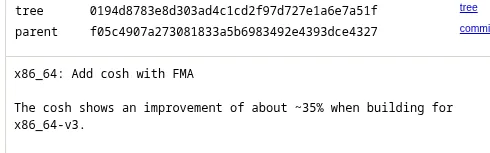
The centerpiece of this update is the implementation of a new FMA (Fused Multiply-Add) optimized version of the cosh() function, specifically designed for modern x86_64 Intel and AMD processors. This optimization, spearheaded by Adhemerval Zanella of Linaro, delivers an impressive 35% performance improvement when targeting the x86_64-v3 micro-architecture feature level.
To put this into perspective, imagine a computational task that previously took 10 seconds to complete. With this optimization, that same task would now take approximately 6.5 seconds – a significant reduction in processing time that could translate to substantial efficiency gains in data-intensive applications.
Technical Deep Dive: What Makes FMA Special?
The FMA instruction set is a powerful feature in modern processors that allows for the execution of multiply-add operations in a single step. This capability is particularly beneficial for mathematical functions like cosh(), which involve multiple arithmetic operations. By leveraging FMA, the new implementation reduces the number of CPU cycles required to compute the hyperbolic cosine, resulting in the observed performance boost.
The optimization isn’t just about raw speed, though. It also improves energy efficiency, as fewer CPU cycles mean less power consumption. This is particularly relevant for data centers and other large-scale computing environments where energy costs are a significant concern.
Beyond cosh(): A Holistic Approach to Optimization
While the cosh() optimization is the star of the show, it’s part of a broader effort to enhance glibc’s performance across multiple mathematical functions. The recent updates also include improvements to the tanh and sinh functions, drawing from the CORE-MATH library. However, it’s worth noting that the benefits of these optimizations can vary depending on the target CPU and instruction set architecture (ISA).
For instance, when targeting older CPUs or less advanced ISAs, the performance gains might be less pronounced or even mixed. This underscores the complexity of software optimization and the need for developers to consider their target audience and hardware when implementing such changes.
The Development Process: Open Source at Its Best
This optimization is a testament to the power of open-source development. The FMA version of cosh() was integrated into glibc Git through a series of patches, with the main commit being c7a7bfe54e7d7cf6ff21114dacdeeb543c378dc2. This transparent development process allows for peer review, collaboration, and rapid iteration – all hallmarks of successful open-source projects.
Looking Ahead: Glibc 2.44 and Beyond
These optimizations are part of the ongoing development cycle leading up to the Glibc 2.44 release, scheduled for August. Given the pace of improvements we’re seeing, it’s likely that we’ll witness even more performance enhancements before the final release. This continuous improvement model ensures that glibc remains at the forefront of system library development, consistently delivering value to its users.
Implications for the Tech Industry
The impact of this optimization extends far beyond glibc itself. Many applications, from scientific computing software to web servers, rely on glibc for their core functionality. A 35% improvement in a fundamental mathematical function could lead to noticeable performance gains across a wide range of software.
For developers, this optimization means faster computations without any code changes on their part. For system administrators, it could translate to better resource utilization and potentially lower operational costs. And for end-users, it might mean faster response times in applications that rely heavily on mathematical computations.
The Future of CPU Optimization
This development also highlights the ongoing importance of CPU-specific optimizations in software development. As processors continue to evolve, with new instruction sets and capabilities being introduced regularly, we can expect to see more of these targeted optimizations in the future. It’s a cat-and-mouse game between hardware manufacturers introducing new features and software developers finding ways to leverage them for improved performance.
Conclusion
The introduction of the FMA-optimized cosh() function in glibc is more than just a performance tweak – it’s a significant step forward in the optimization of open-source software for modern hardware. As we look towards the Glibc 2.44 release and beyond, it’s clear that the open-source community continues to push the boundaries of what’s possible, delivering tangible benefits to users across the globe.
This optimization serves as a reminder of the importance of ongoing software development and the potential for significant improvements even in well-established, widely-used libraries. As processors continue to evolve, we can expect to see more of these targeted optimizations, each contributing to the overall performance and efficiency of our computing infrastructure.
Tags: GNU C Library, glibc, FMA optimization, cosh function, x86_64, performance improvement, Adhemerval Zanella, Linaro, CORE-MATH, CPU optimization, open source development, Glibc 2.44
Viral Phrases:
- “35% faster computations coming your way!”
- “The future of mathematical functions is here”
- “Open source just got a major speed boost”
- “Your CPU’s hidden potential, unlocked”
- “The optimization that’s changing the game”
- “From 10 seconds to 6.5: The power of FMA”
- “GNU C Library: Faster, stronger, better”
- “The secret sauce behind lightning-fast computations”
- “Why your next software update might feel snappier”
- “The unsung hero of system libraries gets a makeover”
,


Leave a Reply
Want to join the discussion?Feel free to contribute!