
Google Fiber will be sold to private equity firm and merge with cable company
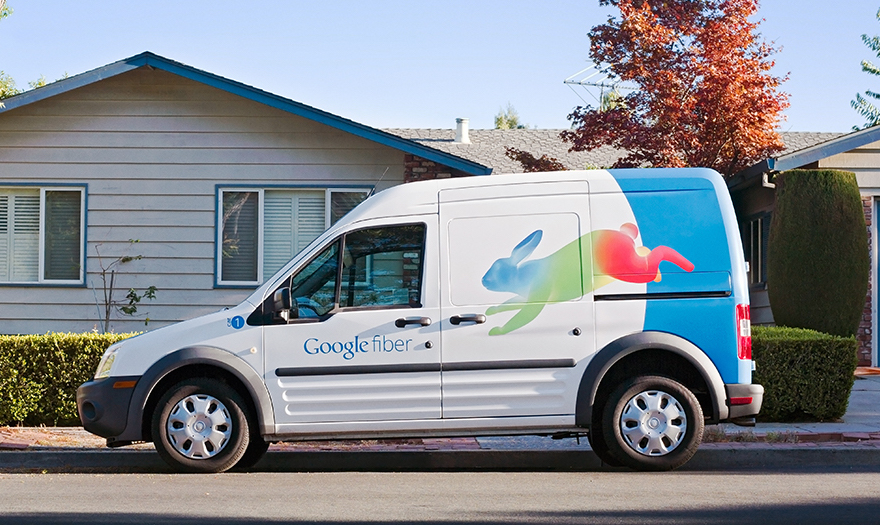
Google Fiber and Astound Merge to Create a 7.1 Million-Location Powerhouse in Cable and Fiber Internet
In a move that’s sending shockwaves through the telecommunications industry, Google Fiber and Astound Broadband have officially joined forces, creating a new behemoth that will pass over 7.1 million locations across 26 states. This merger, the result of years of private equity consolidation, brings together two of the most innovative and competitive players in the broadband market, setting the stage for a new era of high-speed internet access in the United States.
The Birth of a New Giant
Astound Broadband, already a product of industry consolidation, was formed through a series of private equity deals that combined Wave Broadband, RCN, and Grande Communications. Now, with the addition of Google Fiber, the new entity is poised to become a formidable force in the broadband landscape.
According to a research note from New Street Research, Google Fiber currently offers service at 2.8 million locations across 15 states, while Astound’s network spans 4.45 million locations in 12 states and the District of Columbia. Most of Astound’s footprint is built on cable broadband, but it also includes 892,014 fiber locations and 44,548 copper locations.
When combined, the two companies will cover approximately 7.1 million locations in 26 states. Interestingly, the two companies only overlap in three counties in Texas, which account for about 109,000 locations. This minimal overlap means that the merger will create a highly complementary network, with Texas and Illinois emerging as the largest footprints for the combined entity. In fact, cable and fiber will each cover nearly equal shares of the combined company’s locations.
A Competitive Landscape
The combined GFiber/Astound company will operate in a highly competitive environment. In most of its territory, it will face competition from at least one other cable or fiber/copper provider. Key competitors include AT&T (at 53% of locations), Comcast (at 46% of locations), Charter (at 43% of locations), Verizon (at 22% of locations), and Lumen (formerly CenturyLink) (at 11% of locations).
This level of competition underscores the importance of the merger, as the combined entity will need to leverage its scale and resources to stay ahead in a crowded market. The merger also raises questions about the future strategy of the new company. For instance, will it continue to expand into areas served by existing cable and fiber operators? Will it upgrade its own cable footprint with fiber? These are critical questions that will shape the company’s trajectory in the coming years.
Geographic Footprint
Google Fiber’s service area includes Texas, North Carolina, Missouri, Utah, Kansas, Tennessee, Alabama, Georgia, Iowa, California, Arizona, Nebraska, Idaho, Colorado, and South Carolina. Astound, on the other hand, operates in Illinois, Texas, New York, California, Washington, Massachusetts, Pennsylvania, the District of Columbia, Oregon, Maryland, Indiana, Virginia, and New Jersey.
Breaking down the numbers further, Texas, North Carolina, Missouri, Utah, and Kansas account for about 78% of Google Fiber’s locations, while Illinois, Texas, New York, California, and Washington together account for about 72% of Astound’s locations. This geographic diversity will allow the combined company to tap into a wide range of markets, from densely populated urban areas to more rural regions.
The Future of Broadband
The merger of Google Fiber and Astound is more than just a business deal—it’s a statement about the future of broadband in America. As demand for high-speed internet continues to grow, driven by remote work, online education, streaming, and the Internet of Things (IoT), the need for robust and reliable networks has never been greater.
The combined company will have the resources and scale to invest in cutting-edge technologies, such as fiber-to-the-home (FTTH) and 5G, which are critical for delivering the speeds and reliability that consumers and businesses expect. Moreover, the merger could accelerate the deployment of broadband in underserved areas, helping to bridge the digital divide that has long plagued rural and low-income communities.
What’s Next?
While the merger is a significant milestone, it’s just the beginning of what promises to be an exciting chapter in the history of broadband. The combined company will need to navigate a complex regulatory environment, address competitive pressures, and meet the evolving needs of its customers.
One thing is clear: the merger of Google Fiber and Astound is a game-changer for the broadband industry. By combining their strengths, the two companies are well-positioned to lead the charge in delivering fast, reliable, and affordable internet to millions of Americans.
As the dust settles on this historic deal, all eyes will be on the new entity to see how it shapes the future of connectivity in the United States. One thing is certain: the broadband landscape will never be the same.
Tags: Google Fiber, Astound Broadband, broadband merger, fiber internet, cable broadband, telecommunications, high-speed internet, digital divide, 5G, FTTH, network expansion, competitive landscape, New Street Research, internet access, remote work, streaming, IoT, rural broadband, underserved communities.
Viral Phrases:
- “7.1 million locations and counting!”
- “The broadband battle heats up!”
- “Google Fiber + Astound = Unstoppable force!”
- “Bridging the digital divide, one connection at a time.”
- “The future of internet is here, and it’s faster than ever!”
- “Texas and Illinois: The new broadband battlegrounds.”
- “From cable to fiber, the ultimate network upgrade.”
- “Competition is fierce, but innovation is fiercer.”
- “Say goodbye to slow internet, hello to lightning speeds!”
- “The merger that’s changing the game for millions.”
- “Rural America, get ready for a connectivity revolution!”
- “AT&T, Comcast, Verizon: Watch your backs!”
- “The dawn of a new era in broadband.”
- “Fiber is the future, and the future is now.”
- “Uniting forces to connect the unconnected.”
,


Leave a Reply
Want to join the discussion?Feel free to contribute!