
Google is bringing AirDrop support to Pixel 9 series phones
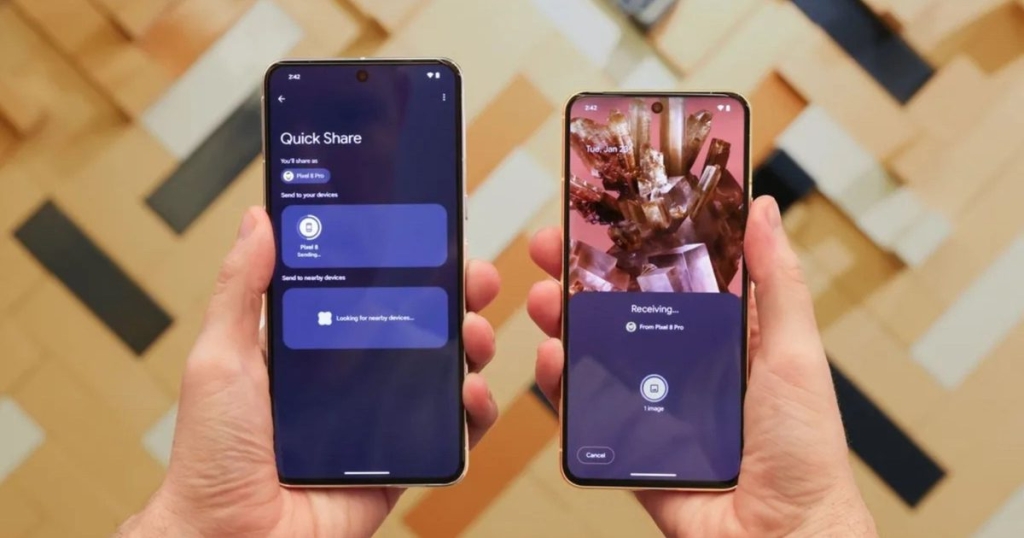
Google’s Quick Share AirDrop Expansion: Pixel 9 Users Finally Get Seamless iPhone File Sharing
In a move that’s sending shockwaves through the tech world, Google has officially rolled out AirDrop compatibility for its Pixel 9 lineup, marking a significant breakthrough in cross-platform file sharing. The announcement, made via Google’s official X (formerly Twitter) account, confirms that Pixel 9, Pixel 9 Pro, Pixel 9 Pro XL, and Pixel 9 Pro Fold users can now seamlessly share files with iPhone, iPad, and macOS devices using Apple’s proprietary AirDrop technology.
The Long-Awaited Cross-Platform Revolution
Remember when sharing files between Android and iPhone felt like trying to communicate with someone speaking a completely different language? Those days are officially over. Google first introduced AirDrop compatibility with the Pixel 10 series last year, but now the feature is cascading down to the more accessible Pixel 9 lineup, making this revolutionary capability available to millions more users.
The timing couldn’t be better. As our digital lives become increasingly interconnected across different ecosystems, the ability to share high-resolution photos, videos, documents, and other files without friction has become essential. Whether you’re collaborating on a project, sharing vacation memories, or transferring work files, this update eliminates one of the most frustrating barriers in the smartphone experience.
Setting Up Your Pixel 9 for AirDrop Magic
Getting started with Quick Share and AirDrop compatibility is surprisingly straightforward. Here’s your step-by-step guide to unlocking this game-changing feature:
For Pixel 9 Series Users:
- Navigate to Settings > System > Software updates
- Install the latest Google Play System update (this is crucial!)
- Go to Settings > All services > System services > Quick Share extension
- Install any available updates for the Quick Share extension
For Apple Device Users Receiving Files:
- Open Control Center on your iPhone or iPad
- Tap and hold the network settings card
- Ensure AirDrop is set to “Everyone for 10 Minutes”
- This temporary setting allows the initial connection to establish
The 10-minute window is particularly clever—it provides enough time for the devices to discover each other and complete the transfer while maintaining security by automatically reverting to more restrictive settings afterward.
Why Pixel 9a Users Are Left Wondering
One puzzling aspect of this rollout is the notable absence of the Pixel 9a from the compatibility list. Google hasn’t provided any official explanation for this exclusion, leaving many budget-conscious consumers scratching their heads. The Pixel 9a, which launched as a more affordable alternative in the Pixel 9 family, shares many of the same hardware capabilities as its siblings, making the omission all the more curious.
Industry analysts speculate this could be due to hardware limitations, software optimization challenges, or perhaps a strategic decision to differentiate between the standard and “a” series models. Whatever the reason, Pixel 9a owners will need to wait patiently or consider alternative file-sharing methods for now.
Privacy and Performance: Google’s Dual Commitment
Google isn’t just focusing on convenience—they’re doubling down on security and performance. The company emphasizes that Quick Share with AirDrop compatibility maintains multiple layers of protection to ensure your shared files remain private and secure throughout the transfer process.
The system employs a direct, peer-to-peer connection methodology, which means your files never touch Google’s servers. This approach offers several critical advantages:
- Zero server logging: Your file contents remain completely private
- No data retention: Files aren’t stored anywhere after transfer
- End-to-end encryption: Your data stays protected during transmission
- Direct device communication: Faster transfers with minimal latency
This privacy-first architecture addresses one of the biggest concerns users have about cross-platform file sharing. You can confidently share sensitive work documents, personal photos, or any other files without worrying about them being intercepted or stored on third-party servers.
The Technical Magic Behind the Scenes
The seamless integration between Google’s Quick Share and Apple’s AirDrop represents a remarkable technical achievement. Both systems use Bluetooth Low Energy (BLE) for device discovery and Wi-Fi Direct for the actual file transfer, creating a hybrid approach that balances speed with battery efficiency.
When you initiate a transfer, your Pixel 9 broadcasts a BLE signal that nearby Apple devices can detect. Once a connection is established, the devices create a direct Wi-Fi connection that can achieve transfer speeds of up to 480 Mbps—fast enough to send even large 4K video files in seconds rather than minutes.
Real-World Impact: Beyond the Technical Specs
Let’s be honest—most users don’t care about the technical wizardry behind file sharing. What matters is the real-world impact. Imagine these scenarios:
- You’re at a friend’s wedding, and they’re using an iPhone while you have your Pixel 9. Instead of fumbling with email attachments or cloud services, you simply tap “Share” and their iPhone appears instantly.
- During a business meeting, you need to share a presentation with colleagues using various devices. Quick Share with AirDrop compatibility ensures everyone gets the file, regardless of their phone choice.
- Traveling with friends who use different devices? Sharing photos and videos becomes as simple as pointing your phone and tapping accept.
These everyday situations highlight why this seemingly small feature represents such a significant step forward in user experience.
The Bigger Picture: Breaking Down Ecosystem Walls
This update is more than just a convenient feature—it’s a symbolic moment in the ongoing evolution of cross-platform compatibility. For years, the tech industry has been criticized for creating walled gardens that lock users into specific ecosystems. Google’s decision to embrace AirDrop compatibility signals a shift toward more open, user-friendly approaches.
While Apple has traditionally been protective of its proprietary technologies, the increasing pressure from competitors and consumer demand for seamless interoperability has forced even the most guarded companies to reconsider their strategies. This collaboration between Google and Apple, albeit limited to file sharing, suggests a future where technological barriers continue to fall.
What This Means for the Future
The successful implementation of Quick Share with AirDrop compatibility opens the door for even more cross-platform innovations. Could we see deeper integration between Android and iOS features in the future? Might we witness the emergence of truly universal standards for device communication?
Industry experts believe this is just the beginning. As 5G networks become more widespread and Wi-Fi 6E adoption increases, the potential for even faster, more reliable cross-platform sharing grows exponentially. We might soon see features like:
- Cross-platform real-time collaboration tools
- Universal device pairing protocols
- Seamless integration of smart home devices across ecosystems
- Shared AR/VR experiences between different platforms
The Competitive Landscape
This move also intensifies the competition in the smartphone market. By offering AirDrop compatibility, Google is addressing one of the iPhone’s most beloved features while maintaining the flexibility and customization that Android users cherish. It’s a strategic masterstroke that could sway fence-sitting consumers who’ve been hesitant to switch platforms due to sharing limitations.
Meanwhile, Apple likely views this as a necessary concession to maintain its competitive edge. Rather than losing users to Android’s flexibility, they’re ensuring that iPhone users can still enjoy the benefits of their ecosystem even when interacting with Android devices.
Final Thoughts: A Win for Everyone
Google’s expansion of Quick Share with AirDrop compatibility to the Pixel 9 lineup represents a significant victory for consumers. It demonstrates that even the largest tech companies can collaborate to solve real-world problems and improve user experiences.
For Pixel 9 owners, this update removes a major pain point in daily device usage. For the broader tech community, it signals a potential shift toward more open, interoperable systems. And for the industry as a whole, it sets a precedent for future collaboration that could benefit users across all platforms.
The only question remaining is: what cross-platform feature will be next to break down the walls between ecosystems?
Tags: #GooglePixel9 #QuickShare #AirDrop #Android #iOS #CrossPlatform #FileSharing #TechNews #Pixel9 #Google #Apple #Innovation #Smartphone #Technology #DigitalTrends #2026Tech #MobileTech #Ecosystem #Privacy #Security #WirelessSharing #TechRevolution #DeviceCompatibility #FileTransfer #DigitalLife #SmartDevices #TechCollaboration #UserExperience #MobileInnovation
Viral Phrases: “The walls between ecosystems are finally crumbling!” “Google just gave iPhone users a taste of Android flexibility!” “Quick Share meets AirDrop: The tech collaboration we didn’t know we needed!” “Pixel 9 users can finally say goodbye to ‘Sorry, I can’t AirDrop that!'” “This is the cross-platform future we’ve been waiting for!” “Google and Apple playing nice? The tech world is upside down!” “Sharing files between iPhone and Android just got stupidly simple!” “The feature that’s making tech enthusiasts lose their minds!” “Pixel 9 just became the ultimate cross-platform companion!” “When tech giants collaborate, everyone wins!”
,
Leave a Reply
Want to join the discussion?Feel free to contribute!