
Google’s Pixel cameras aren’t the best anymore, here’s the proof
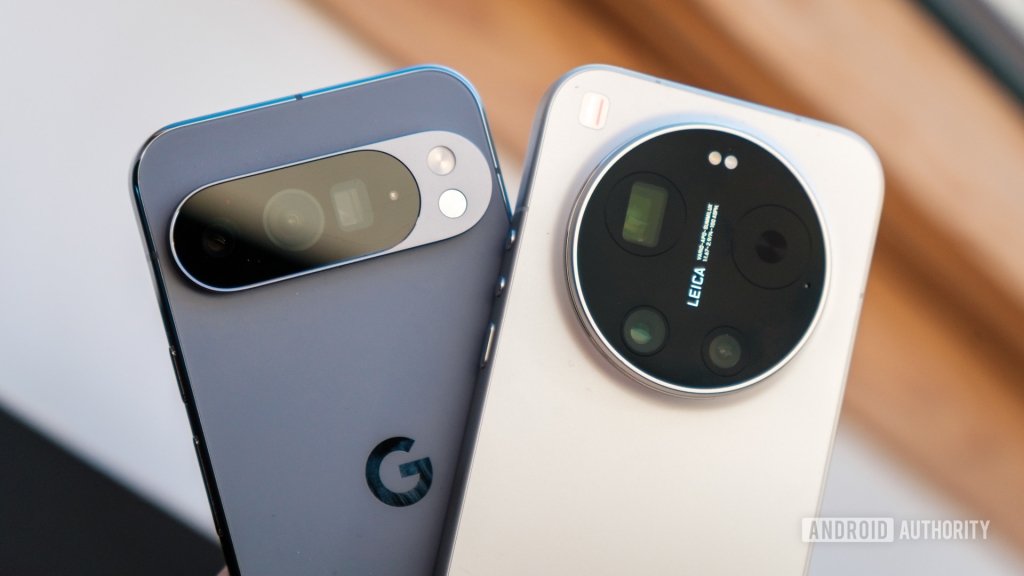
Google Pixel 10 Pro XL vs Xiaomi 17 Ultra: Why I’m Ditching Pixels for Better Hardware
As a longtime Pixel enthusiast who converted to Google’s ecosystem with the Pixel 6 Pro, I’ve always championed computational photography as the future of mobile imaging. But after years of defending Google’s approach, I’m facing a harsh reality: Pixels are slipping in the photography race, and the gap is widening faster than I ever expected.
The Computational Photography Ceiling
Let me be clear—I’m not abandoning Pixels lightly. The Pixel 6 Pro was my gateway drug to Google’s ecosystem, and its triple rear camera system was revolutionary for its time. Computational photography has proven its worth, and Google’s sales pitch for the Pixel 10 series still sounds compelling on paper.
But here’s the uncomfortable truth: for a product line built on image capture excellence, Pixels are no longer competing at the top tier. Yes, they’re still incredibly reliable for basic point-and-shoot scenarios, and with a skilled eye, you can absolutely capture breathtaking results from what appears to be modest hardware on paper. Google’s formula works—but is it great by modern standards? I’m increasingly doubtful.
The problem became impossible to ignore when I started leaving my recent Pixel on the shelf in favor of physically larger smartphone camera packages or my trusty mirrorless camera. After spending way too many hours pixel-peeping, I’ve become painfully aware of Google’s processing artifacts. I genuinely don’t enjoy blowing up these pictures anymore.
While I can overlook grainy shadows, mottled low-light details, and overly-sharp portraits for a quick social media post, that’s not what I want when spending $1,000+ on a phone primarily for photography. This is where Xiaomi’s 17 Ultra enters the picture—and potentially ends my Pixel loyalty until Google seriously overhauls its hardware approach.
The Hardware Revolution I Can’t Ignore
Let’s be honest: for general-purpose shots, the Pixel 10 Pro XL and Xiaomi 17 Ultra are remarkably comparable. Both deliver superb dynamic range, rich and realistic colors, and plenty of detail from their main and zoom cameras. If anything, the Pixel might be slightly more consistent, with Xiaomi’s color science occasionally veering into oversaturation or underexposure territory.
But look closer, and the Pixel’s veneer quickly crumbles. Xiaomi’s latest telephoto camera gives the phone a massive advantage for image quality and flexibility—especially if you frame and crop your pictures as obsessively as I do.
Take this extreme low-light, moderate-zoom scenario: a genuine test for even dedicated cameras, let alone small-sensor phone zoom cameras. Both phones look acceptable at full frame, but when it comes to detail preservation, the Pixel is completely inadequate here—even with Night mode assistance. There’s significant noise, smudged details, and missing information. Meanwhile, the Xiaomi 17 Ultra delivers a level of detail that even my Fujifilm mirrorless camera can’t match, likely due to multi-frame processing and some AI enhancement (there’s definitely an artificial quality to the look).
This noise and detail issue has been a persistent Pixel problem, and the divide is only growing.
Portrait Photography: Pixels’ Achilles’ Heel
Portraits have been a long-running Pixel weakness for similar reasons. For all of Google’s marketing about Pure Tone, blemishes and textures continue to look far too sharp at full frame yet somehow dissolve into mush upon closer inspection. This might not matter much on a phone screen, but it becomes a serious problem if you ever want to print your photos for albums or frames.
The bokeh blur comparison is even more damning. Software just can’t match the accuracy and beauty of natural optical effects. Xiaomi’s new 75mm lens delivers portrait quality that rivals my mirrorless camera—probably the best in the business right now.
The AI Zoom Dilemma
Google’s latest approach has been to rely heavily on AI diffusion upscaling with Pro Res Zoom to enhance details at 30x and beyond. Meanwhile, Xiaomi has embraced a larger 200MP sensor paired with a 75mm-100mm variable focal length lens, creating a versatile system that excels at both short and long distances.
In my experience, Xiaomi has a clear advantage at 3x due to its natural optics. The playing field levels out around 5x and 10x, but beyond that, I’d give a slight edge to Xiaomi. Google’s AI upscaling works well on some textures but struggles with others. While Xiaomi’s long-range results aren’t perfect, the larger sensor ensures daylight performance that’s comparable to Google’s AI-enhanced efforts.
We can extend this comparison to macro photography too. Xiaomi’s novel lens can focus reasonably close, creating natural depth and bokeh without getting super close to subjects. Google’s 5x telephoto can’t focus anywhere near this close, so it resorts to digital upscaling or the ultrawide camera, which introduces perspective distortion and lacks real depth.
The Hardware vs. Software Debate
This really encapsulates the Pixel’s fundamental problem. Google built its early reputation on computational photography—doing more with less—and was initially very successful at bridging the gap, often leading the pack. But it’s mostly continued this trend at the expense of emerging hardware improvements that enable not just better image quality but more versatile shooting options.
I’m not disparaging Google’s computational photography efforts. Exposure, tone mapping, and night photography remain Pixel strengths, augmented by fun tools like Add Me and Magic Editor. But for all Google’s advantages, its imaging pipeline lags the competition in raw image quality.
If you want smartphone pictures that look as close to lifelike as possible, along with next-level creative flexibility, Pixels aren’t where it’s at anymore.
Beyond Photography: The Ecosystem Question
This isn’t to say the Pixel 10 or Galaxy S26 isn’t a good handset for capturing family events or documenting travels. They’re still versatile enough for most needs. However, if you’re a serious photographer who’ll use cutting-edge features and demands the pinnacle of mobile image quality, you’ll find far more utility with phones like the Xiaomi 17 Ultra.
The only issue for US customers? Actually getting their hands on these alternatives.
Of course, there’s much more that goes into making a great phone. While hardware enthusiasts increasingly turn their gaze to China’s Ultra models, there’s still something to be said for the broader ecosystem of the Pixel or Galaxy experience. But as a photography-first phone user, I’m increasingly wondering if that’s enough to keep me loyal.
Tags & Viral Phrases
- Pixel vs Xiaomi camera showdown
- Computational photography limitations
- Smartphone camera hardware evolution
- Best phone for serious photographers
- Xiaomi 17 Ultra review
- Google Pixel photography decline
- Mobile photography 2026
- Camera phone comparison
- Why Pixels are losing the camera race
- Hardware vs software photography debate
- Smartphone zoom camera technology
- Portrait photography smartphone test
- Low light mobile photography
- AI vs optical zoom
- Photography enthusiast smartphone choices
- Mobile camera innovation
- Pixel 10 Pro XL limitations
- Xiaomi camera superiority
- Smartphone photography evolution
- Best camera phone 2026
- Photography first smartphone experience
- Mobile imaging technology
- Camera phone hardware revolution
- Computational photography ceiling
- Smartphone photography reality check
- Why I switched from Pixel
- Camera phone buyer’s guide
- Mobile photography truth bomb
- Smartphone camera shootout
- Photography technology trends
,


Leave a Reply
Want to join the discussion?Feel free to contribute!