
Gradient’s heat pumps get new smarts to enable old-building retrofits
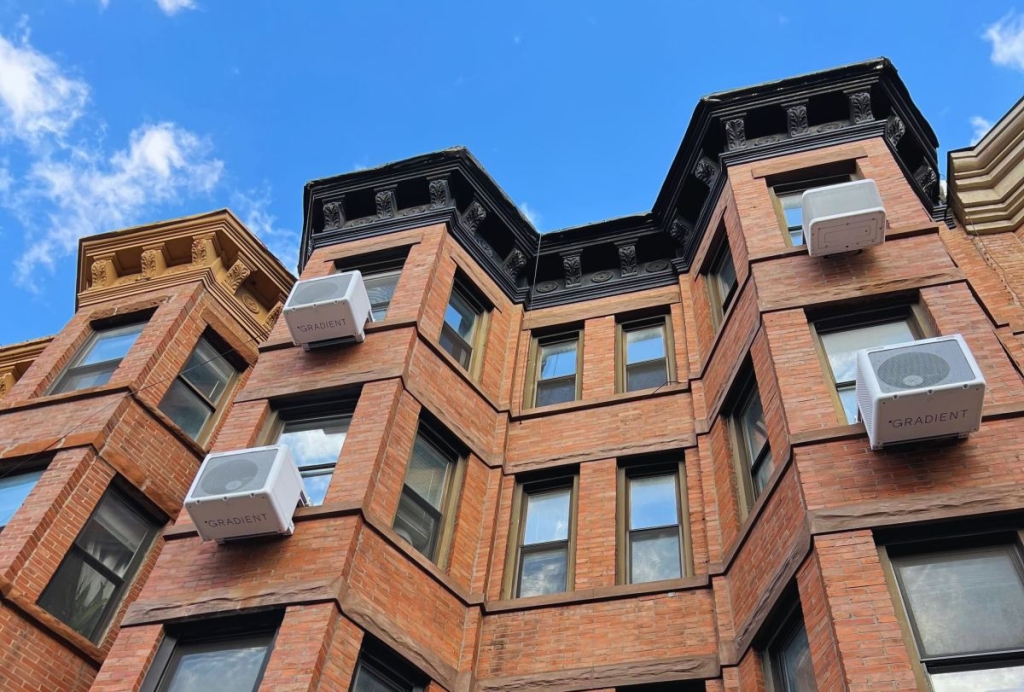
New York’s Aging Buildings Get a High-Tech Makeover—One Window at a Time
In the concrete canyons of New York City and countless other metropolises built during the steam-powered heyday of the early 20th century, millions of residents are living in a climate-controlled nightmare. These venerable structures, once marvels of modern engineering, now stand as monuments to inefficiency—too hot in winter, too cold in spring, and utterly unprepared for the blistering heat waves that climate change is delivering with increasing frequency.
The problem is as old as the buildings themselves. Massive, basement-dwelling boilers that once represented the pinnacle of heating technology now wheeze and groan through another season, creating indoor temperatures that fluctuate wildly between sauna-like conditions and drafty discomfort. For decades, residents have simply endured, layering sweaters in overheated apartments during winter months or suffering through stuffy summers without relief.
But a Bay Area startup called Gradient is rewriting this tired narrative with an elegantly simple solution that’s about to get even smarter.
The Horseshoe-Shaped Revolution
At first glance, Gradient’s heat pumps look almost deceptively simple—window units with a distinctive horseshoe shape that sets them apart from traditional air conditioners. But don’t let their unassuming appearance fool you. These devices represent a fundamental reimagining of how we heat and cool our living spaces.
Unlike conventional window units that block your view and function as either heaters or air conditioners (but never both), Gradient’s units sit below the window frame, preserving your connection to the outside world while delivering year-round comfort. They’re essentially miniaturized versions of the heat pump technology that’s been revolutionizing home heating across the country, compressed into a form factor that works in buildings where installing central systems would be prohibitively expensive or physically impossible.
The technology isn’t entirely new—Gradient has been installing these units in pilot programs across the country, from public housing projects in New York City to affordable housing complexes in California. But what the company is announcing now represents a quantum leap in how these systems can be deployed and managed at scale.
Nexus: When Heat Pumps Start Talking to Each Other
In an exclusive reveal to TechCrunch, Gradient is launching Nexus, a software platform that transforms individual heat pumps into an interconnected ecosystem. Think of it as a nervous system for building climate control—one that gives property managers unprecedented visibility and control while still preserving tenant comfort.
“This is a sector that’s been completely ignored,” explains Vince Romanin, Gradient’s chief technology officer. “Multifamily buildings represent one of our biggest opportunities to improve living conditions while reducing energy waste.”
The timing couldn’t be more critical. New York City alone has thousands of buildings with aging boiler systems that are reaching the end of their operational lives. Replacing these behemoths with modern systems often requires extensive renovations that many building owners simply can’t afford. Gradient’s solution offers a compelling alternative: individual heat pumps that can be installed in hours rather than weeks, without requiring major electrical upgrades or structural modifications.
The Comfort-Control Paradox
One of the most fascinating aspects of Nexus is how it addresses what might be called the “comfort-control paradox” in multifamily buildings. When a single electric meter serves an entire building, individual tenants have little incentive to conserve energy. If heating is included in your rent, why not crank the thermostat to tropical levels during winter? The cost is distributed across all residents, creating what economists call a “tragedy of the commons” scenario.
Nexus changes this dynamic by giving building managers the ability to set reasonable guardrails. They can establish maximum and minimum temperature thresholds that prevent extreme overuse while still ensuring that no one is left shivering or sweating. The system uses data from sensors in each unit to monitor conditions and adjust accordingly.
The results speak for themselves. In one pilot building, managers set a maximum heating temperature of 78°F. The next day, energy consumption dropped by 25%—a reduction that translates directly into lower utility bills and reduced carbon emissions.
Beyond Comfort: Grid Stability and the Electrification Revolution
Gradient’s vision extends far beyond individual building comfort. As the company’s executives are quick to point out, the transition to electric heating and cooling represents both an enormous challenge and an unprecedented opportunity for electrical grids across the country.
“The conventional wisdom is that electrifying everything will overwhelm our electrical infrastructure,” Romanin notes. “But I think that’s a false choice. We can electrify everything and actually make the grid more stable, more efficient, and cheaper to operate.”
The key lies in smart demand management. On scorching summer afternoons when air conditioning loads threaten to overload the grid, Nexus can selectively reduce cooling in units where it will have minimal impact on comfort. By analyzing building characteristics and real-time sensor data, the system can identify which apartments are naturally cooler—perhaps those on lower floors or in shaded areas—and temporarily reduce their cooling load.
This kind of intelligent load shedding could be transformative for grid operators, allowing them to manage peak demand without resorting to rolling blackouts or expensive peaker plants. It’s a perfect example of how software intelligence can multiply the impact of hardware solutions.
The Economics of Comfort
For building owners and property managers, the financial case for Gradient’s solution is compelling. Traditional HVAC retrofits in older buildings can cost tens of thousands of dollars per unit, requiring extensive construction, electrical upgrades, and tenant displacement. Gradient’s window units, by contrast, can be installed in under an hour with minimal disruption.
Perhaps more importantly, they provide air conditioning to buildings that were never designed for it. As heat waves become more frequent and intense, this capability isn’t just about comfort—it’s increasingly a matter of public health and safety. Elderly residents, young children, and those with health conditions are particularly vulnerable to extreme heat, and many older buildings simply weren’t constructed with summer cooling in mind.
The units also offer a path to compliance with increasingly stringent building energy codes and climate regulations. Cities across the country are implementing policies that require building owners to reduce their carbon footprints, and electric heat pumps represent one of the most effective ways to achieve these reductions.
Looking Forward: The Future of Building Climate Control
As Gradient rolls out Nexus to more buildings, the company is already looking toward the next generation of features. Integration with smart grid technologies, predictive maintenance capabilities, and even the potential for units to participate in virtual power plant programs are all on the horizon.
The implications extend far beyond individual comfort. If successful, this model could be applied to millions of buildings across the country, creating a more resilient, efficient, and sustainable built environment. It represents a fundamental shift from the centralized, one-size-fits-all approach of traditional HVAC to a distributed, intelligent system that can adapt to both individual needs and broader grid conditions.
In a world where climate change is making weather patterns increasingly unpredictable, solutions like Gradient’s offer a path forward that doesn’t require abandoning our existing building stock. Instead, they provide a way to modernize and optimize what we already have, making our cities more livable while reducing their environmental impact.
The humble heat pump, once a simple device for moving heat from one place to another, is becoming something far more powerful: a tool for climate resilience, grid stability, and urban transformation. And it’s all happening one window at a time.
Tags
heat pump revolution, smart building technology, energy efficiency, climate change solutions, urban sustainability, HVAC innovation, building retrofits, grid stability, multifamily housing, New York City buildings, electric heating, air conditioning innovation, sustainable cities, building energy codes, climate resilience, smart grid technology, building management systems, urban transformation, environmental technology, sustainable architecture
Viral Sentences
Old buildings are getting a high-tech makeover—one window at a time. The humble heat pump is becoming a tool for climate resilience and urban transformation. Say goodbye to sauna-like apartments and drafty discomfort. Smart heat pumps that talk to each other are revolutionizing building climate control. This isn’t just about comfort—it’s increasingly a matter of public health and safety. The future of building climate control is distributed, intelligent, and window-sized. Electrify everything and make the grid better, not worse. Old buildings don’t need to be abandoned—they need to be optimized. The comfort-control paradox is finally being solved. Heat pumps are future-proofing buildings against worsening heat waves. Building owners can now achieve climate compliance without major renovations. The economics of comfort have never looked better. Smart demand management could prevent rolling blackouts. One hour installation versus weeks of construction. Preserving your view while upgrading your comfort. The building climate control revolution has arrived.
,


Leave a Reply
Want to join the discussion?Feel free to contribute!