
Half the World’s Coral Reefs Devastated by Record Ocean Heat
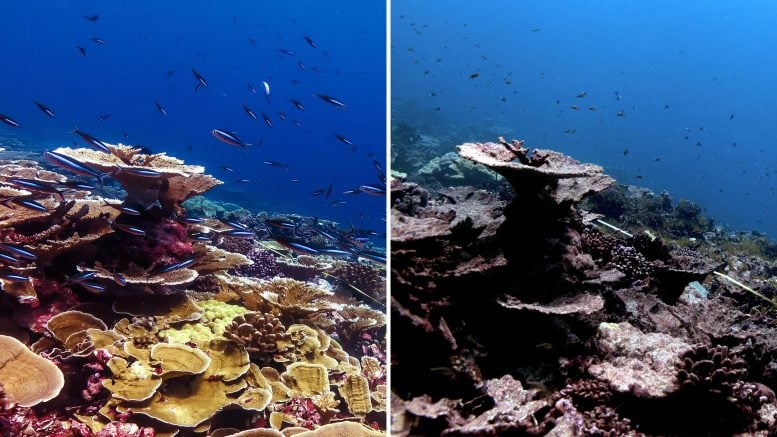
Half the World’s Coral Reefs Devastated by Record Ocean Heat
In an alarming ecological catastrophe unfolding before our eyes, scientists have confirmed that nearly half of the world’s coral reefs have suffered devastating damage from unprecedented ocean heat waves. This environmental emergency represents one of the most severe marine ecosystem collapses in recorded history, with cascading consequences that extend far beyond the underwater world.
The scale of this devastation is staggering. Marine biologists monitoring reef systems across the globe report that coral bleaching events have reached catastrophic proportions, with some regions experiencing mortality rates exceeding 90% in affected areas. The current crisis builds upon years of gradual decline, but the intensity and geographic scope of recent heat events have pushed many reef systems past their breaking point.
Ocean temperatures have surged to record highs, creating conditions that corals simply cannot survive. When water temperatures rise even 1-2 degrees Celsius above normal seasonal maximums, corals experience thermal stress that causes them to expel the symbiotic algae living in their tissues. This process, known as bleaching, strips corals of their vibrant colors and, more critically, their primary food source. Without these algae, corals essentially starve, becoming more susceptible to disease and death.
The current bleaching event is particularly severe because it’s occurring across multiple ocean basins simultaneously. From the Great Barrier Reef in Australia to Caribbean reef systems, from the Indo-Pacific to the Red Sea, coral colonies are experiencing mass mortality. What makes this crisis even more concerning is that scientists believe we’re only witnessing the beginning of what could become an irreversible collapse of these vital ecosystems.
Coral reefs function as the rainforests of the sea, supporting approximately 25% of all marine species despite covering less than 1% of the ocean floor. Their complex three-dimensional structures provide habitat, breeding grounds, and feeding areas for countless fish species, invertebrates, and marine mammals. The loss of these ecosystems creates a domino effect throughout the marine food web, threatening commercial fisheries that millions of people depend upon for food and livelihood.
Beyond their ecological importance, coral reefs generate enormous economic value through tourism and coastal protection. Reef-related tourism supports millions of jobs worldwide, from dive operators and resort staff to local artisans and restaurant workers. The economic impact extends to entire coastal economies that have built their prosperity around healthy reef systems. Additionally, coral reefs act as natural breakwaters, dissipating wave energy and protecting shorelines from erosion, storm surges, and tsunamis. Without this natural barrier, coastal communities face increased vulnerability to extreme weather events and rising sea levels.
The medical and pharmaceutical potential of coral reef organisms represents another critical loss. Many reef species produce unique chemical compounds that have led to breakthroughs in cancer treatments, painkillers, and other medications. The destruction of these ecosystems may eliminate potential cures for diseases that humanity has yet to discover.
Climate scientists emphasize that this crisis serves as a stark warning about the accelerating pace of global warming. The frequency and intensity of marine heat waves have increased dramatically over the past few decades, leaving corals insufficient time to recover between bleaching events. Some reefs that experienced severe bleaching in 2016 or 2020 are now facing their third or fourth mass mortality event in less than a decade.
Ocean acidification compounds the problem, as increased atmospheric carbon dioxide dissolves into seawater, making it more acidic. This chemical change impairs corals’ ability to build their calcium carbonate skeletons, weakening their structural integrity and making them more vulnerable to physical damage and disease.
The international scientific community is racing to develop innovative solutions, from selective breeding of heat-resistant coral strains to artificial reef structures and assisted evolution techniques. However, these efforts face significant challenges, as the scale of the problem far exceeds current restoration capabilities. Even if all coral restoration projects were successful, they would only address a tiny fraction of the reefs at risk.
Marine conservation organizations are calling for immediate action to reduce greenhouse gas emissions, establish marine protected areas, and implement sustainable fishing practices. They argue that without dramatic reductions in carbon emissions, even the most ambitious restoration efforts will be futile in the face of continued ocean warming.
The human cost of coral reef destruction extends to indigenous coastal communities whose cultural identities and traditional ways of life are intimately connected to healthy reef ecosystems. For many Pacific Island nations, coral reefs provide not just economic sustenance but also cultural heritage and spiritual significance that cannot be quantified in monetary terms.
As this crisis unfolds, it serves as a sobering reminder of the interconnectedness of Earth’s systems and the urgent need for comprehensive climate action. The fate of coral reefs may well be an indicator of what awaits other ecosystems if global temperatures continue to rise unchecked.
Tags
coral bleaching, ocean heat waves, marine ecosystem collapse, climate change impact, Great Barrier Reef, coral reef mortality, ocean acidification, marine biodiversity loss, coastal protection, reef tourism economy, climate emergency, global warming consequences, marine conservation, coral restoration, underwater ecosystem, environmental catastrophe, sea temperature rise, reef fish populations, pharmaceutical potential, coastal community impact, assisted coral evolution, greenhouse gas emissions, marine protected areas, Pacific Island nations, sustainable fishing, coral skeleton degradation, marine heat stress, reef-dependent economies, climate action urgency, ecological domino effect
Viral Sentences
Half of Earth’s coral reefs are dead or dying right now. This is happening in real-time, and most people don’t even know about it. The underwater apocalypse is here. When corals die, entire ocean ecosystems collapse within months. Your grandchildren may never see a living coral reef. The economic value of dead reefs? Zero. Climate change isn’t coming – it’s already killed half our reefs. Scientists are literally watching coral reefs die before their eyes. This is the biggest environmental disaster you’ve never heard about. Coral reefs support 25% of all marine life while covering less than 1% of the ocean floor. We’re losing potential cancer cures with every bleached reef. Coastal cities will pay billions for seawalls that reefs used to provide for free. The current coral die-off makes the Amazon fires look small by comparison. Marine biologists are documenting the fastest ecosystem collapse in human history. Your sunscreen might be killing the last remaining healthy corals. The ocean is 30% more acidic than it was 200 years ago – corals can’t survive that. This isn’t just an environmental issue; it’s an economic, cultural, and humanitarian crisis. The clock is ticking: scientists give coral reefs less than 20 years if current trends continue. Every degree of warming kills more corals than the entire Great Wall of China weighs in stone. We’re not just losing pretty fish – we’re losing the foundation of ocean life. The coral reef crisis is the canary in the coal mine for all marine ecosystems.
,


Leave a Reply
Want to join the discussion?Feel free to contribute!