
Hideki Sato, designer of all Sega’s consoles, has died
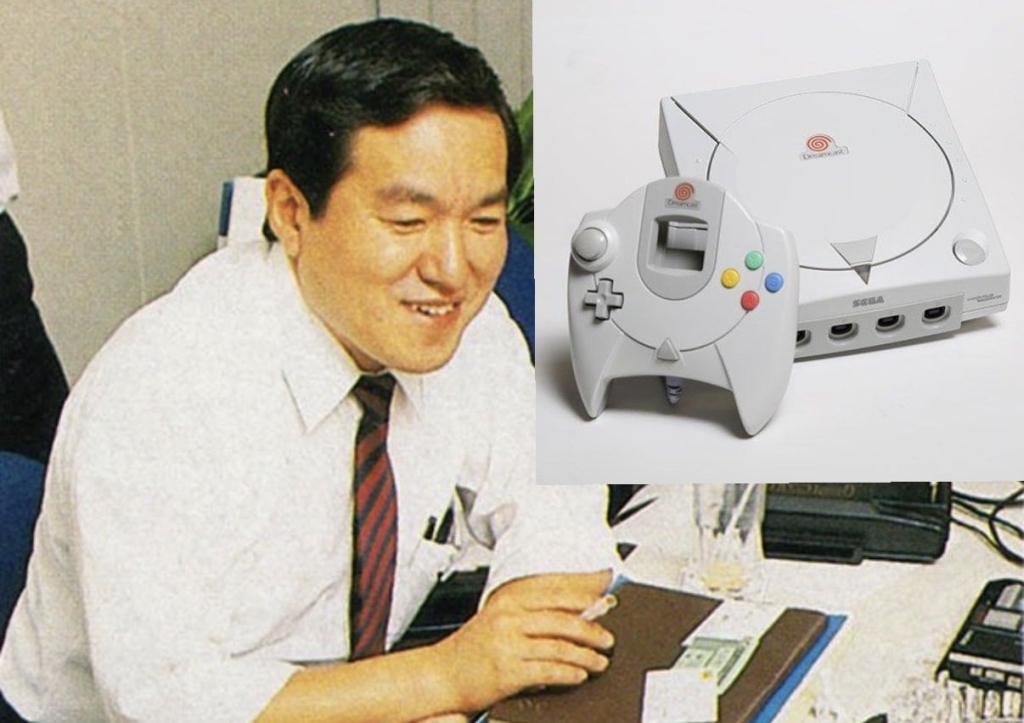
Sega’s Legendary Hardware Architect Hideki Sato Dies at 77: The Man Who Built Gaming’s Most Iconic Consoles
The gaming world mourns the loss of Hideki Sato, the visionary engineer whose fingerprints are on virtually every Sega console that shaped a generation of gamers. Sato, who served as both the mastermind behind Sega’s hardware division and the company’s president from 2001-2003, passed away at age 77 over the weekend, according to Japanese gaming outlet Beep21.
For over three decades, Sato was the beating heart of Sega’s R&D division, the creative force that transformed arcade innovation into living room entertainment. His journey with Sega began in 1971, when the company was still primarily focused on arcade cabinets and pinball machines. What followed was nothing short of revolutionary.
From Arcade Cabinets to Living Room Legends
Sato’s philosophy was elegantly simple yet profoundly impactful: “From the beginning, Sega’s home console development has always been influenced by our arcade development.” This approach would become the cornerstone of Sega’s competitive advantage throughout the 1980s and 1990s.
The SC-3000, Sega’s first foray into home computing, emerged from this arcade-first mentality. “We had no idea how many units we’d sell,” Sato later admitted, reflecting on the uncertainty that accompanied Sega’s bold pivot from pure arcade operation to home entertainment. The SC-3000 represented more than just a product—it was Sega’s declaration that they were ready to bring the arcade experience home.
The Genesis of a Gaming Empire
But it was the Sega Genesis (known as Mega Drive in Japan and Europe) that truly cemented Sato’s legacy. As arcade games transitioned to 16-bit processors, Sato and his team saw an opportunity that others missed. “Arcade development was something we were very invested in, so we were always using the most cutting-edge technology there,” he explained in a retrospective interview. “Naturally, it started us thinking: what if we used that technology in a home console?”
The timing was impeccable. The 68000 chip, a powerhouse processor that would become the Genesis’s beating heart, had recently seen its price drop enough to make mass production feasible. Two years of intense development later, Sega had created something unprecedented: a true 16-bit home console that could deliver arcade-quality experiences without requiring a pocketful of quarters.
The Genesis wasn’t just a console; it was a cultural phenomenon. With Sonic the Hedgehog as its mascot and a marketing campaign that positioned it as the cooler, edgier alternative to Nintendo’s offerings, the Genesis captured the imagination of a generation. Under Sato’s hardware leadership, Sega achieved what many thought impossible: they became a legitimate challenger to Nintendo’s dominance in the home console market.
Saturn: The Ambitious Middle Child
The Sega Saturn represented Sato’s team pushing boundaries even further. Released in 1994, the Saturn was a technically ambitious machine that featured dual 32-bit processors and hardware support for both 2D and 3D graphics. It was designed to handle the complex, polygon-heavy games that were beginning to define the mid-90s gaming landscape.
However, the Saturn’s development and launch revealed the challenges of Sato’s arcade-first philosophy. While arcade hardware could be constantly updated and maintained, home consoles needed to be perfected before release. The Saturn’s complex architecture, while powerful, made it notoriously difficult for developers to extract its full potential—a problem that would plague Sega throughout the 32-bit era.
Dreamcast: The Beautiful Swan Song
Perhaps Sato’s most beloved creation was the Sega Dreamcast, released in 1998. The Dreamcast represented the culmination of everything Sato had learned throughout his career at Sega. “The keyword for the development was ‘play and communication,'” he explained, highlighting the console’s built-in modem and innovative Visual Memory Units (VMUs) that could be removed and used as portable gaming devices.
The Dreamcast was ahead of its time in ways that still resonate today. Online gaming, downloadable content, web browsing—features we take for granted now were revolutionary in 1998. Sato’s team even planned for cell phone integration, though this feature never materialized. “Consumers were now used to the raging ‘bit wars,’ so even though we knew it was a lot of nonsense, we needed to appeal to them in those terms,” Sato admitted, revealing the marketing pressures that led to the “128-bit graphics engine” claim, despite the SH-4 processor being only 64-bit.
The Dreamcast’s premature demise in 2001 marked the end of Sega’s hardware ambitions, but not before proving that Sato’s vision could still produce something magical. The console’s passionate fanbase and enduring influence speak to the quality of his final hardware masterpiece.
A Legacy That Lives On
Sato’s impact extends far beyond the consoles he helped create. His leadership style, technical expertise, and willingness to take risks inspired generations of engineers and designers. The Dreamcast’s innovative features can be traced through modern gaming: online multiplayer, digital storefronts, social features, and the blurring lines between console and portable gaming all have roots in Sato’s final hardware vision.
Even after leaving Sega in 2008, Sato remained a respected figure in the gaming industry, often sought out for his insights on hardware development and the evolution of gaming technology. His career spanned the most transformative period in video game history, from simple black-and-white arcade games to the birth of online console gaming.
The End of an Era
Hideki Sato’s passing represents more than just the loss of a brilliant engineer; it marks the closing of a chapter in gaming history. He was one of the last living links to an era when console wars were fought not just with marketing budgets, but with genuine technological innovation and creative risk-taking.
The consoles Sato helped create weren’t just pieces of electronics—they were cultural touchstones that defined childhoods, inspired careers, and brought people together. From the satisfying click of a Genesis cartridge to the futuristic swirl of the Dreamcast’s boot sequence, Sato’s work created memories that continue to resonate with millions of gamers worldwide.
As the gaming industry continues to evolve, with streaming services, cloud gaming, and ever-more-powerful hardware, it’s worth remembering pioneers like Hideki Sato who showed us that the best technology serves the art of play. His consoles weren’t just about pushing bits and bytes; they were about creating experiences, fostering communities, and pushing the boundaries of what interactive entertainment could be.
Rest in peace, Hideki Sato. The game is over, but your legacy lives on in every pixel, every polygon, and every player who ever picked up a Sega controller.
tags: Sega legend dies, Hideki Sato obituary, Dreamcast creator passes away, Sega hardware architect, gaming industry mourns, Master System designer, Genesis creator, Saturn engineer, 90s gaming icon, arcade to console pioneer, video game history, Sega president dead, R&D genius, gaming hardware evolution, Sega Dreamcast legacy, Sonic’s hardware father, gaming pioneer passes, 16-bit revolution, 128-bit marketing, VMU inventor, online console pioneer, gaming royalty lost, Sega Saturn creator, SC-3000 designer, Sega Genesis mastermind, gaming industry icon, console wars veteran, Sega hardware legacy, gaming’s greatest engineer, arcade cabinet to living room, Sega’s final hardware president, gaming’s golden age, console development legend, Sega’s hardware visionary, gaming’s unsung hero, Sega’s creative force, gaming’s technological pioneer, Sega’s arcade-first philosophy, gaming’s most influential designer, Sega’s hardware dynasty, gaming’s eternal innovator, Sega’s hardware mastermind, gaming’s cultural architect, Sega’s technological genius, gaming’s hardware revolution, Sega’s creative legacy, gaming’s golden era, Sega’s enduring influence
viral sentences: “The man who built Sonic’s world has left the building,” “Sega’s hardware wizard who turned quarters into memories,” “From arcade cabinets to living rooms: the journey ends,” “The Dreamcast’s father has powered down forever,” “Sega’s hardware dynasty built by one brilliant mind,” “The 16-bit revolution had a mastermind, and he’s gone,” “Gaming lost its most brilliant engineer,” “The console wars had a general, and he’s passed the baton,” “Sega’s hardware legacy lives on through his creations,” “The man who made gaming magical has left us,” “From pixels to polygons: his journey shaped gaming,” “The arcade came home because of him,” “Sega’s hardware heart has stopped beating,” “Gaming’s golden age had a architect, and he’s gone,” “The controller master has put down the pad,” “Sega’s hardware wizard has cast his final spell,” “The man who built gaming’s greatest machines has powered off,” “From quarters to controllers: his legacy endures,” “Gaming lost its most brilliant hardware mind today”
,

Leave a Reply
Want to join the discussion?Feel free to contribute!