
Holyvolt buys US battery pioneer Wildcat Discovery for $73M
Breaking News: Holyvolt’s $73M Acquisition of Wildcat Discovery Technologies Could Revolutionize Battery Manufacturing
In a move that could fundamentally reshape the battery industry’s approach to materials discovery and production, Swedish startup Holyvolt has announced its acquisition of San Diego-based Wildcat Discovery Technologies for $73 million. This strategic merger brings together two pioneering technologies that, when combined, promise to dramatically accelerate the development and scaling of next-generation battery technologies.
The Battery Industry’s Critical Bottleneck
For years, the battery industry has struggled with a fundamental challenge: the ability to identify promising new materials in laboratory settings far outpaces the ability to translate those discoveries into commercially viable products. This “valley of death” between research and production has been a significant barrier to the clean energy transition, often resulting in years of delays and hundreds of millions of dollars in wasted investment.
Holyvolt’s solution to this problem represents a bold bet on vertical integration. By acquiring Wildcat Discovery Technologies, the company is essentially attempting to build a complete end-to-end pipeline for battery innovation—from molecular discovery through to pilot-scale production.
The Players: Holyvolt’s Manufacturing Innovation
Founded in 2022 and backed by Volvo, Holyvolt has developed a unique approach to battery manufacturing that addresses several critical pain points in the industry. Their process replaces the organic solvents traditionally used in battery electrode coating with water-based processing, significantly reducing environmental impact and production costs.
What makes Holyvolt’s approach particularly compelling is its use of screen-printing techniques—a method borrowed from the electronics industry that has been refined over more than 20 years of research. This allows for a manufacturing process that is not only more environmentally friendly but also more flexible, modular, and scalable than conventional approaches.
The Holyvolt CEO, Mathias Ingvarsson, emphasizes the significance of their manufacturing breakthrough: “Our water-based processing and screen-printing techniques represent a fundamental shift in how batteries can be manufactured. We’re not just making incremental improvements; we’re changing the underlying chemistry of production itself.”
Wildcat Discovery Technologies: The High Throughput Platform
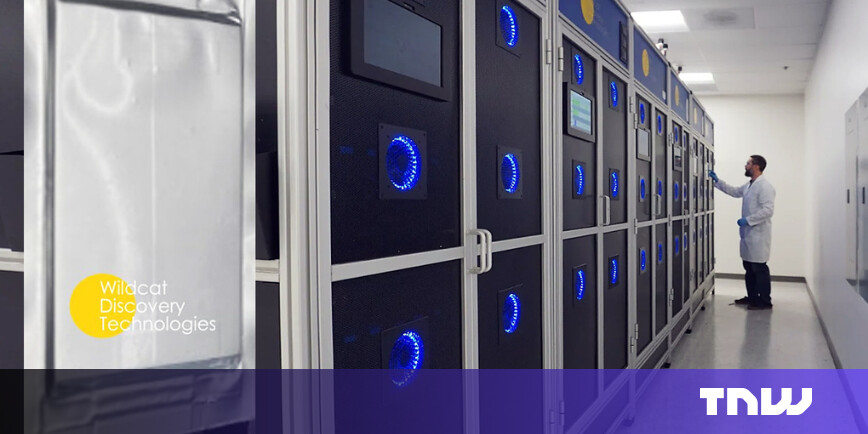
Wildcat Discovery Technologies brings to the table what many consider the gold standard in battery materials discovery: their High Throughput Platform (HTP). This sophisticated system can synthesize and screen thousands of material combinations simultaneously, identifying optimal battery chemistries up to ten times faster than conventional research methods.
The platform’s power lies in its ability to generate massive datasets—terabyte-scale, structured materials data that machine learning models can actually use effectively. This isn’t just about running more experiments; it’s about running the right experiments and learning from them at an unprecedented scale.
Wildcat’s approach is rooted in combinatorial chemistry, a methodology originally developed for pharmaceutical drug discovery. The company was founded by Prof. Peter Schultz, one of the world’s foremost pioneers of this technique. Schultz, who holds the Wolf Prize in Chemistry and is a member of the National Academy of Sciences, has spent decades refining the application of high-throughput methods to materials science.
The Combined Vision: From Molecule to Market
When asked about the acquisition, Ingvarsson was unequivocal about Wildcat’s capabilities: “Wildcat is today the world leader, hands down the best in the world, in battery chemistry. They have focused for 18 years on battery chemistry and become world leaders in anodes, cathodes, electrolytes, and essentially everything around a battery.”
The vision for the combined entity is ambitious: a seamless pipeline that runs from molecular discovery all the way to pilot-scale production. This integration could potentially compress development timelines from years to months, allowing battery manufacturers to rapidly iterate on new chemistries and bring innovations to market faster than ever before.
The Financial Structure and Backing
The $73 million deal is structured as a mix of cash, equity, and deferred milestone payments, reflecting the strategic importance Holyvolt places on this acquisition. The transaction follows Holyvolt’s €20 million funding round, which was specifically designed to finance this deal.
Holyvolt raised approximately €12 million at a €182 million valuation in February, building on an earlier round of around €5.5 million. The company’s investors include Volvo, climate tech VC Course Corrected, and FAM (the investment arm of Sweden’s Wallenberg family), indicating strong backing from both industrial and financial partners.
The Intellectual Heritage: Prof. Peter Schultz’s Legacy
The intellectual foundation of this acquisition traces back to Prof. Peter Schultz’s pioneering work in combinatorial chemistry. Schultz founded Symyx Technologies to apply high-throughput methods to materials science before launching Wildcat specifically for battery applications.
His vision for the combined entity is equally ambitious: “With Holyvolt, we can do for batteries what high throughput and AI have done for drug discovery.” This statement captures the transformative potential of the merger—applying the same methodological rigor and scale that revolutionized pharmaceutical development to the energy storage industry.
The Global Footprint and Market Strategy
The combined entity will operate from offices in Stockholm, Munich, and San Diego, creating a truly international presence in the battery technology space. The company plans to serve customers across the battery supply chain through both technology development partnerships and licensing arrangements.
This multi-pronged approach to market entry is crucial. Rather than attempting to compete directly with established battery manufacturers, Holyvolt and Wildcat are positioning themselves as enablers of innovation—providing the tools and technologies that will allow others to develop better batteries faster.
The Technical Challenge Ahead
While the combined technology stack is compelling, significant technical challenges remain. The integration of Wildcat’s discovery platform with Holyvolt’s manufacturing process will require careful calibration to ensure that materials discovered through high-throughput screening can actually be produced at scale using water-based methods.
Moreover, the battery industry is notoriously conservative when it comes to adopting new technologies, particularly for applications where safety and reliability are paramount. Convincing established manufacturers to adopt these new approaches will require not just technical superiority but also proven track records and compelling economic cases.
The Competitive Landscape
Holyvolt’s acquisition comes at a time when the battery industry is experiencing unprecedented investment and innovation. Companies across the globe are racing to develop next-generation batteries with higher energy density, faster charging times, and lower costs.
What sets this acquisition apart is its focus on the discovery-to-production pipeline rather than any single technology. By addressing the fundamental bottleneck in battery innovation, Holyvolt and Wildcat are attempting to create a platform play rather than a product play—potentially positioning themselves as indispensable infrastructure for the entire industry.
The Road Ahead: Questions and Opportunities
The success of this merger will ultimately depend on execution. Can the combined entity effectively integrate two sophisticated technology platforms? Can they translate their capabilities into commercial contracts and partnerships? And perhaps most importantly, can they deliver on the promise of dramatically accelerated battery development timelines?
The next few years will be critical in answering these questions. If successful, this acquisition could represent a watershed moment in battery technology—one that accelerates the clean energy transition by making better batteries available faster and at lower cost.
Tags: #BatteryTechnology #CleanEnergy #Holyvolt #WildcatDiscovery #BatteryManufacturing #HighThroughput #CombinatorialChemistry #EnergyStorage #Volvo #ClimateTech #SwedishInnovation #SanDiegoTech #MaterialsScience #BatteryInnovation #TechAcquisition #SustainableManufacturing #CleanEnergyTransition #BatteryMaterials #TechNews #EnergyTech
Viral Phrases:
– “Revolutionizing battery manufacturing from molecule to market”
– “The missing link between battery discovery and production”
– “Holyvolt’s $73M bet on accelerating the clean energy transition”
– “Combinatorial chemistry meets water-based manufacturing”
– “From lab bench to pilot scale in record time”
– “The pharmaceutical approach to battery innovation”
– “Volvo-backed startup’s bold acquisition strategy”
– “High throughput discovery meets scalable manufacturing”
– “Closing the valley of death in battery development”
– “Terabyte-scale materials data meets screen-printing technology”
– “The future of batteries is being built in Stockholm, Munich, and San Diego”
– “Accelerating innovation in the slow-moving battery industry”
– “From Wolf Prize-winning research to commercial reality”
– “The platform play that could transform energy storage”
– “Water-based processing: the green revolution in battery manufacturing”
– “Screen-printing techniques borrowed from electronics”
– “18 years of battery chemistry expertise acquired”
– “The $73M merger that could compress battery development from years to months”
– “Enabling the next generation of battery innovations”
– “The intellectual heritage of Prof. Peter Schultz’s combinatorial chemistry”,

Leave a Reply
Want to join the discussion?Feel free to contribute!