
Homebrew Computer Club holds 1st meetup: Today in Apple history
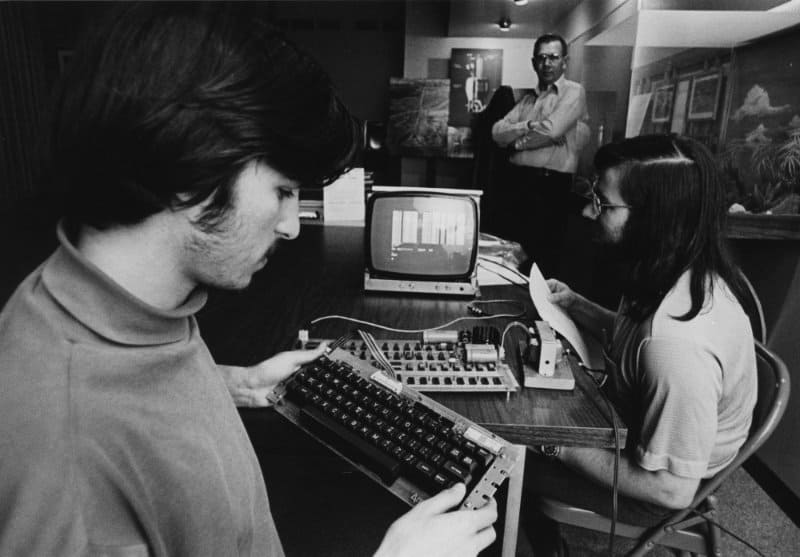
The Homebrew Computer Club: The Unlikely Gathering That Ignited the Personal Computing Revolution
On March 3, 1975, in a modest garage in Menlo Park, California, a group of technology enthusiasts gathered for what would become one of the most pivotal meetings in computing history. The Homebrew Computer Club, born from the vision of Fred Moore and Gordon French, wasn’t just another hobbyist gathering—it was the spark that would eventually ignite the personal computing revolution and change the world forever.
The Perfect Storm of Innovation
The timing couldn’t have been more fortuitous. The computing world was buzzing with excitement over the Altair 8800, a kit computer that had recently captured the imagination of tech enthusiasts everywhere. This wasn’t just another piece of hardware; the Altair 8800 represented something revolutionary—the democratization of computing power that had previously been confined to massive, expensive mainframes accessible only to corporations and universities.
For the first time, ordinary people could own a computer. Not just any computer, but one that could be built, modified, and understood by its owner. This was revolutionary thinking in an era when computers were still mysterious, room-sized machines that most people had never seen, let alone touched.
The Garage That Changed Everything
The first meeting took place in French’s garage, but this wasn’t your typical Silicon Valley startup story. These weren’t venture capitalists or business executives; they were computer geeks, electronics hobbyists, and curious minds who saw the potential in this new technology. They were people who would stay up all night soldering circuits, debugging code, and dreaming about what computers could become.
The atmosphere was electric with possibility. Members brought their projects, shared their discoveries, and debated the future of computing with a passion that would seem excessive to outsiders. But to them, this wasn’t excessive—it was necessary. They were building the future, one circuit board at a time.
Steve Wozniak: The Heart of Homebrew
Among the attendees was a young engineer named Steve Wozniak, whose passion for computers would make him the beating heart of the Homebrew Computer Club. Unlike his future business partner Steve Jobs, Wozniak was the quintessential computer geek—someone who lived and breathed technology, who understood computers at their most fundamental level, and who saw beauty in their elegant design.
Wozniak attended that very first meeting, and it changed his life. The energy, the shared passion, the collective intelligence in that garage inspired him to build something extraordinary. He wasn’t thinking about starting a company or making millions; he was thinking about proving that affordable, powerful computing was possible for ordinary people.
The Birth of an Idea
Wozniak’s vision was clear: create a computer that was both affordable and powerful enough to be genuinely useful. He wanted to show the Homebrew community that you didn’t need to spend thousands of dollars to own a real, programmable computer. With just a few chips, he believed he could create something that would rival the capabilities of much more expensive machines.
This wasn’t just about building hardware; it was about proving a point. Wozniak wanted to demonstrate that the future of computing belonged to the people, not just to corporations with deep pockets. His approach was fundamentally democratic—he planned to share his designs with the club, allowing others to build their own versions and contribute to the collective knowledge.
The Apple Connection
The story might have ended there if not for Steve Jobs’ intervention. Jobs, who was less technically inclined but possessed an extraordinary business sense, saw something that Wozniak hadn’t fully considered: commercial potential. Jobs convinced his friend that instead of giving away the designs, they should build and sell the computer themselves.
This was the moment that would change everything. Jobs’ business acumen combined with Wozniak’s technical genius created a partnership that would revolutionize not just computing, but multiple industries. Their collaboration at Homebrew laid the groundwork for what would become Apple Computer.
The Byte Shop Deal
Jobs’ persuasion led to one of the most important business deals in tech history. He negotiated an order with The Byte Shop, one of the first computer stores in the world, for 50 assembled computers at $500 each. This was astonishing—Jobs had secured a $25,000 order without any capital, without a finished product, and without any guarantee that they could actually deliver.
But deliver they did. Working out of Jobs’ parents’ garage (yes, another garage), they built the Apple I computers by hand. This wasn’t just a business venture; it was a testament to their determination and belief in what they were building. They weren’t just making computers; they were making history.
The Club’s Evolution
As the Homebrew Computer Club grew, it moved from French’s garage to the much larger Stanford Linear Accelerator Center. The meetings became more sophisticated, attracting more members and generating more innovative ideas. The club became a breeding ground for technological innovation, with members sharing knowledge, collaborating on projects, and pushing the boundaries of what was possible with personal computers.
The club’s influence extended far beyond Apple. Many other tech companies and innovations can trace their roots back to Homebrew meetings. It was a community that fostered creativity, encouraged experimentation, and celebrated the joy of building something new.
The End of an Era
The Homebrew Computer Club officially disbanded in 1977, the same year Apple was incorporated. By then, the personal computing revolution was well underway. What had started as a small gathering of hobbyists had helped create an entirely new industry.
But the club’s legacy lived on. The spirit of collaboration, the sharing of knowledge, and the belief that technology should be accessible to everyone continued to influence the tech industry for decades to come. Many of the principles that guided Homebrew—openness, collaboration, and the democratization of technology—would become foundational to the internet age.
The Reunion
In 2013, the club held a reunion that brought together many of the original members. Seeing these pioneers together again was a powerful reminder of how a small group of passionate individuals could change the world. Steve Wozniak, of course, was there, along with other luminaries who had been part of this extraordinary community.
The reunion wasn’t just a nostalgic gathering; it was a celebration of the enduring impact of the Homebrew philosophy. These were people who had dared to imagine a different future, who had worked tirelessly to make that future a reality, and who had succeeded beyond their wildest dreams.
Tags & Viral Phrases:
- How a garage meeting changed the world
- The birth of Apple and personal computing
- Steve Wozniak’s journey from geek to legend
- Silicon Valley’s original startup story
- The club that launched a trillion-dollar industry
- When computers belonged to the people
- The moment Steve Jobs saw the future
- Why Homebrew still matters today
- The hackers who built Apple
- From garage to global domination
- The unsung heroes of tech history
- How passion beats money every time
- The blueprint for every tech startup
- When innovation was about sharing, not patents
- The meeting that made billionaires
- Why Silicon Valley started in a garage
- The real story behind Apple’s success
- How geeks became millionaires
- The community that built the future
- When technology was still magical
,

Leave a Reply
Want to join the discussion?Feel free to contribute!