
How Did This River ‘Flow Uphill’? Geologists May Finally Have an Answer : ScienceAlert
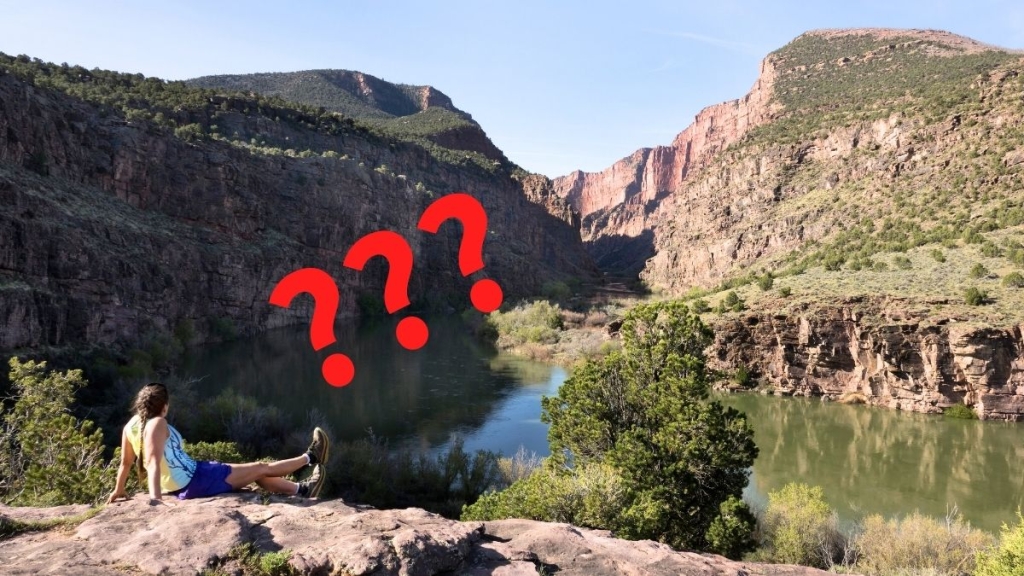
For more than a century, the Green River’s course through the Uinta Mountains in northeastern Utah has been one of geology’s most enduring head-scratchers — a literal case of water defying gravity. Rivers, by their very nature, flow downhill, tracing the contours of the land over millions of years. Yet here, the Green River cuts across a 50-million-year-old mountain range, carving the 700-meter-deep Canyon of Lodore perpendicular to the peaks themselves. It’s a geological oddity that seems to break every rule — until now.
A team led by geologist Adam Smith from the University of Glasgow has uncovered the hidden mechanism behind this anomaly. The answer? The mountain range literally dropped out from under the river, thanks to a phenomenon known as lithospheric dripping.
Picture this: deep beneath the Uinta Mountains lies the lithosphere, Earth’s rigid outer shell. At its base, a dense chunk of mineral-rich rock became so heavy that it began to sag into the planet’s molten mantle — like a dense blob of honey slowly dripping off a spoon. As this “drip” descended, it pulled the overlying crust downward with it, temporarily lowering the entire mountain range. The Green River, flowing along its ancient course, simply continued on its path, oblivious to the geological sleight of hand happening beneath it.
But the story doesn’t end there. Once the drip broke free from the lithosphere — somewhere between 2 and 5 million years ago — the Uinta Mountains began to rebound, rising by as much as 400 meters. By then, the Green River had already etched its improbable path, and the Canyon of Lodore was locked in place, a permanent scar across the range.
The evidence for this dramatic process comes from cutting-edge seismic imaging. By analyzing how earthquake vibrations scatter through Earth’s interior, Smith and his team detected a cold, round anomaly about 200 kilometers below the surface — almost certainly the remnants of the drip. What’s more, the crust beneath the Uintas is unusually thin, further supporting the idea that a massive chunk of it had torn away and sunk into the mantle.
This isn’t just a quirky footnote in geology. The merging of the Green and Colorado Rivers millions of years ago had far-reaching consequences. It redefined the continental divide of North America, creating the boundary between rivers flowing to the Pacific and those heading to the Atlantic. It also reshaped ecosystems, influencing the evolution of wildlife by altering habitats and migration patterns.
As Smith puts it, “The merging of the Green and Colorado Rivers millions of years ago altered the continental divide of North America. It created the line that separates the rivers that flow into the Pacific from those that flow into the Atlantic, and created new habitat boundaries for wildlife that influenced their evolution.”
The study, published in the Journal of Geophysical Research: Earth Surface, not only solves a long-standing geological mystery but also highlights the dynamic, ever-changing nature of our planet. Earth’s surface is not static; it’s a living, breathing entity, constantly reshaping itself in ways both subtle and spectacular.
So the next time you marvel at a river cutting through a mountain, remember: it’s not magic, it’s just Earth doing what it does best — defying expectations, one drip at a time.
Tags & Viral Phrases:
- Green River mystery solved
- Lithospheric drip phenomenon
- Geology’s greatest head-scratcher
- How rivers defy gravity
- Earth’s crust is dripping
- Uinta Mountains’ hidden secret
- Seismic imaging reveals Earth’s secrets
- Continental divide redefined
- Wildlife evolution shaped by rivers
- Earth’s dynamic surface
- 700-meter-deep Canyon of Lodore
- Adam Smith’s groundbreaking discovery
- How mountains can literally drop
- The science behind Earth’s weirdest rivers
- Why the Green River cuts across mountains
- Lithosphere, mantle, and mountain magic
- Geological sleight of hand
- Earth’s living, breathing surface
- Rivers that rewrite history
- The drip that changed everything
,


Leave a Reply
Want to join the discussion?Feel free to contribute!