
how emotion recognition algorithms are moving into wearables and industry applications · TechNode
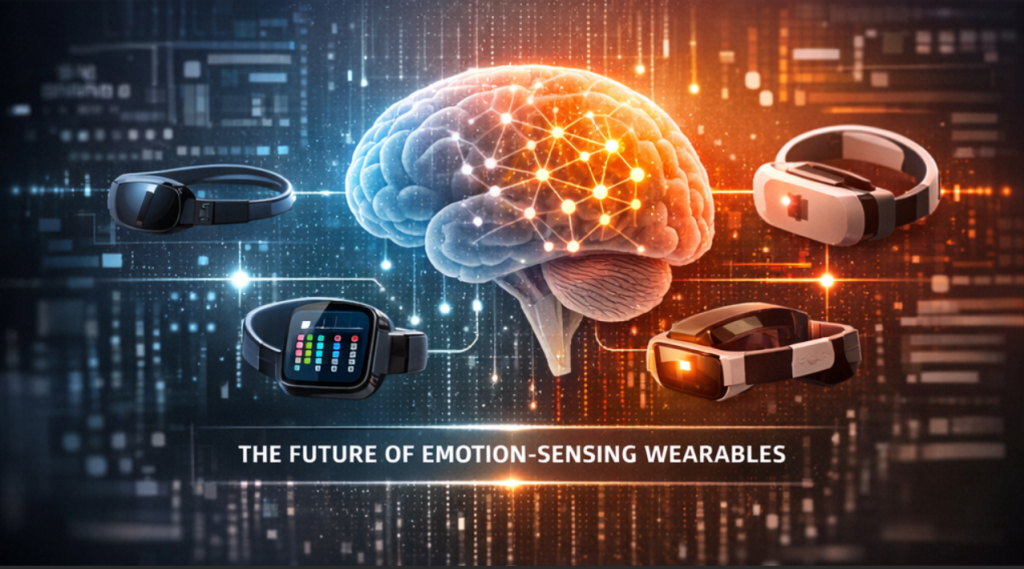
Shenzhen Bi’an Mind Technology: Pioneering Emotion AI for a New Era of Human-Computer Interaction
In the heart of Shenzhen’s bustling tech ecosystem, a young company is quietly revolutionizing how we interact with machines—by teaching them to sense our feelings. Founded in 2021, Shenzhen Bi’an Mind Technology is at the forefront of emotion recognition, blending cutting-edge AI with smart wearable tech to create devices that can actually feel what we’re feeling. With applications spanning healthcare, education, and high-risk industries, Bi’an Mind is not just building gadgets—it’s crafting a future where technology responds to our emotional states as naturally as it does to our touch.
The Science Behind the Sentiment: Autonomic Nervous System Meets AI
At the core of Bi’an Mind’s innovation is a deceptively simple idea: emotions leave a trail in our bodies. By tapping into the autonomic nervous system—the part of our biology that controls heart rate, breathing, and stress responses—the company’s proprietary AI algorithms can decode emotional states from physiological signals like heart rate variability (RRI) and breathing rate.
This isn’t about reading facial expressions or analyzing tone of voice. Instead, Bi’an Mind’s technology focuses on continuous, real-time monitoring that’s less prone to cultural bias or deliberate manipulation. Using the Valence-Arousal model, the system can classify emotions such as anger, sadness, anxiety, and happiness, offering a window into our inner world that’s both subtle and powerful.
But here’s the catch: while the science is compelling, the real test lies in scalability and accuracy across diverse populations. Can these algorithms truly understand the emotional nuances of a global user base? That’s the next frontier.
From Lab to Wrist: The Smart Emotion Watch
Bi’an Mind’s flagship product, the smart emotion watch, brings this technology to life. More than just a fitness tracker, it’s a 24/7 emotional companion. By continuously monitoring heart rate variability and other signals, it tracks your mood, stress, and energy levels, presenting the data in intuitive visual reports.
But it doesn’t stop at monitoring. The watch also offers mindfulness exercises and psychological assessments, creating a feedback loop that helps users actively manage their emotional wellbeing. Imagine getting a gentle nudge to breathe deeply when your stress levels spike, or receiving a weekly summary that helps you spot patterns in your mood.
Of course, the challenge is real: will users stick with it? Emotional data is deeply personal, and long-term engagement hinges on trust, usability, and clear value. Plus, the effectiveness of interventions like guided breathing or mood tracking is still being quantified—a crucial step for mainstream adoption.
Beyond the Individual: Group Emotion Monitoring for Organizations
For institutions, Bi’an Mind offers the emotion screening and early warning system, a powerful tool for monitoring group emotional health. Targeted at healthcare providers, schools, and high-risk industries like nuclear power and mining, the system generates metrics such as stress indices and autonomic nervous system balance reports.
When emotional anomalies are detected—say, a sudden spike in stress among workers—the system can trigger real-time alerts, enabling swift intervention. In practice, these tools act as decision-support systems, helping managers and administrators make informed choices about safety, workload, and wellbeing.
But here’s where things get tricky: emotion data is highly sensitive. Effective use requires not just technical accuracy, but also robust privacy safeguards and clear ethical guidelines. The value of these insights depends on how responsibly they’re collected, interpreted, and acted upon.
Transforming Industries: From Classrooms to Coal Mines
Bi’an Mind’s technology is already making waves across multiple sectors. In education, wearable devices help monitor teachers’ emotional fluctuations, offering data that can inform training programs and optimize job assignments. In high-risk industries, the tech tracks workers’ fatigue and stress, adding an extra layer of safety to critical operations.
In healthcare, partnerships with mental health platforms allow for long-term data tracking of patients with depression and anxiety, giving clinicians new tools to assess treatment outcomes. This is where the stakes are highest: emotion data in medical contexts must be handled with the utmost care, balancing innovation with patient rights and regulatory compliance.
The Bigger Picture: Emotion AI as the Next Frontier of Human-Computer Interaction
Looking ahead, Bi’an Mind’s work is part of a broader shift in technology: emotion recognition is moving from a nice-to-have feature to a core element of human-computer interaction. No longer just about making devices smarter, it’s about making them more human.
This evolution raises profound questions. How much should our devices know about our feelings? What are the limits of emotional data use? And how can industries collectively define the value—and the risks—of this new frontier?
For Bi’an Mind, the journey is just beginning. As their algorithms grow more sophisticated and their applications more widespread, the company is poised to shape not just the future of wearables, but the very way we relate to technology itself.
Tags: #EmotionAI #WearableTech #BiAnMind #AIAlgorithms #MentalHealthTech #SmartWearables #EmotionalIntelligence #TechInnovation #HealthcareTech #EducationTech #HighRiskIndustries #HumanComputerInteraction #AIEmotionRecognition #FutureOfTech #TechNews #ViralTech #BreakingNews #TrendingNow #TechRevolution #NextGenAI
Viral Sentences:
- “Your watch just read your mind—literally.”
- “Tech that feels your feelings? Welcome to the future.”
- “From classrooms to coal mines, emotion AI is everywhere.”
- “The next big thing in tech isn’t speed—it’s empathy.”
- “Can a device really understand your emotions? Shenzhen says yes.”
- “Emotion AI: The invisible layer transforming human-computer interaction.”
- “Wearables are getting personal—very personal.”
- “The future of tech is not just smart, it’s sensitive.”
- “Your stress levels just became data. What happens next?”
- “Emotion recognition: The new frontier in AI ethics and innovation.”
,


Leave a Reply
Want to join the discussion?Feel free to contribute!