
How much wildfire prevention is too much?
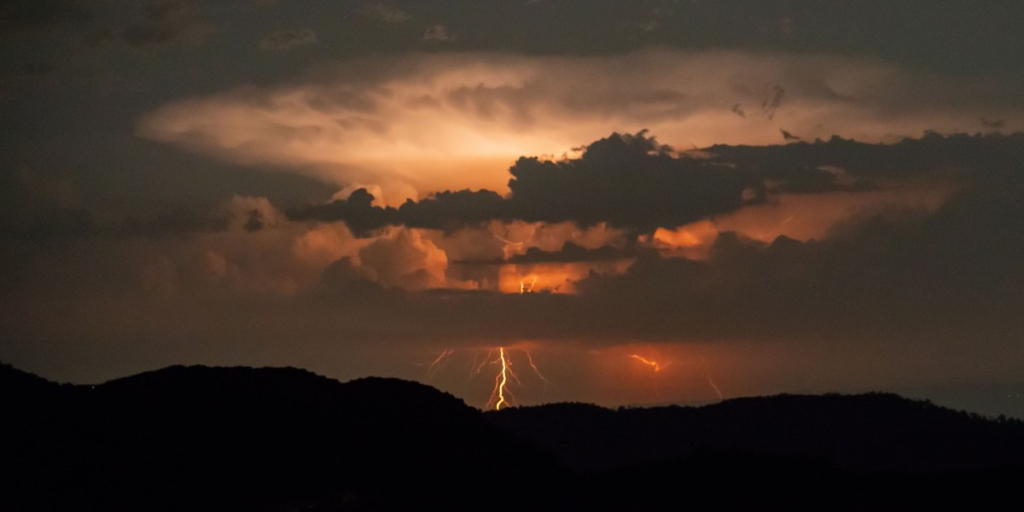
A groundbreaking startup claims it can stop lightning before it strikes—and in doing so, prevent the catastrophic wildfires that have become all too common across the globe. The bold promise comes from Skyward Wildfire, a company that says it has developed a method to neutralize lightning before it can ignite the dry brush and forests that fuel today’s megafires. But as with any revolutionary technology, there are more questions than answers.
Lightning is, at its core, a massive static discharge—essentially the same phenomenon as when you shuffle your socks on a carpet and then touch a doorknob, only on a much larger and more powerful scale. In nature, lightning forms when ice particles and tiny ice pellets called graupel collide and rub together in storm clouds. This friction builds up a charge, and when the difference becomes great enough, the energy is released as a bolt of lightning. For decades, scientists have wondered if it might be possible to intervene in this process.
Starting in the 1950s, researchers began experimenting with ways to prevent lightning from striking. One of the most intriguing ideas involved using metallic chaff—fiberglass strands coated with aluminum—to act as a conductor and dissipate the static charge before it could build up enough to cause a strike. The military had already been using similar materials to disrupt radar signals, so the concept had some precedent. The theory was sound: by providing an alternative path for the electrical charge to travel, you could theoretically reduce or even prevent lightning strikes.
However, the results have been mixed. Some studies suggest that you would need extremely high concentrations of chaff to effectively prevent lightning, and early field tests were often small in scale. To date, there is little public information about Skyward Wildfire’s efforts. The company has not released data from its field trials, nor has it published any peer-reviewed papers detailing its methods or results. This lack of transparency has left many experts skeptical about whether the technology can truly deliver on its promises.
Even if Skyward Wildfire’s method works as advertised, a more fundamental question arises: Should we use it? Lightning-caused fires are indeed a growing concern, especially as climate change accelerates. Research has shown that lightning strikes have substantially increased in the Arctic boreal region, where warming is happening fastest. These fires can be devastating, releasing vast amounts of carbon stored in permafrost and threatening communities.
But fire is not inherently bad. Many ecosystems, particularly in the American West, evolved to burn. Fire plays a crucial role in clearing out dead vegetation, recycling nutrients, and creating habitat for certain species. The catastrophic wildfires we see today are often the result of a combination of climate-fueled conditions and decades of fire suppression policies that have allowed fuel to build up. When fires do start, they burn hotter and more destructively than they would have in the past.
So, the idea of preventing lightning-sparked fires is both tantalizing and troubling. On one hand, it could save lives, property, and ecosystems from the worst effects of uncontrolled burns. On the other, it raises the specter of unintended consequences—what happens when we disrupt a natural process that has shaped landscapes for millennia?
As James Temple, a colleague of mine, points out in his recent deep dive into this topic, there is still much uncertainty about how well this technology would work and under what conditions. The history of weather modification is littered with bold claims and dashed hopes. While the science behind lightning prevention is intriguing, the real-world application remains unproven.
For now, the most responsible approach may be to continue researching and testing these methods while also investing in proven strategies like controlled burns, forest management, and community preparedness. Technology alone is unlikely to solve the wildfire crisis, but it could be one tool in a broader toolkit.
As we grapple with the realities of a warming world, it’s worth remembering that some of the most effective solutions are those that work with nature, rather than against it. Whether or not we can stop lightning, the challenge remains: how do we live with fire in a way that is safe, sustainable, and respectful of the natural world?
Tags: lightning prevention, wildfire technology, climate change, static discharge, metallic chaff, Skyward Wildfire, fire ecology, Arctic boreal fires, weather modification, controlled burns, forest management, community preparedness, megafires, carbon emissions, natural processes, unintended consequences, scientific skepticism, technological innovation, ecosystem health, environmental policy
Viral phrases:
– “Stop lightning before it strikes”
– “The bold promise of wildfire prevention”
– “Nature’s static discharge”
– “Fire isn’t the enemy—it’s part of the cycle”
– “Can we really control the weather?”
– “The science of stopping lightning”
– “A tool in the wildfire toolkit”
– “Living with fire in a warming world”
– “The future of fire management”
– “Revolutionary or risky?”,


Leave a Reply
Want to join the discussion?Feel free to contribute!