
How to Film ICE | WIRED
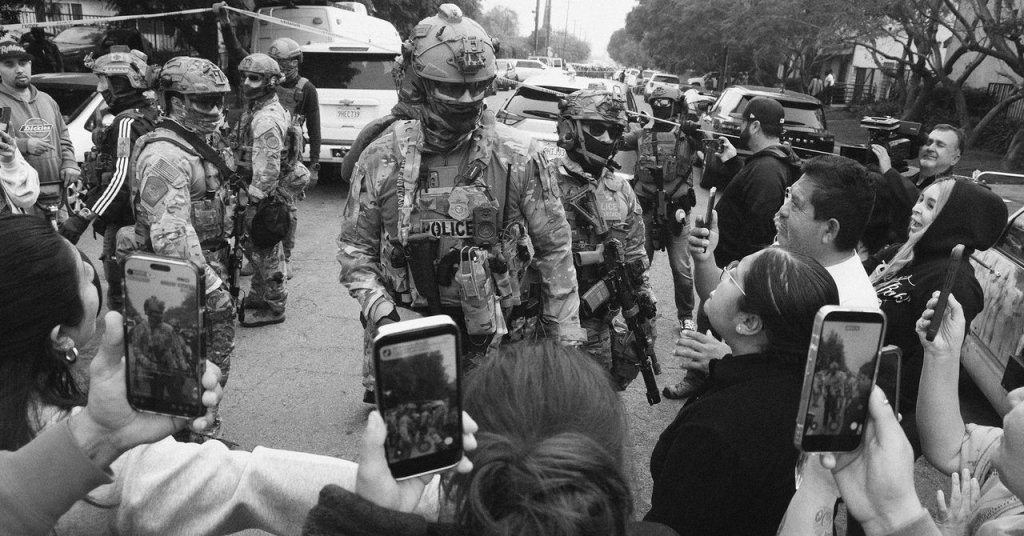
The Deadly Paradox of Filming ICE: How Video Became Both a Weapon and a Target in America’s Immigration Crackdown
In January 2026, a chilling reality unfolded on the streets of Minneapolis that would crystallize the deadly paradox facing Americans who dare to document federal immigration enforcement: two lives were extinguished simply for pointing cameras at ICE agents.
Renee Nicole Good was fulfilling her role as a legal observer, her wife capturing footage of federal immigration agents conducting operations in their community. Alex Pretti stood nearby, his phone in hand, filming the very agents who would moments later take his life. Yet in a bitter twist of fate, it was precisely this video documentation—captured by multiple witnesses—that would later expose the truth of what happened and begin to hold federal agents accountable for their actions.
This is the impossible position that millions of Americans now find themselves in as they grapple with how to resist—and record—ICE’s expanding presence in cities across the country. The act of observation has become increasingly dangerous, with federal agents actively targeting those who document their activities, even as video evidence remains one of the few tools capable of piercing through official narratives and exposing misconduct.
“Unfortunately, there is no way to film ‘safely’ right now—I think everybody may be taking a risk because of how aggressive and brazen and outright illegal ICE’s conduct has been,” explains Trevor Timm, cofounder and executive director of Freedom of the Press Foundation. (Disclosure: WIRED’s global editorial director sits on Freedom of the Press Foundation’s board.) “Alex Pretti was killed in part because he was filming ICE, which is an absolute travesty. But we saw that shooting from half a dozen angles because there were other people there who were filming as well. And because they were filming, we saw the egregious lies that the Trump administration was spreading almost immediately.”
This tension between documentation and danger has been building for more than two decades, ever since smartphones became ubiquitous and transformed video recording from a specialized activity into a tool accessible to anyone with a mobile device. What began as a way to capture everyday moments has evolved into a pivotal instrument for activists, journalists, and concerned citizens seeking to expose injustice and shape political discourse.
In the United States, however, people who openly film with cameras or smartphones are increasingly being targeted by federal agents, despite the First Amendment’s clear protection of the right to record government operations in public spaces. This constitutional right has come under unprecedented assault as immigration enforcement operations have escalated nationwide.
The Trump administration has been particularly aggressive in attempting to criminalize documentation of federal agents. In July, Department of Homeland Security secretary Kristi Noem went so far as to label the act of recording federal agents as “violence” during a public appearance. “It is doxing them. It is videotaping them where they’re at,” she claimed, despite the fact that the First Amendment explicitly protects such activities.
This position has been echoed by other administration officials. DHS spokesperson Tricia McLaughlin told WIRED in a statement that “videoing our officers in an effort to dox them and reveal their identities that is a federal crime and a felony.” The administration has maintained this position despite the glaring contradiction that, by DHS’s own questionable definition, ICE agents are essentially “doxing” themselves through their own operations and public presence.
This rhetoric represents a direct and dangerous threat to anyone recording ICE agents, whether they’re legal observers, activists, or professional journalists, says Jackie Zammuto, associate director at Witness, a nonprofit dedicated to using video to fight human rights violations. “Video documentation has the power to expose abuses, to help call for accountability, and to challenge official narratives,” Zammuto explains. “At the same time, we’re absolutely seeing an increase of documenters being targeted—including journalists who are marked as journalists—even when they’re doing it legally, even when they’re respecting orders from the police. It is a massive risk, and I think that it’s important for people to weigh that risk and their own comfort in taking it.”
Yet Zammuto also emphasizes that there are practical steps people can take to protect themselves while still exercising their right to document. “There are ways to be safer, to consider your own security and also the security of those around you,” she notes.
Before You Film: Digital Security in the Age of Surveillance
When planning to film ICE or Customs and Border Protection agents—or more generally, to record events at a protest—using an alternative or burner phone can significantly help protect your privacy and that of those around you. However, achieving complete anonymity in today’s surveillance environment is increasingly difficult. Immigration officials have developed vast surveillance capabilities that extend far beyond traditional monitoring.
Federal agencies have built sophisticated systems for tracking and monitoring populations, including purchasing vast troves of online advertising data, deploying surveillance drones along border regions and in urban areas, tapping into extensive license plate reader networks, and accessing systems capable of monitoring mobile phones across entire neighborhoods simultaneously. These capabilities mean that even careful documenters may leave digital traces that could potentially be traced back to them.
Beyond these widespread surveillance capabilities, the direct seizure of your phone by ICE or Border Patrol agents poses additional digital security risks. If you’re detained and officials take your device, they may attempt to extract data from it, potentially accessing not just your documentation but also your contacts, messages, location history, and other sensitive information.
If you do bring your personal device to a protest or to document ICE activities, there are several crucial security measures you should implement beforehand. First and most importantly, turn off all biometric unlocking systems—disable Face ID, fingerprint recognition, and any other biometric authentication methods. Instead, secure your device with a strong password or PIN code.
This distinction matters because the legal landscape around device access is complex and often contradictory. Officials must have a warrant or court order to demand a PIN or passcode from you, as these are considered testimony protected by the Fifth Amendment. However, it is legally easier for them to compel you to unlock your device using a biometric identifier like a fingerprint or facial recognition, as courts have sometimes treated these as physical evidence rather than testimonial.
Additional preparatory steps include backing up any existing data on your device, removing unnecessary personal information, and considering using encrypted messaging apps for communication before and after the event. Some activists also recommend enabling airplane mode when not actively recording to prevent real-time tracking, though this means you won’t be able to livestream or immediately share footage.
The decision to document ICE activities ultimately requires careful consideration of both the potential impact of your documentation and the very real risks to your personal safety and digital security. As the events in Minneapolis tragically demonstrated, the simple act of pointing a camera at federal agents has become increasingly dangerous. Yet as multiple angles of Alex Pretti’s killing showed, video documentation remains one of the most powerful tools citizens have to expose the truth and demand accountability in an era of expanding government surveillance and enforcement powers.
The paradox remains unresolved: documenting ICE may put you at risk, but failing to document may allow abuses to continue unchecked. Each person must weigh these competing considerations and decide their own level of acceptable risk in the pursuit of accountability and justice.
tags
ICE surveillance, documenting federal agents, First Amendment rights, digital privacy, burner phones, biometric security, immigration enforcement, legal observation, protest safety, government accountability, video documentation, Trump administration policies, DHS surveillance capabilities, digital security tips, constitutional rights, activism in the digital age, witness protection, border patrol monitoring, mobile phone security, livestreaming protests
viral_sentences
- “Videoing ICE agents has become the most dangerous form of journalism in America”
- “Your smartphone might be the only thing standing between truth and government lies”
- “In 2026, pointing a camera at federal agents could cost you your life”
- “The First Amendment is being rewritten by those who swore to protect it”
- “Documenting ICE is now considered ‘violence’ by the same government that claims to support free speech”
- “Your phone’s fingerprint scanner might be the key that unlocks your entire digital life to federal agents”
- “ICE is building a surveillance state while calling citizens criminals for simply recording the truth”
- “The camera has become the new protest sign—and it’s drawing bullets”
- “In America today, the most powerful weapon against government overreach fits in your pocket”
- “When the government fears cameras more than accountability, democracy is in danger”
,


Leave a Reply
Want to join the discussion?Feel free to contribute!