
How to make your e-commerce product visible to AI agents? Use this new system trusted by L’Oréal, Unilever, Mars & Beiersdorf
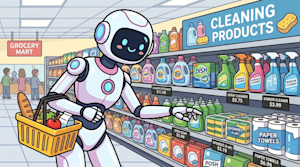
The Dawn of Agentic Commerce: How Azoma’s AMP Protocol is Rewriting the Rules of E-Commerce
In a world where artificial intelligence agents are rapidly becoming the primary shoppers for consumers, the landscape of e-commerce is undergoing a seismic transformation. The traditional paradigm of human-driven online shopping is giving way to a new era where AI agents research, compare, and even purchase products on behalf of their human counterparts. This shift isn’t just theoretical—Morgan Stanley’s research suggests that by 2030, agentic commerce could account for 10-20% of all U.S. commerce spend, translating to a staggering $190 billion to $385 billion in market value.
Enter Azoma, a four-year-old startup that’s positioning itself at the forefront of this revolution with its groundbreaking Agentic Merchant Protocol (AMP). This new framework isn’t just another technological innovation—it’s a fundamental reimagining of how brands interact with the AI-driven marketplace.
Breaking Free from the Black Box: The Problem AMP Solves
The current state of e-commerce for AI agents is akin to the Wild West. When an AI agent is tasked with finding the perfect product for a consumer, it often scours the internet, pulling data from various sources—some verified, many not. This creates what industry insiders call the “black box” problem: brands lose control over how their products are represented, and consumers receive potentially inaccurate or inconsistent information.
AMP addresses this by serving as a “system of record” for product information. Instead of brands manually updating product details across countless platforms—Amazon, Walmart, Google Shopping, and countless others—they can now centralize all their product intelligence in one place. This includes not just basic product information but also legal guardrails, brand guidelines, and compliance requirements.
The Technical Architecture: More Than Just Data Distribution
At its core, AMP is designed to be agent-agnostic, meaning it works seamlessly across different AI platforms and marketplaces. The protocol includes several key components:
Canonical Machine-Native Catalogues: These are data structures specifically designed for Large Language Model (LLM) ingestion, enriched with persona-level signaling that helps AI agents understand not just what a product is, but who it’s for and why it matters.
Programmatic Open Web Distribution: This ensures that the data AI agents find on the open web matches the brand’s official documentation, eliminating the inconsistencies that plague current systems.
Agent-Agnostic Infrastructure: By avoiding vendor lock-in, brands can interface with any AI assistant or marketplace agent, future-proofing their e-commerce strategy.
Performance Visibility: Brands gain unprecedented insight into how AI agents “weigh” specific product attributes and can verify compliance across the entire ecosystem.
Early Adoption and Real-World Impact
The protocol has already seen remarkable adoption among consumer goods giants. L’Oréal, Unilever, Mars, Beiersdorf, and Reckitt have all moved quickly to implement AMP, recognizing the urgency of maintaining brand control in an AI-driven marketplace.
The results speak for themselves. Ruroc, a helmet manufacturer, has seen its site traffic from ChatGPT increase 14-fold, positioning them as the #1 recommended ski helmet brand in target geographies. Other clients have seen their share of mentions within retail agents like Amazon Rufus increase by 5x, with optimized content demonstrating conversion lifts of up to 32% in split-testing.
For rapidly growing firms like Perfect Ted, this visibility contributed to a +532% year-over-year revenue increase—a testament to the protocol’s transformative potential.
The Team Behind the Revolution
Azoma’s leadership team brings together the perfect blend of retail expertise and AI innovation. CEO Max Sinclair spent six years at Amazon, where he spearheaded the customer browse experience for the Singapore launch and managed the expansion of Amazon Grocery throughout the European Union. This firsthand experience with the limitations of static listings in a dynamic market informed AMP’s development.
CTO Timur Luguev, a Fulbright Scholar and ERCIM Fellow with over a decade in multimodal deep learning, views AMP as a way to indirectly influence the broader “online footprint” that informs AI reasoning. His technical expertise ensures that the protocol isn’t just innovative but also scalable and robust.
From SEO to ACO: The New Optimization Paradigm
AMP effectively replaces traditional Search Engine Optimization (SEO) with Agentic Commerce Optimization (ACO). This transition is driven by a fundamental shift in consumer trust. As Sinclair notes, “You’re going to trust ChatGPT acting on your data more than just putting into Google, ‘what mattress should I use’ and just clicking on whoever paid for that top link.”
This represents a profound change in how brands must think about their online presence. Instead of optimizing for human search behavior, they must now consider how AI agents reason about products and make recommendations.
The Future: Outcome-Based Commerce
Looking ahead, Azoma envisions a future where pricing is directly tied to the value delivered by agentic interactions. While current enterprise clients engage through traditional six-to-seven-figure annual contracts, the long-term goal is outcome-based pricing.
“Our ambition is the future is kind of… taking a cut when they [agents] deliver value,” Sinclair stated. This model would effectively transition the protocol from a SaaS expense into a performance-based asset, aligning the interests of brands and the platform perfectly.
The Inevitable March of Progress
As the market prepares for the official unveiling of the protocol at the Agentic Commerce Optimization event in London on March 12th, the message to the C-suite is clear: the “fixed” product page is dead. In an agentic world, product information must be dynamic, intelligent, and brand-controlled.
“When L’Oréal, Unilever and Mars move together in the same direction, the rest of the market pays attention,” Sinclair concluded. The race for agentic commerce dominance has begun, and AMP is positioning itself as the gold standard for brands that refuse to lose control of their digital destiny.
Tags/Phrases/Viral Elements:
Agentic Commerce Revolution
AI Shopping Agents Taking Over
The Death of Traditional E-Commerce
Morgan Stanley’s $385 Billion Prediction
Black Box Problem Solved
Brand Control in the AI Era
AMP Protocol Game Changer
From SEO to ACO
Outcome-Based E-Commerce
The Future of Shopping is Automated
AI Agents as Primary Customers
E-Commerce 2.0
The End of Static Product Pages
AI-Powered Brand Protection
The New Digital Marketplace
Agentic Commerce Optimization
The Rise of Machine-Native Catalogues
AI Shopping Revolution
The Future is Agentic
Breaking the Amazon-Walmart Duopoly
The New Gold Standard in E-Commerce
,


Leave a Reply
Want to join the discussion?Feel free to contribute!