
Huge fossil bonanza preserves 512-million-year-old ecosystem
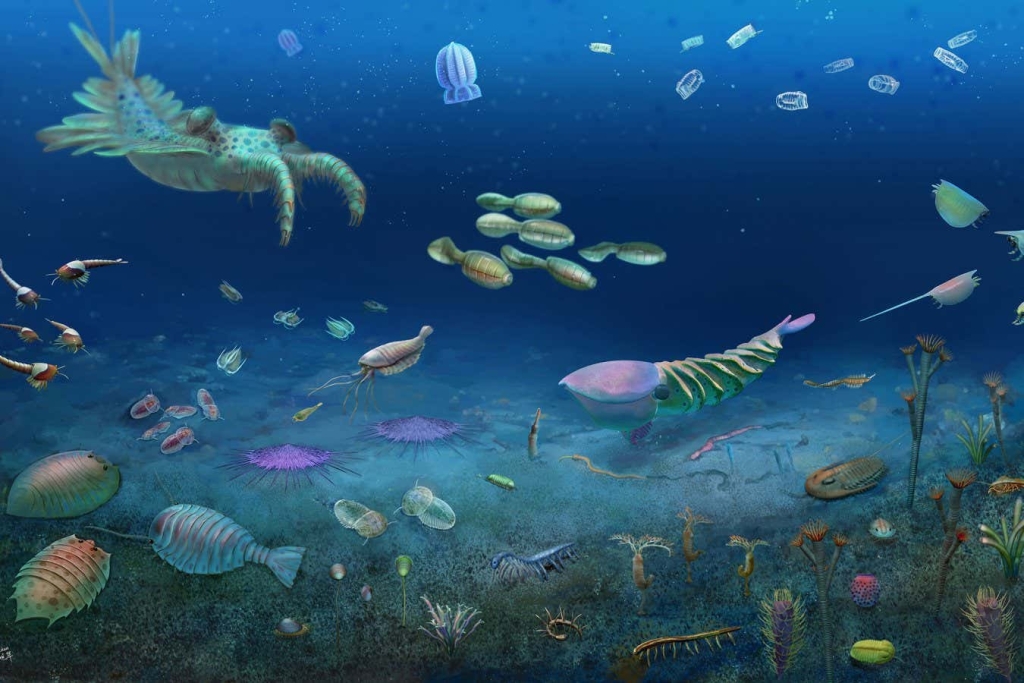
Breaking News: Groundbreaking 512-Million-Year-Old Fossil Site Unearthed in China—A Window into Earth’s First Mass Extinction!
In a discovery that’s sending shockwaves through the scientific community, researchers in southern China have uncovered an extraordinary fossil site that’s being hailed as one of the most significant paleontological finds of the century. The newly discovered Huayuan biota, dating back 512 million years to the Cambrian period, offers an unprecedented glimpse into life just after Earth’s first mass extinction event—and it’s absolutely mind-blowing.
Located in the mountainous region of Huayuan County in Hunan Province, this fossil treasure trove has already yielded 8,681 fossils from 153 species, with nearly 60% being completely new to science. The site is being compared to—and in some ways surpasses—the legendary Burgess Shale in Canada, which has long been considered the gold standard for Cambrian fossil preservation.
What Makes This Discovery So Revolutionary?
The Huayuan biota captures a critical moment in Earth’s history: the aftermath of the Sinsk event, a catastrophic mass extinction that occurred around 513.5 million years ago when oxygen levels in the oceans plummeted. While previous knowledge of this extinction came primarily from skeletal remains like trilobites and sponges, the Huayuan site reveals the full, shocking impact on soft-bodied creatures that rarely fossilize.
“This is like finding a complete ecosystem frozen in time,” says Han Zeng, the lead researcher from the Nanjing Institute of Geology and Palaeontology. “We’re seeing animals that lived in the deep ocean, which were less affected by the extinction, alongside those that were completely wiped out.”
The Stars of the Show: Ancient Creatures That Will Blow Your Mind
The fossils include an astonishing array of life forms that look like they’re straight out of a science fiction movie. Arthropods dominate the scene—these are the ancient relatives of today’s insects, spiders, and crustaceans. The largest predator discovered so far is Guanshancaris kunmingensis, an 80-centimeter-long arthropod that would have been the apex predator of its time, stalking the ancient seas with terrifying efficiency.
But perhaps the most shocking discovery is Helmetia, an arthropod genus previously found only in Canada’s Burgess Shale. Finding the same species “halfway across the world” suggests these ancient creatures were capable of spreading vast distances through ocean currents—a revelation that’s rewriting our understanding of early animal migration.
Preservation So Perfect, It’s Almost Unnatural
What makes the Huayuan biota truly extraordinary is the quality of preservation. These creatures weren’t just fossilized—they were mummified in exquisite detail. Walking legs, antennae, tentacles, gills, digestive systems, eyes, and even neural tissues have been preserved, offering scientists an unprecedented look at ancient anatomy.
The secret to this remarkable preservation? A catastrophic mudslide that buried the creatures almost instantly under a slurry of fine sediment, capturing them in the very moment of their lives—and deaths.
Why This Changes Everything
Joe Moysiuk from the Manitoba Museum in Canada calls the discovery “a critical snapshot of soft-bodied biodiversity during the Cambrian, filling in missing frames in the proverbial tape of Earth’s history.” Tetsuto Miyashita from the Canadian Museum of Nature adds that comparing different Cambrian sites helps paleontologists “tease apart the effects of geography, mass extinction, and ocean depths and chemistry.”
But perhaps the most intriguing mystery is what’s missing: fish. “Where are the fish?” Miyashita asks. “Were they undergoing a pinch globally and very rare, or was there some other ecological reason we don’t find them chasing after so many species of soft-bodied animals?”
The Future of This Discovery
Han Zeng and his team have barely scratched the surface of what they’ve collected. “There will be new species coming out,” he promises. “Fish may be there, and we shall wait and see.” With thousands more fossils to analyze and potentially decades of research ahead, the Huayuan biota could continue to revolutionize our understanding of early life on Earth for generations to come.
This discovery isn’t just about ancient history—it’s about understanding how life recovers from catastrophic events, how ecosystems rebuild, and what happens when the delicate balance of our planet is disrupted. In an age where we’re facing our own environmental challenges, the lessons from 512 million years ago have never been more relevant.
Tags & Viral Phrases:
- Ancient life frozen in time
- Mind-blowing Cambrian discovery
- Earth’s first mass extinction revealed
- Soft-bodied creatures preserved perfectly
- Apex predator from 512 million years ago
- Fish mystery deepens
- Rewriting evolutionary history
- Scientific breakthrough of the century
- Ancient creatures that look alien
- Understanding Earth’s past to save its future
- Fossil site that’s better than Burgess Shale
- 60% new species discovered
- Neural tissues preserved for 512 million years
- What killed Earth’s first animals?
- The day the oceans died
- Prehistoric life in stunning detail
- Evolution’s greatest hits
- Ancient ecosystem resurrected
- Scientific treasure trove
- The missing link to our past
,


Leave a Reply
Want to join the discussion?Feel free to contribute!