
Humanoid robotics maker Sunday reaches $1.15B valuation to build household robots
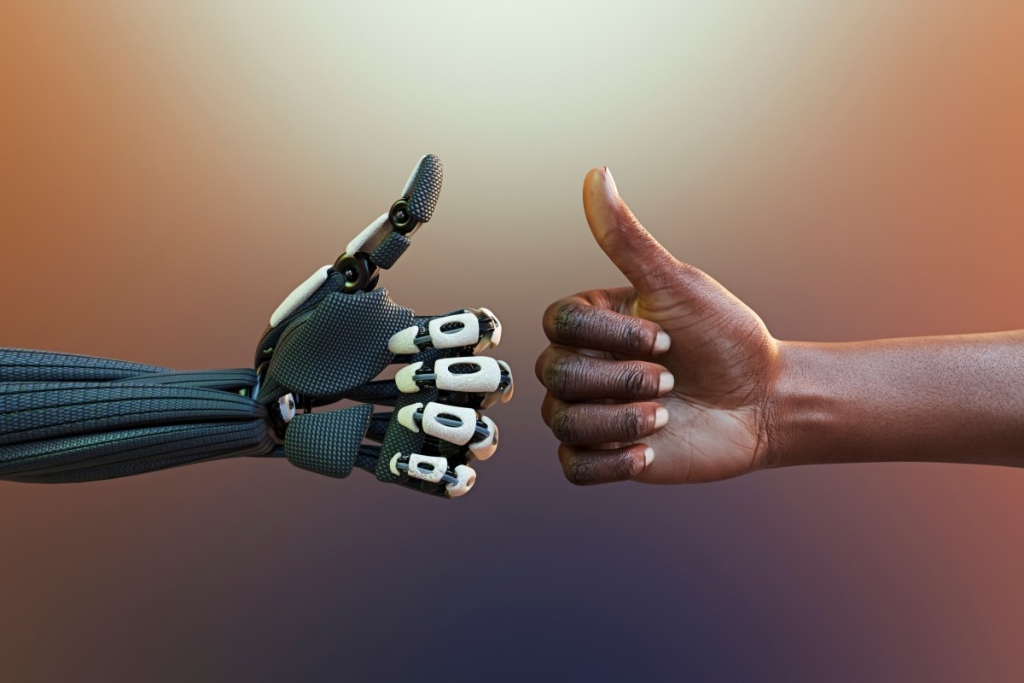
Robotics Startup Sunday Hits $1.15 Billion Valuation as Unicorn Fever Grips AI Hardware Sector
In a stunning validation of the humanoid robotics dream, California-based startup Sunday has rocketed to unicorn status after securing $165 million in Series B funding at a $1.15 billion valuation. The robotics company, which emerged from stealth mode just months ago, is now officially valued at over $1 billion—a rare feat in the hardware-heavy AI space where profitability remains elusive for most.
The funding round was led by Coatue Management, with participation from heavyweight investors including Tiger Global, Benchmark, and Bain Capital Ventures. This influx of capital comes as the robotics industry experiences unprecedented momentum, with investors betting billions on the vision of household humanoid helpers that have eluded developers for decades.
The Memo Mission: Building Rosie from “The Jetsons”
Sunday’s ambitious goal is to create Memo, a humanoid robot designed to tackle everyday household chores that humans find tedious or time-consuming. The company envisions Memo handling tasks like laundry sorting, table clearing, dishwashing, and other domestic responsibilities that have proven remarkably difficult for robots to master.
The startup was founded by Tony Zhao and Cheng Chi, who are tackling what many consider the holy grail of robotics: creating a machine that can seamlessly integrate into human living spaces and perform complex, varied tasks with the dexterity and judgment of a human assistant.
“We’re not just building another robot; we’re building a true household companion,” Zhao said in a statement. “Memo represents the convergence of advanced AI, sophisticated mechanical engineering, and practical utility that consumers have been waiting decades to see.”
From Stealth to Waitlist: Sunday’s Meteoric Rise
The company’s emergence from stealth mode late last year has already generated significant buzz. According to Bloomberg, Sunday has amassed a waitlist of 1,000 potential customers eager to be among the first to own a Memo robot. This early demand suggests that consumer appetite for household robotics may finally be reaching a tipping point.
The timing couldn’t be better for Sunday. The robotics industry is experiencing a renaissance fueled by breakthroughs in artificial intelligence, machine learning, and sensor technology. Companies across the spectrum—from industrial automation to consumer robotics—are racing to capitalize on these advances.
Why Household Robots Have Remained Elusive
The challenge Sunday faces has stymied roboticists for generations. While industrial robots have excelled at repetitive tasks in controlled environments like factory floors, household settings present a constellation of variables that have proven extraordinarily difficult to manage.
The fundamental problem lies in what roboticists call the “grasping problem.” Unlike factory robots that manipulate identical objects in predictable ways, household robots must handle items of varying weights, textures, fragility, and importance. A wine glass requires a completely different approach than a towel, which differs again from a piece of fruit or a book.
“Training data has been the bottleneck,” explains robotics expert Dr. Elena Rodriguez from MIT’s Computer Science and Artificial Intelligence Laboratory. “We’ve had the mechanical capability for years, but teaching robots to understand context, apply appropriate force, and make real-time decisions about how to interact with novel objects has been extraordinarily challenging.”
Sunday’s approach appears to leverage recent advances in AI training methodologies, potentially using vast datasets of human interaction with household objects to train Memo’s neural networks. The company has been notably secretive about its specific technical approach, but industry insiders suggest they may be employing cutting-edge techniques in reinforcement learning and computer vision.
The Unicorn Robotics Boom
Sunday’s billion-dollar valuation places it among a select group of robotics companies that have achieved unicorn status. This elite club includes companies like Figure AI, which raised $675 million at a $2.6 billion valuation for its humanoid robot; Sanctuary AI; and Tesla’s Optimus project, which carries significant weight on the company’s balance sheet despite not being a separate entity.
The surge in robotics valuations reflects a broader market sentiment that the pieces are finally falling into place for practical, consumer-facing robotics. Advances in AI language models, computer vision, and battery technology have created a convergence that investors believe could finally make household robots economically viable.
However, skeptics remain. The history of robotics is littered with companies that promised revolutionary household helpers but delivered disappointment. From the Sony AIBO robotic dog to various attempts at robotic vacuum cleaners that promised more than they delivered, the gap between promise and reality has often been vast.
What’s Next for Sunday
With its new funding, Sunday plans to accelerate Memo’s development and aims to launch its first commercial units by Thanksgiving of this year—an ambitious timeline that would put actual products in consumers’ hands faster than many industry observers expected.
The company will need to navigate significant challenges beyond the technical hurdles. Manufacturing at scale, ensuring reliability, addressing safety concerns, and, crucially, pricing the product at a point that makes it accessible to consumers all represent formidable obstacles.
Industry analysts estimate that a sophisticated humanoid robot like Memo could cost anywhere from $20,000 to $100,000 to produce initially, though economies of scale could bring prices down over time. The question remains whether consumers will be willing to make such a significant investment in robotic assistance.
The Broader Implications
Sunday’s success and valuation signal something larger about the trajectory of AI and robotics. For years, artificial intelligence development focused primarily on software—algorithms, language models, and data processing. Now, the field is increasingly turning toward embodied AI, where intelligence must interact with the physical world.
This shift has profound implications for labor markets, particularly in sectors like healthcare, hospitality, and domestic services, where humanoid robots could eventually supplement or replace human workers. It also raises complex questions about human-robot interaction, privacy in the home, and the societal impact of increasingly capable machines.
As Sunday races toward its Thanksgiving launch target, the robotics world watches with bated breath. If Memo delivers on even a fraction of its promise, it could mark the beginning of a new era in which the dream of helpful household robots finally becomes reality. If it falls short, it will join the long list of noble attempts that couldn’t quite bridge the gap between science fiction and engineering reality.
One thing is certain: with $165 million in fresh funding and a billion-dollar valuation, Sunday has the resources to make its bid—and the world will soon see whether Memo can truly bring the Jetsons’ Rosie into our homes.
Tags: robotics, AI, unicorn, humanoid robot, household automation, Memo, Sunday, Tony Zhao, Cheng Chi, Coatue Management, Tiger Global, Benchmark, Bain Capital Ventures, automation, smart home, embodied AI, Series B funding, tech valuation, Thanksgiving launch, Rosie the Robot
Viral phrases: “Robotics unicorn fever,” “Memo mission,” “the grasping problem,” “Rosie from the Jetsons,” “embodied AI revolution,” “stealth to waitlist,” “billion-dollar household helper,” “Thanksgiving launch target,” “convergence of AI and robotics,” “the holy grail of robotics,” “bridging science fiction and reality”
,


Leave a Reply
Want to join the discussion?Feel free to contribute!