
I compared Verizon, T-Mobile, and AT&T 5G coverage on a road trip – and the winner surprised me
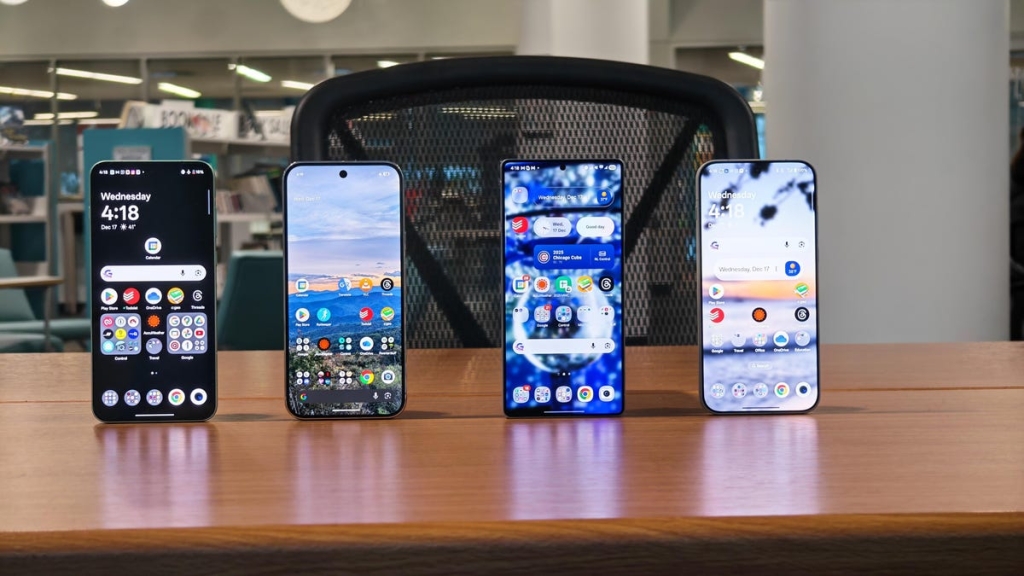
5G Road Trip Test: Google Pixel 10 Pro vs. AT&T, Verizon & T-Mobile
The Ultimate 5G Coverage Challenge
I embarked on a 1,000+ mile road trip across America’s heartland to test 5G network reliability between major cities, and the results might surprise you.
The Setup: Three Pixel 10 Pros, One Epic Journey
Armed with three Google Pixel 10 Pro phones—each equipped with AT&T, Verizon, and T-Mobile eSIMs—I mounted them on a 2×4 pine board and connected them to an Anker Solix C1000 Gen 2 power station. Using nPerf software, I collected over 120,000 data points throughout our journey from Chicago to Nashville and back.
Methodology: Beyond the Speed Test
Unlike typical carrier comparisons that test at predetermined hotspots, I wanted to know what happens in the vast stretches between cities. Every hour, we’d pull over for controlled speed tests using an iPhone 17 with all three carriers, but the real story came from continuous monitoring as we drove through Indiana, Illinois, Kentucky, and Tennessee.
The Results: Who Dominated the Heartland?
T-Mobile emerged as the clear leader with 96.2% 5G coverage, including both standalone (SA) and non-standalone (NSA) configurations. AT&T and Verizon both achieved over 35% 5G coverage, which is decent but not groundbreaking.
Signal strength was remarkably consistent across all three carriers—each maintained “decent or better” signal strength for over 90% of the journey. This was particularly impressive given that we were traveling primarily on interstate highways, where network congestion is typically highest.
The NSA vs. SA Factor
One fascinating discovery: T-Mobile was the only carrier successfully utilizing non-standalone 5G configurations. NSA networks use existing 4G infrastructure to establish connections, making them faster and cheaper to deploy. Standalone 5G, while superior for latency-sensitive applications like gaming and remote control, requires building entirely new infrastructure.
Standout Moments
Verizon delivered a jaw-dropping 4Gbps download speed in Louisville, Kentucky—a performance that reinforces their reputation for pushing the boundaries of what’s possible. Meanwhile, T-Mobile’s consistent nationwide coverage suggests they’re delivering on their “best nationwide 5G network” promise.
The Verdict: 5G Has Matured
All three networks proved capable of maintaining reliable connections throughout our 13-hour journey. Whether you’re streaming music, navigating, or making emergency calls from the roadside, you’ll likely have sufficient coverage regardless of your carrier.
The most important takeaway? 5G deployment has progressed far enough that even in America’s “boring” middle section, you’re rarely without a decent signal—especially if you’re traveling on major highways where carriers have prioritized coverage.
viral tags: 5G road trip test, Google Pixel 10 Pro, AT&T vs Verizon vs T-Mobile, network coverage comparison, highway 5G testing, best 5G carrier, 4Gbps speed test, standalone vs non-standalone 5G, road trip connectivity, Pixel 10 Pro review
viral phrases: “5G has finally delivered on its promises,” “the boring highway test nobody talks about,” “4Gbps speeds in the middle of nowhere,” “T-Mobile dominates the heartland,” “Verizon’s jaw-dropping Louisville performance,” “NSA vs SA: the hidden 5G battle,” “120,000 data points reveal the truth,” “interstate highways: 5G’s priority zones,” “Pixel 10 Pro proves its worth,” “the 1,000-mile 5G experiment”
,


Leave a Reply
Want to join the discussion?Feel free to contribute!