
I tested popular ‘power-savers’ on the market – here’s the only one that isn’t a scam
Scam “Power-Saving” Devices Are a Waste of Money — Here’s What Actually Works
ZDNET’s Key Takeaways
- Scam “power-saving” devices are ineffective and potentially dangerous
- Smart plugs and power strips are proven ways to reduce energy costs
- Monitoring your energy usage helps identify waste and save money
With electricity bills climbing higher each month, consumers are desperate for ways to cut costs. Unfortunately, this desperation has created a perfect breeding ground for scammers peddling fake “power-saving” devices that promise miraculous results but deliver nothing but disappointment—and potentially danger.
These Devices Do Absolutely Nothing to Save Power
Walk through any online marketplace and you’ll find countless “energy-saving” devices claiming to “optimize electrical usage,” “extend appliance lifespans,” and “eliminate phantom power drain.” They plug into your wall outlet and flash reassuring lights while supposedly working their magic.
Also: This USB power meter I tested is shockingly accurate – especially for how cheap it is
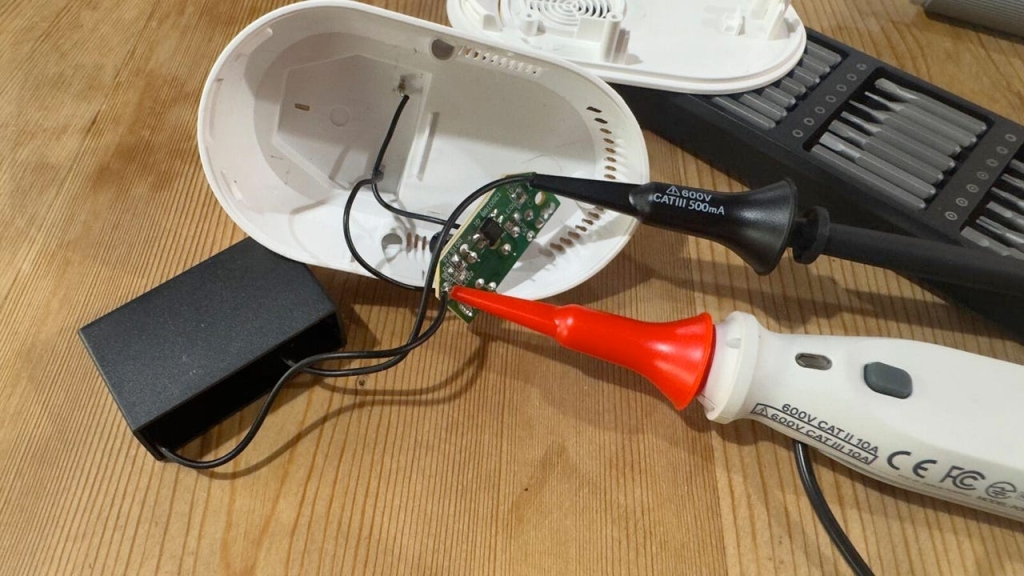
The reality? These devices are modern snake oil. Many are actually repurposed cases from rodent repellers—another category rife with scams. I’ve purchased and dissected numerous examples to understand what’s inside, and the results are consistently disappointing.
When you plug these into your outlet, the absolute best outcome is that they sit there doing nothing while drawing a tiny amount of power to illuminate their LED displays. The worst-case scenario? They could start a fire due to shoddy construction and substandard components.
Let me be crystal clear: despite their bold marketing claims, these devices accomplish absolutely nothing in terms of energy savings.
Don’t Buy Them—They’re Dangerous Junk
Here’s a typical example marketed for the UK, though similar versions target every region. Even the plug design violates local electrical safety standards.

The device attempts to look legitimate with a fake testing certification number on the back—completely fabricated and meaningless.
Inside, the construction is alarmingly poor. The assembly quality is subpar, and the wiring is dangerously thin—barely adequate for the current they might carry.
One puzzling detail: some newer models include a fuse, which earlier versions lacked. I can only speculate why manufacturers added this safety feature—perhaps due to increasing scrutiny or reported incidents.
The centerpiece of these scams is typically a large black box labeled as a capacitor. When tested, it registers as zero—meaning it’s not even a functional capacitor. It’s completely fake, a hollow prop designed to look technical and impressive.
There is absolutely nothing inside these devices capable of saving power. However, there’s plenty that could go catastrophically wrong. Do not buy them under any circumstances.
What Actually Works: Smart Plugs and Power Strips
“But I want to buy SOMETHING to help!”
Fine—retail therapy is understandable, as long as it doesn’t turn your home into an inferno. My recommendation for actual energy savings? Invest in smart plugs or smart power strips.
I use several Tapo-branded devices (a TP-Link subsidiary), and they’re genuinely excellent. These allow you to control outlets remotely via smartphone apps, monitor real-time power consumption, and schedule automatic on/off cycles.
The app provides detailed energy usage statistics, letting you see exactly how much each device costs to operate. There’s nothing quite like watching real-time power consumption to motivate you to turn off energy-hogging appliances.
Also: Are portable wind generators legit? I tested one at home – here’s my buying advice
Consider my 3D printers and filament dryers as an example. These devices are perfect candidates for smart plug control. I can remotely power them on in the morning when I start printing and turn them off when complete, rather than letting them run all day unnecessarily.
Think of the minimal power draw from smart plugs as a “convenience tax”—yes, they consume a small amount of electricity, but the cost is negligible compared to the savings and convenience they provide.
Most importantly, smart plugs give you visibility into your energy consumption patterns. Seeing exactly how much that old refrigerator or entertainment system costs to run is often the wake-up call needed to make meaningful changes.
So forget the “electricity saving box” scams and invest in actual solutions. Your wallet—and your safety—will thank you.
Scam Power-Saving Device
Fake Energy Saver
Dangerous Electrical Scam
Power Bill Ripoff
Home Energy Scam
Fake Capacitor Scam
Electrical Fire Hazard
Smart Plug Alternative
Energy Monitoring Solution
Save Real Money
Don’t Get Scammed
Fake Testing Certification
Poor Quality Construction
Dangerous Wiring
Phantom Power Scam
Energy Saving Myth
Consumer Protection Warning
Electrical Safety Hazard
Online Marketplace Scam
TP-Link Tapo
Real Energy Savings
Monitor Your Usage
Remote Power Control
Schedule Appliances
Track Power Consumption
Energy Cost Visibility
Convenience Tax
3D Printer Power
Filament Dryer
Smart Home Automation
Electrical Safety First
Don’t Waste Money
Proven Solutions
Avoid Scams
Consumer Awareness
Energy Efficiency
Home Automation
Power Management
Electrical Safety
Scam Alert
Consumer Protection
Energy Monitoring
Smart Technology
Home Safety
Money Saving Tips
Electrical Devices
Consumer Electronics
Energy Conservation
Power Consumption
Home Improvement
Safety Warning
Product Review
Technology News
Consumer Advice
,

Leave a Reply
Want to join the discussion?Feel free to contribute!