
I tried Tecno’s modular phone concept at MWC – and it quickly got weird
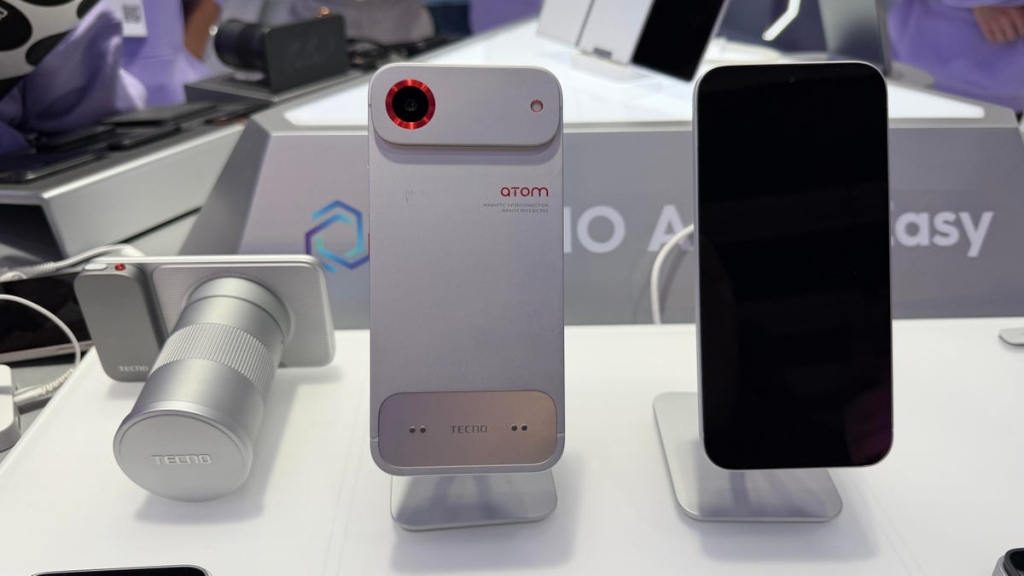
Tecno’s Magnetic Modular Phone Concept: A Bold Vision That Needs Stronger Magnets
Tecno continues to push boundaries at Mobile World Congress (MWC), unveiling its latest proof-of-concept device that could redefine how we think about smartphone customization. The Chinese manufacturer’s magnetic modular phone represents both an exciting evolution in modular design and a reminder of the challenges that have plagued this concept for years.
The device immediately stands out for its remarkably thin profile—reminiscent of an iPhone Air—and its innovative approach to expandability. Rather than the traditional snap-on modular system we’ve seen before, Tecno employs a sophisticated magnetic attachment system with pogo pins that allows various components to securely connect to the phone’s rear surface.
Under the hood, the concept device packs respectable specifications for a proof-of-concept: a MediaTek Dimensity 8350 processor, 256GB of storage, 12GB of RAM, and a 3,000mAh battery. While the base battery capacity might seem modest, Tecno’s modular approach transforms this limitation into a feature rather than a bug.
The battery modules represent perhaps the most practical and immediately appealing aspect of the design. Each 3,000mAh module magnetically attaches to the phone’s back, and with three modules available, users can stack them to achieve a staggering 12,000mAh total capacity. This addresses one of the most common pain points for smartphone users—battery anxiety—while maintaining the device’s slim profile when fewer modules are attached.
However, the implementation reveals significant challenges that Tecno must address before this concept becomes a viable product. The magnets, while functional, proved disappointingly weak during hands-on testing. Modules exhibited noticeable wobble and instability, raising concerns about both the user experience and the long-term durability of the connection system. For a concept built around modularity, the fundamental attachment mechanism needs substantial reinforcement.
The camera modules showcase both the potential and the current limitations of Tecno’s approach. The optical telephoto lens, which adds 3x zoom capability by magnetically attaching over the primary camera, demonstrates clever engineering. However, the resulting inverted image—a consequence of the magnifying lens design—suggests software hasn’t fully caught up with the hardware innovation. More puzzling is the absence of an ultrawide camera module, which seems like a missed opportunity given the system’s flexibility.
The 100x optical telephoto camera module pushes the concept further into experimental territory. This module operates independently via Wi-Fi connection to the phone, transmitting images to the device’s viewfinder. While the idea is ambitious, testing revealed significant latency issues that could stem from either the Wi-Fi implementation or the show floor’s crowded network environment. The separation between camera and viewfinder introduces complexity that may not justify the benefits for most users.
Beyond the core modular components, Tecno includes several accessories that stretch the definition of modularity. A lavalier microphone with windscreen, a ring light/mirror combination for selfies and vlogging, and a Bluetooth speaker module all connect magnetically but function independently of the phone. While these additions increase the system’s versatility, they also highlight the conceptual ambiguity between “modular” and “accessory.”
The wallet module, despite being one of the more straightforward additions, exemplifies the system’s current limitations. Given the weak magnets and the wallet’s exposed position, users would likely worry about losing their cards or cash—defeating the purpose of convenient, secure storage.
Tecno’s modular concept inevitably draws comparisons to Motorola’s Moto Mods, which attempted similar functionality several years ago. Motorola’s system ultimately failed to achieve mainstream adoption, primarily due to ecosystem commitment issues. Once manufacturers release modular accessories, they must maintain consistent form factors across product generations, or early adopters are left with expensive, incompatible accessories.
This creates a fundamental trust problem that Tecno must overcome. While Motorola had established credibility and a track record of supporting its modular ecosystem for over four years, Tecno lacks the same brand recognition and proven commitment to long-term support. The company would need to make substantial, credible commitments to maintain form factors and continue accessory development across multiple product generations.
The concept’s success also depends on addressing practical concerns beyond the technical implementation. Import availability, warranty support, and repairability all factor into whether consumers would invest in such a system. Without clear answers to these questions, even the most innovative modular design struggles to gain traction.
Despite these challenges, Tecno’s magnetic modular phone represents an important exploration of smartphone customization’s future. The battery stacking system alone offers a compelling solution to a universal problem, and the camera expansion options suggest possibilities for specialized photography that traditional smartphones cannot match.
For modular phones to succeed where previous attempts have failed, they must offer clear, compelling advantages that justify the added complexity and potential compatibility concerns. Tecno’s concept takes significant steps in the right direction, particularly with its practical battery solution and the ambitious camera modules. However, the execution reveals that the technology isn’t quite ready for prime time.
The magnetic attachment system needs stronger, more reliable connections. The software integration requires refinement to match the hardware’s capabilities. And perhaps most importantly, Tecno needs to demonstrate a genuine, long-term commitment to supporting this modular ecosystem.
As a proof of concept, Tecno’s modular phone succeeds in showcasing what’s possible when manufacturers think beyond traditional smartphone design constraints. It offers a glimpse of a future where users can truly customize their devices to match their specific needs and preferences. Whether Tecno—or any manufacturer—can transform this vision into a practical, sustainable product remains to be seen, but the exploration itself pushes the entire industry forward.
The modular phone concept refuses to die because it addresses a fundamental desire for personalization and adaptability in our most personal devices. Tecno’s latest attempt may not be ready for store shelves, but it keeps the dream alive and continues the evolution toward truly customizable mobile technology.
#ModularPhone #Tecno #MWC2026 #SmartphoneInnovation #MagneticModularity #BatteryTechnology #CameraAccessories #MobileCustomization #TechConcepts #FutureOfSmartphones #MobileWorldCongress #DeviceModularity #SmartphoneDesign #TechInnovation #MobileTechnology
“This could be the future of smartphone customization”
“Magnetic modularity that actually works”
“12,000mAh of battery power in your pocket”
“Camera attachments that push boundaries”
“The spiritual successor to Moto Mods”
“When your phone becomes whatever you need it to be”
“Modular dreams that need stronger magnets”
“Beyond the traditional smartphone form factor”
“Accessories or modules? The line is blurring”
“The trust problem every modular phone faces”
“Proof of concept or product preview?”
“Battery anxiety solved with magnetic stacking”
“Camera innovation meets practical challenges”
“When software can’t keep up with hardware”
“The modular phone concept refuses to die”
“Tecno’s bold vision needs refinement”
“Magnetic connections that aren’t quite strong enough”
“Accessories that stretch the definition of modularity”
“The challenge of ecosystem commitment”
“Exploring the boundaries of smartphone design”,

Leave a Reply
Want to join the discussion?Feel free to contribute!