
I Used To Care More About Upgrading My Phone
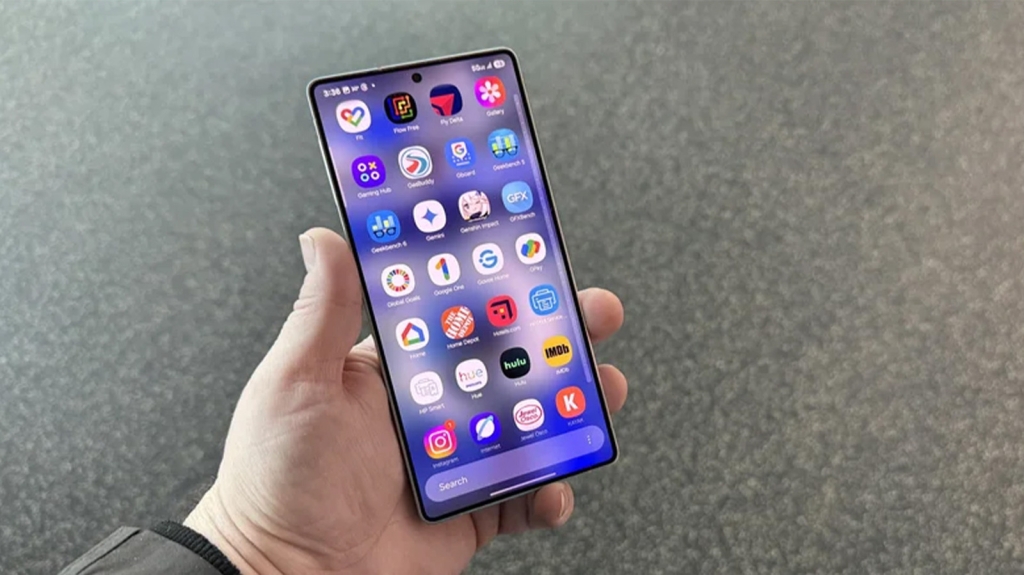
The End of an Era: Why I’m Breaking My Decade-Long Smartphone Upgrade Habit
By [Author Name] • February 1, 2026
It’s 2026, and something unprecedented is happening: I’m seriously considering not upgrading my smartphone this year. For over a decade, I’ve religiously upgraded to the latest flagship every single year, but as Samsung Unpacked 2026 approaches, I find myself strangely indifferent to the prospect of trading in my Galaxy S25 Ultra.
The routine is familiar—back up the phone, factory reset it, send it back to Samsung—but this time, I’m asking myself: what if I just didn’t?
This isn’t a fleeting thought. In previous years, I’ve always found compelling reasons to upgrade. My Galaxy S24 Ultra had that infamous grainy screen issue that drove me crazy, making dark gray look like sand. But my S25 Ultra? It works perfectly. It does everything I need. And for the first time in years, I’m questioning whether the annual upgrade cycle still makes sense.
The Magic Is Gone: When Smartphones Were Actually Exciting
Remember when upgrading your phone felt like Christmas morning? Those days weren’t that long ago, but they might as well be ancient history now.
Back in the golden age of smartphone innovation, every year brought something genuinely different. The LG V20 had that quirky second screen on top. The HTC Evo 4G came with a built-in kickstand—remember that? These weren’t just spec bumps; they were statements of identity, experiments in what a phone could be.
HTC was particularly brilliant at this. The Evo 4G LTE built on its predecessor’s cool factor, then the company completely reinvented itself with the M7’s aluminum unibody design. LG did the same—the V10 had steel rails and a rubberized back, while the V20 was all metal and felt entirely different in your hand.
Fast forward to 2026, and what do we have? The Galaxy S25 Ultra looks almost identical to the S24 Ultra, which looked almost identical to the S23 Ultra. Google, Apple, and others have settled into their design languages like comfortable armchairs. The thrill of the new has been replaced by the comfort of the familiar.
And let’s be honest—the smartphone landscape has lost some of its color. HTC is gone from the U.S. market. LG exited the phone business entirely. Even Asus recently threw in the towel. What’s left feels like a monochrome painting compared to the vibrant canvas we once had.
The only real excitement left is in foldables, but at $1,800+ for a device that’s still figuring itself out? That’s a hard sell for most people.
The Performance Plateau: When More Power Doesn’t Mean More Wow
Here’s a dirty little secret about modern smartphones: they’re already fast enough for almost everything we do.
Remember when performance leaps were actually noticeable? The HTC Evo 4G had a single-core processor, 512MB of RAM, and a 480p screen. The Evo 4G LTE doubled all those numbers, and the HTC One M7 doubled them again. Each upgrade felt transformative.
Today? The biggest improvements are in AI computing and ray tracing—technologies that, frankly, most people don’t use intensively on their phones. Battery sizes have plateaued while we wait for the next revolution in battery technology (looking at you, lithium-sulfur).
As someone who games on mobile and considers myself a power user, even I have to admit: modern smartphones are good enough. The difference between a 2024 flagship and a 2026 flagship might mean a few extra frames in your games or slightly faster video rendering times. But for 95% of what we do—scrolling social media, taking photos, messaging, browsing—the experience is essentially identical.
Year-over-year updates simply aren’t that big anymore. The real improvements now come every two or three years, not annually. Which makes the whole yearly upgrade grind feel increasingly pointless.
The Feature Freeze: When Nothing Really Changes
When was the last time a smartphone feature genuinely blew your mind? I’m not talking about “nice to have” improvements—I mean something that made you say “I need this” and actually changed how you used your phone.
Smartphone charging has gotten faster, sure. Screens now have variable refresh rates. OLED has become standard even in budget phones. But these are incremental improvements, not revolutions.
AI is the new buzzword, but let’s be real: how many people are using AI intensively on their phones? Google’s Night Sight was revolutionary—nearly a decade ago. Since then, we’ve had refinements, not reinventions.
The Reddit thread comparing the S24 Ultra and S25 Ultra cameras proves the point perfectly. From three feet away on a computer screen, you’d be hard-pressed to tell the difference. You need to pixel-peep to see any changes at all. In some cases, people even perceive progress as going backward.
So if I did spend the big bucks on a 2026 flagship over my 2025 flagship, the experience would be 95% the same. The other 5%? Stuff I might not even notice. To get genuinely noticeable changes these days, you have to wait multiple years. Which, again, makes the yearly upgrade cycle feel increasingly silly.
Maybe I’m Just Getting Old: The Changing Nature of Tech Enthusiasm
I could go on for hours about smartphone stagnation, but that would be intellectually dishonest. The truth is, maybe I’m the one who’s changed.
I used to love hopping between phone makers, exploring their unique technologies. I was obsessed with the quad DAC in LG’s final phones—that audio quality was genuinely special. I’ve always loved the S-Pen in Samsung devices. These distinguishing features used to make brand-hopping exciting.
These days? Jumping between OEMs doesn’t hit the same way. Sure, OnePlus has super-fast charging. Samsung’s Ultra models still have the S-Pen. But these features don’t tickle my curiosity like LG’s vein-reading camera did. That technology was terrible, but it was creative and interesting. It showed a company thinking differently.
Today’s defining features are almost entirely software-based: Google’s call screening on Pixels, Samsung’s DeX desktop mode, Apple’s ecosystem integration. While these are incredibly useful and functional, they’re not “fun” in the same way. They don’t spark that childlike wonder that made me fall in love with technology in the first place.
So as I look at my Galaxy S25 Ultra sitting on my desk, I have to ask myself: is there even a reason to get the Galaxy S26 Ultra? Or to test the market and see what else is out there?
The honest answer? Not really. Maybe I’ll be proven wrong when Samsung Unpacked 2026 happens. Maybe they’ll announce something genuinely revolutionary. But based on the trajectory of the past few years, I’m not holding my breath.
The wild west of smartphones is over. We’re in the era of conservative iterations and incremental improvements. And for the first time in a decade, I’m okay with sitting this year out.
Tags: smartphone upgrade cycle, Galaxy S25 Ultra, Galaxy S26 Ultra, smartphone innovation stagnation, mobile technology trends, annual phone upgrades, HTC Evo, LG V series, foldable phones, AI smartphone features, mobile gaming performance, smartphone design evolution, tech enthusiast burnout, smartphone feature fatigue, mobile industry consolidation
Viral Phrases: “The magic is gone,” “The performance plateau,” “Feature freeze,” “Maybe I’m just getting old,” “The wild west is over,” “Conservative iterations,” “Sitting this year out,” “Breaking my decade-long habit,” “95% the same,” “Silly upgrade grind”
Trending Keywords: smartphone stagnation, upgrade fatigue, mobile innovation slowdown, tech enthusiast perspective, flagship phone comparison, yearly upgrade cycle, smartphone feature evolution, mobile technology maturity, industry consolidation impact, user experience plateau
,


Leave a Reply
Want to join the discussion?Feel free to contribute!