
I was a phone addict: These 7 tricks stopped me scrolling and curbed my screen time – fast
I Was a Phone Addict. These 7 Tricks Stopped Me Scrolling and Slashed My Screen Time—Fast
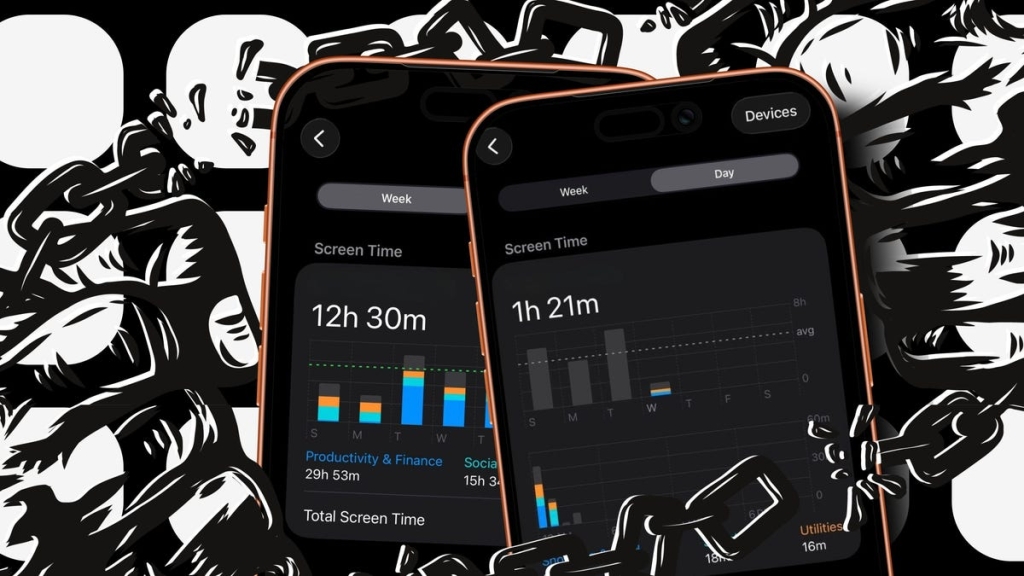
A few months ago, I looked at my iPhone’s screen time report and was stunned: 13 hours a day, including work on my Mac. Some days it was even more. I’ve always loved tech—testing apps, exploring new features, and staying online—but I started doing the math. Even excluding work, I was spending over 100 days a year staring at my phone. That’s more than three months of my life, 24/7, glued to a glowing rectangle instead of doing things I love or spending time with my family.
The realization hit me hard. Tech is cool, but I don’t want to waste a quarter of my life addicted to a screen, rarely looking up to enjoy the world or my loved ones. I’d long wondered why there never seemed to be enough time in the day—maybe because TikTok, X, Facebook, Instagram, and Big Tech had hijacked my brain and wouldn’t let go. So I decided to change.
I set a goal: get my daily phone use down to one hour. If I could do less, even better. To my surprise, as someone deeply addicted to my phone and never having tried to cut back before, it turned out to be easier than I expected.
ZDNET’s Key Takeaways:
- Small changes can dramatically slash your screen time.
- Make it harder to grab your phone and mindlessly scroll.
- Deleting apps works better than relying on app limits and timers.
How to Reduce Phone Screen Time
I want to start with something important: I first had to admit I have a phone addiction, and you should too. It’s not normal to spend huge chunks of your life obsessed with a phone. Sure, it may be common, but we should never convince ourselves it’s normal. I did for years, and unfortunately, it means I’ve also lost years of my life. Once you recognize that, it helps with willpower. I can list every trick that works for me, but if you truly don’t want to cut back your screen time, you won’t.
Since I was already using the Screen Time app on my iPhone to check daily and weekly averages, I figured I might as well use the tools it offers to reduce my screen time. One of the main features is App Limits. If you tap it, you can select Add Limit, choose an app, and decide how long you want to allow yourself to use that app.
Since I’m an iPhone user, my focus is on iOS in this guide, but Android offers similar tools. Go to Settings > Digital Wellbeing & parental controls. There, you can see a chart of daily usage, how many times apps were opened, and the number of notifications. You can also set app timers and usage goals.
Right away, I set aggressive limits on my biggest time sinks. I started with 15 minutes for social apps and Chrome because my goal was to get under an hour of total phone use a day. But if you’ve used app limits before, you know the problem. You can dismiss the warning with a single tap and keep going.
And yes, I did that. A lot.
Still, they help. Even though they’re easy to override, they force a small moment of awareness. Seeing a notification that says you’ve hit your daily limit does something psychologically. It reminds you you’ve already spent more time than you intended. Today, I still use timers on the apps I open most often, Chrome in particular.
But I needed something else that interrupts my habit more forcefully.
2. Use Screen Time Control Apps
The next thing I tried was a screen time control app called ScreenZen. It’s free on iOS and Android. It interested me because, instead of blocking apps outright, it serves up a “speed bump” before you open apps. The idea is simple: phone use is automatic. You unlock your phone and tap an app before you even realize you’re doing it.
ScreenZen is designed to interrupt that reflex. When you mindlessly open an app, it forces a delay of up to 60 seconds. You’ll see a message asking whether opening the app is actually important right now. What’s especially useful is it also works with sites. If you try to go directly to YouTube in your browser, it can trigger the same delay.
In some configurations, ScreenZen can require you to solve a quick math problem or word guess, review your to-do list, take steps around the room, or wait through a countdown. Technically, what it’s doing is inserting friction into your habit loop. Interrupt the loop and the behavior becomes less automatic, or at least that’s the hope.
I tried ScreenZen first with one particular app I had little self-control with: TikTok. While the pause did give my brain time to reconsider, in practice, I learned if I really want to scroll, I will scroll. With TikTok, I would often wait through the delay, especially at night before bed, which is when I really preferred to do my video scrolling.
That’s when I realized tools alone aren’t going to solve my problem.
3. Remove the Biggest Time Sinks
There is a landmark trial happening right now examining whether social media companies like Meta intentionally design their platforms to be addictive and harmful to minors’ mental health.
It’s spurred a lot of discussion, and it’s made me think more about how these apps keep us engaged. Algorithms, infinite feeds, autoplay videos, and push notifications. Every part of the system is built to keep you looking at your screen. The more I think about it, the more annoyed I am that I’ve fallen into their trap, their loop.
Instead of trying to manage my time inside these apps, I removed them.
Looking at my screen time data made the decision easier. Two apps stood out immediately: Facebook and Messenger. I rarely post on Facebook and mostly lurk, yet I was opening it constantly. Messenger was worse because group chat notifications were firing all day long. I deactivated my accounts and deleted both apps.
Then there’s TikTok. It’s easily my biggest time sink, so that one had to go.
I kept X for a while, but my usage started creeping up there too. Eventually, I deleted the app from my phone but kept the account. Now, if I want to check it, I log in through a browser. That extra step works a lot like ScreenZen, adding friction and making me less likely to use it. I did the same thing with some work apps, like Chartbeat.
Instagram and Snapchat were never major problems. According to my Screen Time app, I spend less than five minutes a day in each, so I kept them. Snapchat is where I save video memories of my daughter and share them with family. Instagram mostly satisfies the occasional curiosity spiral. We’ll see how long they last.
If I could recommend one tip most, it’s this one. Removing the apps I was most addicted to made the biggest difference. My phone is now in my hands a lot less because there’s nothing on it constantly pulling me back in.
4. Change Where and When Your Phone Is Used
With most app distractions gone, I began focusing on where and when I use my phone. For example, when I’m watching a movie with my family, I used to look up everything. Actor trivia. Filming locations. Reviews.
Now? I watch the movie. The phone stays in another room. I’m already looking at one screen. Is that not enough?
The same rule applies when people come over. I don’t want to check my phone during every lull in the conversation, so I keep it upstairs. At restaurants, I leave my phone off and keep it in my purse or in the glove compartment of my car. Instead of checking notifications, I look at my family and friends and enjoy the moment.
I also do this when I’m doing something creative. Painting, journaling, or working on a project. If the phone is nearby, the temptation to check it is damn near constant. But if it’s out of sight, the temptation disappears.
After a few weeks of this, you might notice something interesting happen. I certainly did. You stop feeling like you need the phone nearby all the time. The constant pull starts to fade. The addiction wanes.
5. Fix Your Morning Routine
Another big change I made: my alarm clock.
For years I used my phone as my alarm. Don’t we all? That means every morning starts the same way. The alarm goes off, I grab my phone, and within seconds, I’m checking notifications. From there, it’s a short path to email, news, and feeds. Before I even get out of bed, I’ve fallen into the scroll.
So I bought a physical alarm clock. Now my phone stays in a drawer overnight, and I don’t check it for the first hour after waking up. That single change broke one of the strongest habit loops that used to start my day.
6. Replace Boredom Scrolling with Better Defaults
Of course, boredom still happens. Phones are the easiest solution to boredom ever invented.
But what often happens is you pull your phone out, scroll for a few minutes, and suddenly an hour disappears. If you really want to use your phone during a moment of boredom, find a better default than scrolling.
I read an ebook in the Kindle app or listen to an audiobook in Audible. Other times I play New York Times games. These types of activities still involve screens, but they’re a completely different type of engagement. Reading requires focus. Word games exercise your brain. Neither keeps you trapped in a constant algorithmic feed.
Most importantly, they have natural stopping points. You finish a chapter. You finish a puzzle. You stop.
7. Disable Notifications
The final change that helped me a lot was turning off notifications for almost every app on my phone, at least the ones I still have left, like email. Notifications primarily exist to get you using your phone and opening apps. You receive them for likes, messages, breaking news alerts, and even random reminders from apps.
Each one is an interruption, and over the course of a day, they continuously nudge you to pick up your phone. So, get rid of them. On an iPhone, go to Settings > Notifications, select an app, and toggle off Allow Notifications.
I’ve only kept them for calls, texts, and ScreenZen. It’s tedious to turn them off them for every app, but it’s worth it. Once I disabled them, my phone stopped demanding my attention 24/7, and my notification fatigue subsided.
Android users can do the same by going to Settings > Notifications and adjusting permissions for apps.
My Results So Far
I’ve probably lived half my life already, and I want to make the most of the second half. I don’t want to be addicted to my phone anymore. As of now, my average phone screen time is around an hour a day, though some days are closer to 30 to 45 minutes.
The difference in how my day feels is huge. I have more time for hobbies, more attention during conversations, and more moments with my family. The interesting part is, I didn’t really “quit” my phone. I just made a point to minimize its importance in my life.
A few app limits. Some friction with ScreenZen. Removing the most addictive time sinks. Keeping my phone physically out of reach. None of those changes is dramatic on its own, but together they have brought me from several hours a day to one. Maybe they’ll help you, too.
Tags & Viral Phrases:
- phone addiction
- screen time
- social media detox
- TikTok addiction
- how to stop scrolling
- digital wellbeing
- phone habits
- mindless scrolling
- app limits
- ScreenZen
- notification fatigue
- phone-free mornings
- boredom scrolling
- tech addiction
- reclaim your time
- break the scroll cycle
- digital minimalism
- phone detox
- how I cut my screen time
- stop phone addiction
- reduce screen time fast
- phone habits that work
- I was a phone addict
- these tricks stopped me scrolling
- how to stop being addicted to your phone
- phone addiction is real
- I deleted TikTok and my life changed
- I stopped checking my phone first thing in the morning
- I turned off all notifications and it changed everything
- I replaced scrolling with reading and never looked back
- I keep my phone in another room and it’s life-changing
- I used to spend 13 hours a day on my phone
- I got my screen time down to one hour a day
- I’m not addicted to my phone anymore and I feel free
- I broke up with my phone and gained my life back
,

Leave a Reply
Want to join the discussion?Feel free to contribute!