
I was planning to get the Galaxy S26 Ultra, but these downgrades made me rethink
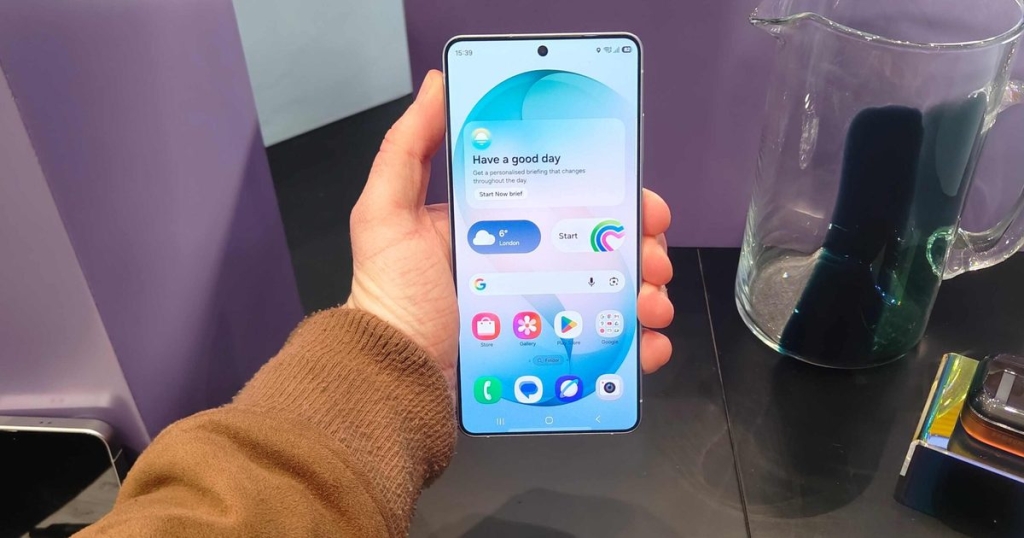
Samsung Galaxy S26 Ultra: A Flagship That Falls Short in Key Areas
Samsung’s latest flagship, the Galaxy S26 Ultra, has arrived with a mix of excitement and skepticism. While the device introduces some innovative features, it also comes with a few unexpected compromises that might make potential buyers think twice. After spending time with the device, I’ve decided to sit this one out—and here’s why.
Privacy Display Comes at a High Cost
Samsung’s Privacy Display is undoubtedly the star feature of the S26 Ultra. It’s designed to block prying eyes from peeking at your screen in public, and it works impressively well. However, this innovation comes with a significant trade-off: the screen is noticeably dimmer than its predecessor, the S25 Ultra, even with the privacy feature turned off.
Samsung rates the S26 Ultra’s display for up to 2,600 nits, but lab tests reveal a peak brightness of 1,806 nits, compared to the S25 Ultra’s 1,860 nits. While this might seem like a minor difference on paper, it’s quite noticeable in real-world use. Reviewers have also reported that text on the S26 Ultra’s display appears blurrier than on the S25 Ultra, even at the same resolution.
To make matters worse, some users have experienced eye strain after prolonged use. For someone like me, who spends hours reading articles and texting, this could be a dealbreaker.
Samsung Promised 10-Bit Color, Then Took It Back
During the Galaxy S26 Ultra’s launch event, Samsung touted the device’s 10-bit color depth display as a major upgrade. However, users quickly noticed that the product specifications listed only 16.7 million colors, which corresponds to 8-bit color depth. Samsung later confirmed that the display simulates 10-bit color rather than offering true 10-bit performance.
This discrepancy is more than just a technicality. In hands-on testing, the S26 Ultra’s display fell short when compared to devices with true 10-bit panels, like the OnePlus 15. HDR content lacked the smooth gradients and rich detail that 10-bit displays are known for. While the average user might not notice the difference in everyday use, the gap between what was promised and what was delivered is hard to ignore.
The 3x Camera Quietly Got Worse
At first glance, the S26 Ultra’s camera setup appears unchanged from the S25 Ultra. Both feature a 10MP telephoto sensor with 3x optical zoom, but a closer look at the specs reveals a downgrade. The S26 Ultra uses a smaller 1/3.94″ sensor with 1.0µm pixels, compared to the S25 Ultra’s larger 1/3.52″ sensor with 1.12µm pixels.
In bright daylight, the difference might not be noticeable, but in low-light conditions, the S26 Ultra’s camera struggles. The smaller sensor captures less light, resulting in more noise and less detail. For photography enthusiasts, this is a step backward.
Design Choices I Don’t Quite Understand
Samsung’s design choices for the S26 Ultra are a mixed bag. The new camera island design feels like a departure from the sleek, minimalist aesthetic of the S25 Ultra, and I’m not a fan. Additionally, Samsung has reverted to an aluminum frame from the titanium used in the S25 Ultra, which feels like a cost-cutting measure.
The device is slimmer, but it’s also taller and wider, resulting in a worse screen-to-body ratio. On the plus side, the more rounded design makes it more comfortable to hold. Still, these changes don’t feel like meaningful upgrades.
The Charge Cycle Confusion
One of the more concerning revelations about the S26 Ultra is its battery life rating. The EU’s EPREL database lists the device as rated for 1,200 charge cycles before dropping to 80% capacity, compared to the S25 Ultra’s 2,000 cycles. This initially sounded alarming, but it’s important to note that the S25 Ultra was tested under older, less stringent standards.
In real-world use, the S26 Ultra’s battery should degrade at the same rate as its predecessor. Plus, the more efficient Snapdragon 8 Elite Gen 5 chip means the S26 Ultra lasts longer on a single charge. So, while the charge cycle rating might raise eyebrows, it’s not as big of a concern as it seems.
While Samsung Cuts Corners, Rivals Are Stepping Up
At $1,299, the S26 Ultra faces stiff competition. The OnePlus 15 offers comparable performance at a significantly lower price, while the Xiaomi 17 Ultra boasts a 12-bit display with 3,500 nits of peak brightness and a 6,000 mAh battery with 90W fast charging.
Samsung’s flagship is no longer the undisputed leader it once was. If you’re upgrading from an older device, the S26 Ultra might still be worth considering, but if you’re already using an S25 Ultra, there isn’t enough new here to justify the upgrade.
Tags and Viral Phrases:
– Samsung Galaxy S26 Ultra
– Privacy Display
– 10-bit color controversy
– Camera downgrade
– Design flaws
– Battery life concerns
– Flagship competition
– OnePlus 15 vs Galaxy S26 Ultra
– Xiaomi 17 Ultra
– Is the S26 Ultra worth it?
– Samsung’s missteps
– Tech downgrade
– Eye strain issues
– HDR display problems
– Smartphone upgrade dilemma,


Leave a Reply
Want to join the discussion?Feel free to contribute!