
ICE Agent’s ‘Dragging’ Case May Help Expose Evidence in Renee Good Shooting
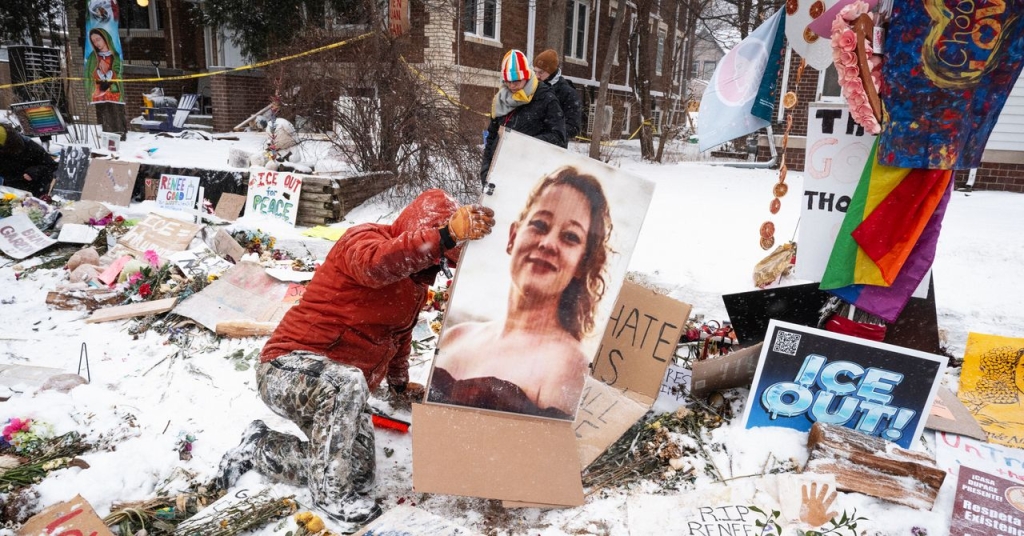
Explosive New Evidence Emerges in ICE Agent Shooting Case, Linking Officer to Fatal Minneapolis Police Incident
In a stunning twist that has sent shockwaves through the legal community and reignited fierce debates about law enforcement accountability, defense attorneys for a Minnesota man convicted of assaulting an ICE agent are demanding access to explosive investigative files that could completely unravel the prosecution’s case.
Roberto Carlos Muñoz-Guatemala, who was convicted in December of assault on a federal officer with a dangerous weapon and causing bodily injury, now finds himself at the center of a legal maelstrom after bombshell revelations surfaced connecting the ICE agent he allegedly assaulted to a controversial fatal shooting just weeks earlier.
The Chain of Events That Changed Everything
The case dates back to June 2025, when ICE agents surrounded Muñoz-Guatemala’s Nissan Altima on what court documents describe as an attempted deportation operation. According to official testimony, agent Jonathan Ross shattered the vehicle’s rear window with a tool before reaching inside, only to be dragged approximately 100 yards when Muñoz-Guatemala accelerated away. Ross, who deployed his taser repeatedly during the incident, suffered significant injuries.
Muñoz-Guatemala, who called 911 immediately after the encounter claiming he was the victim of an assault, maintained throughout his trial that he had no idea Ross was a federal agent. His attorneys argued that Ross’s plainclothes appearance—described as wearing “ranger green and gray” with his badge on his belt—failed to clearly identify him as law enforcement.
The jury convicted Muñoz-Guatemala on December 10, but the verdict now hangs in legal limbo after prosecutors’ worst nightmare came true: the same Jonathan Ross who testified against Muñoz-Guatemala was identified as the ICE agent who fatally shot 37-year-old Renee Nicole Good during Operation Metro Surge in Minneapolis on January 7.
The Good Shooting: Catalyst for Legal Earthquake
The revelation that Ross was involved in Good’s killing has sent Muñoz-Guatemala’s defense team scrambling for what they’re calling “newly discovered evidence” that could fundamentally alter the case’s trajectory. Good, described by community members as a Minnesota poet and mother of three, was killed during what ICE characterized as a “targeted operation” in Minneapolis.
Ross has been placed on administrative leave following the shooting—standard protocol after fatal use of force incidents—but crucially, the Justice Department has announced it will not pursue criminal charges against him. This decision has already sparked outrage in Minneapolis communities already reeling from questions about police accountability and use of force standards.
Defense Strategy: Unearthing the Truth About Agent Ross
In court filings that read like a legal thriller, Muñoz-Guatemala’s attorneys are demanding access to Ross’s training records, investigative files, and any documentation related to the Good shooting. Their argument is both strategic and explosive: if the jury convicted Muñoz-Guatemala based on the premise that driving away was not a reasonable response to Ross’s actions, then evidence about Ross’s conduct, tactics, and potential history of aggressive behavior becomes absolutely critical.
The defense team is essentially arguing that Ross may have been the aggressor in the June incident, using excessive force that provoked Muñoz-Guatemala’s flight response. They’re seeking to establish whether Ross has a documented history of behaving recklessly in the field or contrary to his training—information that could not only impact the assault conviction but also potentially influence sentencing if the conviction stands.
The Two-Pronged Jury Decision Tree
Legal analysts have identified a crucial vulnerability in the prosecution’s case. The jury instructions essentially created a two-part decision tree: jurors could convict Muñoz-Guatemala if they believed he should have known Ross was law enforcement, or if they believed driving away was not a reasonable response to the situation.
The defense’s bombshell motion highlights a critical gap in the record: the conviction verdict doesn’t specify which of these two prongs the jury relied upon. This ambiguity has opened the door for what could be a complete legal do-over if the court determines that evidence about Ross’s conduct in the Good shooting is relevant to assessing whether his actions in June were reasonable or excessive.
Contradictions and Credibility Issues Surface
The case against Muñoz-Guatemala was already showing cracks before the Good shooting revelation. During trial, Muñoz-Guatemala claimed he had asked to speak to an attorney—a statement that would suggest he knew Ross was law enforcement. However, an FBI agent who witnessed the incident testified he didn’t hear this request, and prosecutors stated they had never heard this claim before Muñoz-Guatemala made it in court.
These inconsistencies, combined with the newly revealed connection to the Good shooting, have defense attorneys arguing that their client was denied a fair trial by evidence that only came to light after conviction. They’re now asking the court to pause all deadlines for a new trial motion until the discovery dispute is resolved—a request that, if granted, could effectively freeze the case in legal limbo.
The Broader Implications: Law Enforcement Accountability in the Spotlight
Beyond the immediate legal drama, this case has reignited national conversations about law enforcement accountability, use of force standards, and the intersection of immigration enforcement with community safety. The fact that an ICE agent involved in a controversial fatal shooting was simultaneously the victim-witness in an assault prosecution has raised serious questions about oversight and transparency in federal law enforcement operations.
Community activists in Minneapolis have already begun organizing protests demanding a full investigation into Good’s killing, while immigration rights advocates are pointing to Muñoz-Guatemala’s case as evidence of systemic problems in how immigration enforcement operations are conducted.
What Happens Next?
Prosecutors have yet to file a formal response to the defense’s explosive motions, but legal experts say the government faces an uphill battle. The court must now decide whether evidence about Ross’s conduct in the Good shooting is sufficiently relevant to the June incident to warrant disclosure, and whether the timing of this revelation—coming after conviction but before sentencing—provides grounds for a new trial.
The Department of Homeland Security has declined to comment on Ross’s current duty status or whether any departmental review of the Good shooting is underway, while the Department of Justice has maintained its position that no criminal charges will be filed in connection with Good’s death.
As the legal battle intensifies, one thing is clear: this case has evolved from a straightforward assault prosecution into a complex examination of law enforcement conduct, accountability, and the sometimes blurry lines between victim and perpetrator in the justice system.
The coming weeks will determine whether Muñoz-Guatemala gets a new trial, whether the public ever sees the investigative files the defense is demanding, and whether this case becomes a landmark precedent for how courts handle situations where law enforcement officers’ conduct outside a specific prosecution becomes relevant to the case at hand.
One thing is certain: the legal community, immigration advocates, and law enforcement agencies across the country will be watching closely as this unprecedented situation unfolds.
Tags:
ICE agent controversy, Minneapolis police shooting, immigration enforcement accountability, federal officer assault case, Renee Nicole Good killing, Jonathan Ross investigation, Roberto Carlos Muñoz-Guatemala trial, Operation Metro Surge, law enforcement use of force, immigration deportation operations, federal agent training records, Minneapolis community outrage, ICE accountability demands, newly discovered evidence motion, law enforcement credibility issues, immigration rights advocacy, federal officer conduct investigation, Minneapolis legal drama, ICE agent administrative leave, Justice Department decision not to charge, immigration enforcement transparency, federal law enforcement oversight, Minneapolis community protests, ICE operation controversy, federal officer assault conviction, immigration enforcement tactics, law enforcement accountability standards, Minneapolis police community relations, federal agent misconduct allegations
Viral Sentences:
“The same ICE agent who killed Renee Nicole Good was also the victim in a high-profile assault case” “Defense attorneys demand explosive investigative files that could unravel ICE agent’s credibility” “Justice Department refuses to charge ICE agent in fatal Minneapolis shooting” “Immigration enforcement operation turns into legal nightmare for federal prosecutors” “Community demands answers as ICE agent’s dual role in separate cases comes to light” “New evidence suggests ICE agent may have been aggressor in assault case” “Minneapolis poet’s killing exposes cracks in federal law enforcement accountability” “Conviction now hangs in limbo as defense uncovers bombshell connection” “ICE agent’s conduct under microscope as legal battle intensifies” “Immigration rights advocates seize on case as example of systemic problems” “Legal experts say government faces uphill battle in keeping files sealed” “Court must decide if fatal shooting evidence is relevant to assault conviction” “Minneapolis community erupts as details of controversial ICE operation emerge” “Federal prosecutors’ worst nightmare: key witness linked to fatal shooting” “Defense argues ICE agent history of aggressive behavior could justify client’s actions” “Legal thriller unfolds as conviction verdict’s ambiguity becomes critical” “Immigration enforcement meets law enforcement accountability in unprecedented case” “Community activists organize as ICE agent placed on administrative leave” “Federal officer’s dual role raises serious questions about oversight and transparency” “Legal precedent at stake as court weighs newly discovered evidence motion”
,


Leave a Reply
Want to join the discussion?Feel free to contribute!