
Ice core reveals low CO2 during warm spell 3 million years ago
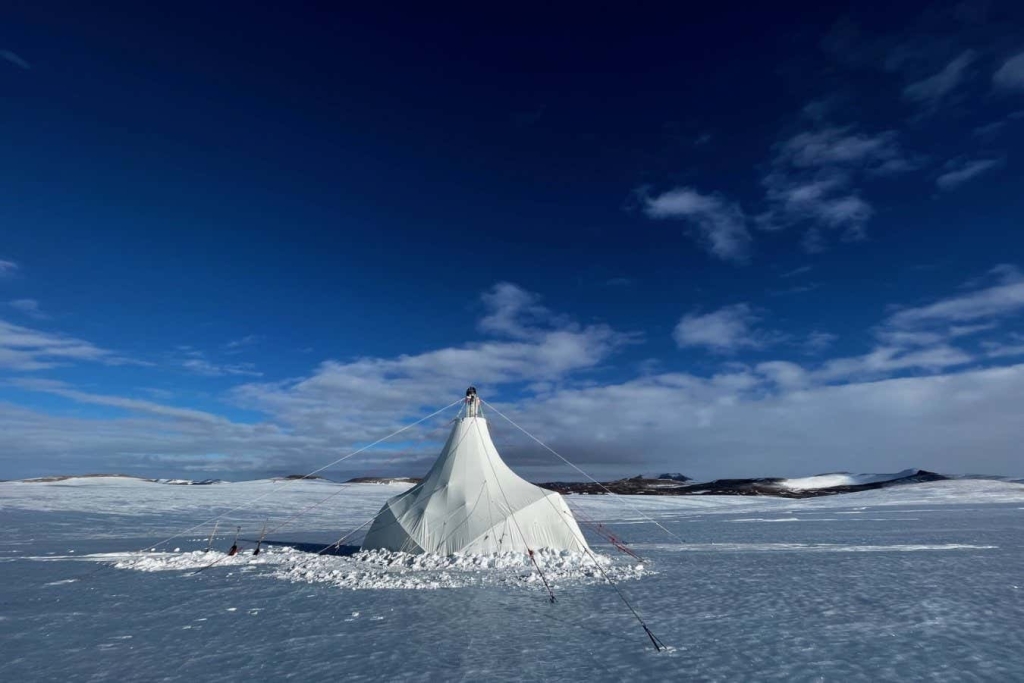
In a groundbreaking discovery that has sent shockwaves through the scientific community, researchers have successfully extracted and analyzed a 3-million-year-old ice core from Antarctica, providing unprecedented insights into Earth’s ancient atmosphere. This remarkable achievement, detailed in a recent study published in the journal Science, offers a unique window into a pivotal period in our planet’s history and raises crucial questions about the sensitivity of Earth’s climate to greenhouse gas fluctuations.
The ice core, retrieved from the Allan Hills region of Antarctica, contains tiny air bubbles that have preserved the composition of the atmosphere from the late Pliocene epoch. This era, which occurred roughly 3 million years ago, is of particular interest to climate scientists due to its similarities to our current climate conditions. During the Pliocene, global temperatures were approximately 1°C warmer than today, and sea levels were significantly higher, reaching up to 25 meters above current levels.
The team of researchers, led by Julia Marks-Peterson from Oregon State University, utilized advanced drilling techniques to extract the ancient ice. This process involved carefully penetrating the Antarctic ice sheet to reach layers that have remained undisturbed for millions of years. The retrieved core, measuring several hundred meters in length, was then meticulously analyzed in state-of-the-art laboratories to extract and measure the trapped air bubbles.
The results of this analysis have surprised the scientific community. The levels of carbon dioxide and methane found in the bubbles were significantly lower than previously estimated for this period. Carbon dioxide levels were measured at 250 parts per million (ppm), while methane concentrations stood at 507 parts per billion (ppb). These figures are notably lower than earlier indirect estimates, which had suggested CO2 levels around 400 ppm during the Pliocene.
This discovery has profound implications for our understanding of Earth’s climate sensitivity. The fact that such low levels of greenhouse gases were associated with a significantly warmer climate and higher sea levels suggests that our planet may be more responsive to atmospheric changes than previously thought. As Marks-Peterson notes, “Maybe the Earth system is even more sensitive to changes in CO2 than we have understood. That’s a little bit of a scary thought.”
The potential ramifications of this finding are far-reaching. If Earth’s climate is indeed more sensitive to greenhouse gas fluctuations than we believed, it could mean that even small increases in atmospheric CO2 could lead to more dramatic climate changes than current models predict. This would have serious implications for our understanding of future climate scenarios and the urgency of addressing anthropogenic climate change.
However, the scientific community is urging caution in interpreting these results. Cristian Proistosescu from the University of Illinois Urbana-Champaign points out that “any new data that suggests Pliocene CO2 levels were lower than previously expected means future climate change might be worse than previously expected.” Nevertheless, he and others emphasize the need for further research to confirm these findings and fully understand their implications.
Tim Naish from Victoria University of Wellington in New Zealand cautions against drawing definitive conclusions from this single study. He suggests that the research should be expanded to cover a broader range of time periods within the Pliocene, particularly focusing on the warmest phases of the epoch. Naish states, “It’s way too early to throw the baby out with the bathwater.”
Another challenge in interpreting the data comes from the nature of the ice core itself. Thomas Chalk from the European Center for Research and Education in Environmental Geosciences highlights that the distortion of ancient ice makes it difficult to determine whether the measured values represent an average condition, a cold period, or a warm period within the Pliocene. He emphasizes the need for additional context to fully understand the significance of these findings.
To address these uncertainties, the research team is now collaborating with the Beyond EPICA group, which recently extracted the oldest continuous ice core record, stretching back over 1 million years. By comparing their results with this more comprehensive dataset, the scientists hope to gain a clearer picture of the Pliocene climate and refine their understanding of Earth’s climate sensitivity.
This groundbreaking research not only provides valuable insights into Earth’s past climate but also has significant implications for our future. As we grapple with the challenges of anthropogenic climate change, understanding how our planet responded to natural variations in greenhouse gas levels millions of years ago becomes increasingly crucial. The findings from this 3-million-year-old ice core serve as a stark reminder of the delicate balance of our climate system and the potential consequences of even small changes in atmospheric composition.
As the scientific community continues to analyze and debate these findings, one thing is clear: our understanding of Earth’s climate history and its implications for the future has been significantly advanced by this remarkable feat of scientific exploration. The ice core from Allan Hills stands as a testament to human ingenuity and our relentless pursuit of knowledge about our planet’s past, present, and future.
#AncientIceCore #ClimateSensitivity #PlioceneEpoch #GreenhouseGases #AntarcticResearch #ClimateChange #EarthHistory #IceBubbles #CarbonDioxide #MethaneLevels #ClimateModels #EnvironmentalScience #GlobalWarming #SeaLevelRise #AtmosphericComposition #ClimateCrisis #ScientificDiscovery #ClimateResearch #Paleoclimatology #EarthSystemSensitivity
The Earth’s climate may be more sensitive than we thought. #ClimateShock
Ancient ice reveals surprising insights into our planet’s past. #IceCoreSecrets
3-million-year-old bubbles challenge our understanding of climate change. #ClimateMystery
Antarctica’s frozen time capsule unlocks Pliocene climate secrets. #IceAgeInsights
Low CO2 levels, high temperatures: a climate conundrum. #ClimateParadox
Earth’s past climate may hold keys to our future. #ClimateTimeMachine
Tiny air bubbles, big implications for our warming world. #ClimateWakeUpCall
Antarctic ice core: a window into Earth’s sensitive climate system. #ClimateSensitivity
Pliocene puzzle: solving the mystery of ancient greenhouse gases. #ClimateDetective
Ice core analysis: rewriting the story of Earth’s climate history. #ClimateRewrite
Climate sensitivity shocker: small changes, big impacts? #ClimateSurprise
Ancient ice, modern implications: the Pliocene connection. #ClimateLink
Antarctic treasure trove: unlocking 3 million years of climate data. #IceCoreTreasure
Climate conundrum: low CO2, high temperatures in Earth’s past. #ClimateMysterySolved
Ice core revelations: challenging our climate change assumptions. #ClimateRealityCheck
The Pliocene paradox: understanding Earth’s climate sensitivity. #ClimateParadoxSolved
Antarctic ice: nature’s climate time capsule. #IceAgeArchive
Climate sensitivity: the unexpected factor in global warming. #ClimateWildCard
Ancient air bubbles: rewriting the rules of climate science. #ClimateGameChanger
Ice core insights: the Pliocene’s warning for our warming world. #ClimateWarning,


Leave a Reply
Want to join the discussion?Feel free to contribute!