
ICE Pretends It’s a Military Force. Its Tactics Would Get Real Soldiers Killed
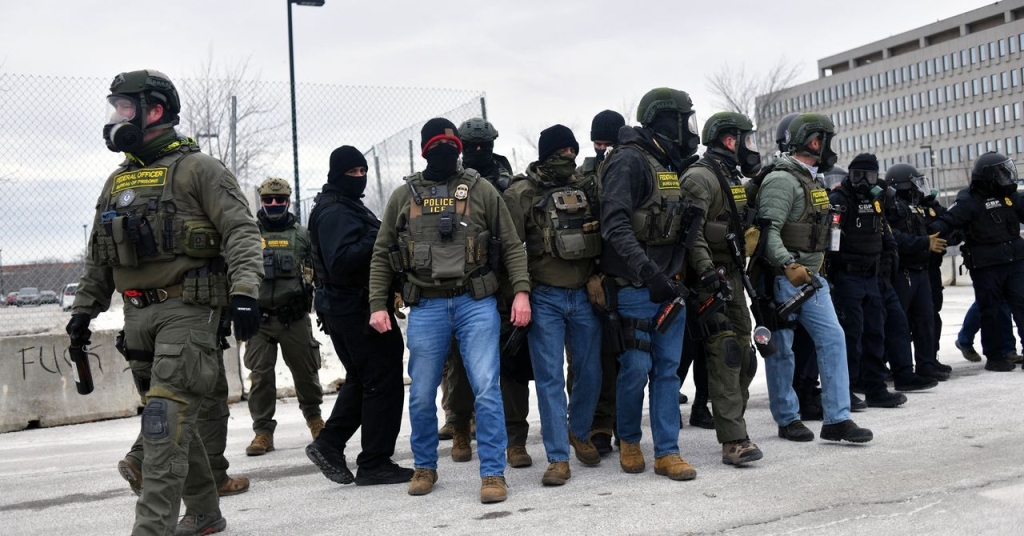
ICE Escalates Under White House Pressure, Raising Alarms Over Civil Liberties and Political Fallout
In a dramatic escalation of federal immigration enforcement, Immigration and Customs Enforcement (ICE) agents have reportedly intensified their tactics following direct encouragement from senior White House officials. Stephen Miller, the administration’s deputy chief of staff for policy, has been at the center of the controversy, urging ICE to ramp up arrests and even telling agents they possessed “federal immunity” during a high-profile address in October 2025.
Since Miller’s remarks, ICE operations have taken on a more aggressive and militarized character, sparking widespread concern among civil rights advocates, lawmakers, and local communities. The shift has been particularly pronounced in states like California, Illinois, Oregon, Minnesota, and Maine—regions that have historically resisted federal overreach and prioritized immigrant protections.
Critics argue that the administration’s hardline approach is not only ethically questionable but also strategically misguided. Political analysts warn that such tactics risk alienating moderate voters and energizing opposition, potentially jeopardizing Republican control of Congress and the White House in upcoming elections. “When enforcement becomes punitive rather than procedural, it erodes public trust and undermines the legitimacy of the institutions involved,” said Dr. Elena Martinez, a political science professor at Stanford University.
The use of militarized tactics by ICE has drawn comparisons to counterinsurgency operations, a framing that many experts reject as inappropriate and dangerous. Unlike the military, which operates under strict rules of engagement in conflict zones, ICE functions as a civilian law enforcement agency tasked with upholding immigration laws within the United States. “We cannot allow the normalization of military-style operations in our neighborhoods,” said Rep. Alexandria Ocasio-Cortez (D-NY). “This is not a war zone; it’s our home.”
The escalation has also strained relationships between federal and state authorities. Several governors have publicly condemned ICE’s tactics, with some threatening to withhold state resources or challenge the agency’s actions in court. “We will not stand by while our communities are terrorized,” said California Governor Gavin Newsom in a recent press conference. “ICE’s actions are not only inhumane but also counterproductive to public safety.”
Human rights organizations have documented a surge in complaints about ICE’s conduct, including allegations of excessive force, racial profiling, and violations of due process. The American Civil Liberties Union (ACLU) has filed multiple lawsuits against the agency, accusing it of operating outside the bounds of the law. “ICE’s tactics are not just aggressive—they are unconstitutional,” said ACLU attorney Lee Gelernt. “We are seeing a pattern of abuse that cannot be ignored.”
The administration, however, has defended its approach, framing it as necessary to address what it describes as a crisis at the border. “We have a duty to enforce the law and protect American citizens,” said a White House spokesperson. “ICE is doing exactly what the American people elected us to do.”
Yet, as tensions rise and public opinion shifts, the long-term consequences of this hardline stance remain uncertain. Political strategists warn that the administration’s tactics could backfire, galvanizing opposition and undermining its broader agenda. “When enforcement becomes the message, it risks overshadowing the policy itself,” said Dr. James Carter, a political analyst at the Brookings Institution. “The question is whether the administration is willing to pay the political price for its approach.”
As ICE continues to operate under heightened scrutiny, the debate over immigration enforcement is likely to remain a flashpoint in American politics. For now, the agency’s actions serve as a stark reminder of the delicate balance between security and civil liberties—a balance that, if tipped too far, could have profound implications for the nation’s democratic fabric.
Tags & Viral Phrases:
- ICE tactics escalate
- Stephen Miller federal immunity
- militarized immigration enforcement
- civil liberties under threat
- political fallout for Republicans
- governors push back on ICE
- ACLU sues ICE for abuse
- public trust eroding
- immigration enforcement crisis
- unconstitutional tactics
- state vs. federal showdown
- humanitarian concerns grow
- Trump administration hardline stance
- border security debate intensifies
- communities in fear
- due process violations
- strategic failure in enforcement
- militarized police state fears
- immigrant rights under attack
- political backlash brewing
,


Leave a Reply
Want to join the discussion?Feel free to contribute!