
ICE protester says her Global Entry was revoked after agent scanned her face
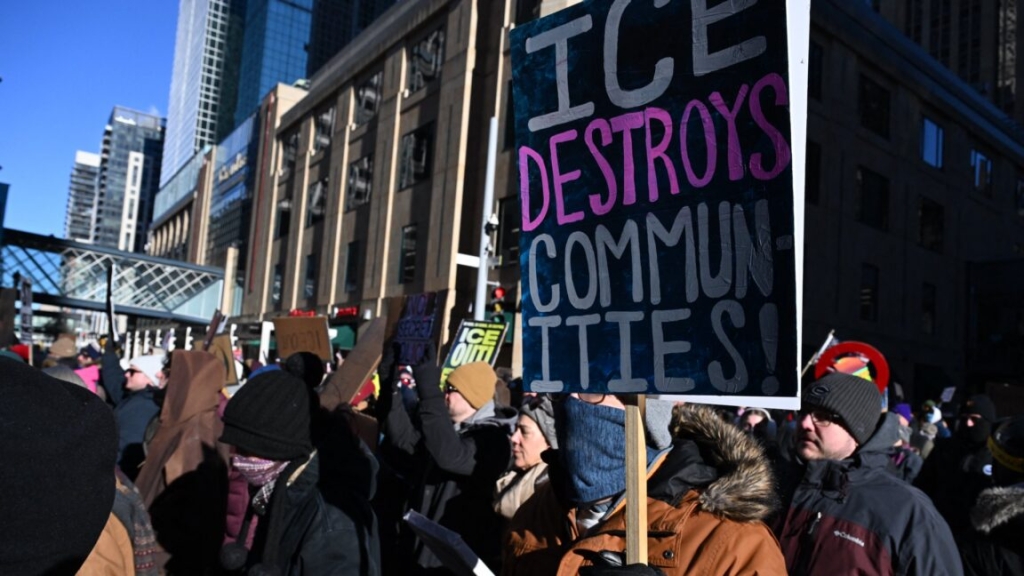
ICE’s Surveillance Arsenal: Legal Observer Detained After License Plate Scan Sparks Privacy Fears
In a chilling escalation of federal surveillance tactics, a legal observer was detained by Immigration and Customs Enforcement (ICE) agents after her license plate was scanned during a routine monitoring operation in Minneapolis. The incident has ignited fresh concerns about the expanding reach of facial recognition technology, automated license plate readers (ALPRs), and other digital surveillance tools being deployed under the Trump administration’s hardline immigration enforcement policies.
The legal observer, who has not been publicly identified, recounted her experience in a sworn declaration filed with local civil rights organizations. According to her statement, she was conducting lawful observation of federal agents during an immigration enforcement action when her vehicle was flagged by an ALPR system. Moments later, she was approached by ICE officers who informed her that her personal information had been logged into their database.
“I am concerned that border patrol and other federal enforcement agencies now have my license plate and personal information, and that I may be detained or arrested again in the future,” she wrote. “I am concerned about further actions that could be taken against me or my family. I have instructed my family to be cautious and return inside if they see unfamiliar vehicles outside of our home.”
The observer, who had undergone formal Legal Observer Training, emphasized that she was engaged in constitutionally protected activity at the time of the encounter. “I believe that I did not do anything that warranted being stopped in the way that I was on January 10th,” she stated. The interaction left her feeling “angry and intimidated,” raising serious questions about the chilling effect such tactics may have on public oversight of law enforcement.
Despite the unsettling experience, the observer has not abandoned her commitment to accountability. While she has paused active monitoring of federal agents since January 10, she continues to participate in peaceful protests and is “assessing when I will return to active observations.”
The Technology Behind the Crackdown
This incident is just one example of how federal agencies are leveraging advanced surveillance technologies in their immigration enforcement efforts. ICE has been at the forefront of adopting tools like facial recognition software from Clearview AI and a mobile face-scanning application called Mobile Fortify. These systems are used not only to verify citizenship but also to identify individuals at protests and other public gatherings.
In recent weeks, at least seven American citizens in the Minneapolis area reported being recorded with facial recognition technology by ICE agents, according to local activists and videos shared on social media. None of these individuals had given consent to be recorded, highlighting the invasive nature of these practices.
Beyond facial recognition, ICE employs a suite of other high-tech tools to track and identify individuals. Cell-site simulators, commonly known as Stingrays, are used to pinpoint the location of mobile phones, while Palantir software helps agents analyze vast amounts of data to identify potential deportation targets. Together, these technologies create a comprehensive surveillance network that critics argue infringes on civil liberties and privacy rights.
A Growing Backlash
The use of such technologies has sparked widespread criticism from lawmakers, privacy advocates, and civil rights organizations. In October 2025, a group of lawmakers declared that ICE’s forced face scans to verify citizenship were unconstitutional, calling for an immediate halt to the practice. Similarly, the deployment of Mobile Fortify to local police departments has raised alarms about the normalization of invasive surveillance in everyday law enforcement.
The New York Times recently reported on the extent of ICE’s surveillance activities, revealing that agents have been recording protesters and bystanders without their knowledge or consent. This revelation has fueled calls for greater transparency and oversight of federal surveillance programs.
What’s Next?
As the debate over surveillance and privacy continues to intensify, the legal observer’s experience serves as a stark reminder of the real-world consequences of these technologies. Her story underscores the need for robust safeguards to protect individuals from unwarranted monitoring and the potential misuse of their personal information.
For now, the observer remains committed to her advocacy work, even as she navigates the fear and uncertainty caused by her encounter with ICE. Her determination to continue observing and protesting reflects a broader struggle for accountability and justice in an era of increasingly pervasive surveillance.
Tags: ICE surveillance, facial recognition, license plate scanning, privacy concerns, civil liberties, immigration enforcement, Palantir, Clearview AI, Mobile Fortify, Stingray, legal observer, protest monitoring, data privacy, government overreach, Trump administration, Minneapolis, unconstitutional surveillance, digital rights, activist intimidation, border patrol, CBP, Homeland Security.
Viral Phrases: “Your license plate is now in a federal database,” “Facial recognition without consent,” “ICE’s surveillance state,” “Chilling effect on protest,” “Big Brother is watching,” “Privacy in the age of AI,” “Data collection without limits,” “The price of speaking out,” “Surveillance capitalism meets immigration enforcement,” “When technology meets tyranny.”
,


Leave a Reply
Want to join the discussion?Feel free to contribute!