
India is teaching Google how AI in education can scale
Google’s AI Education Gamble: Why India Is Teaching Silicon Valley the Hard Lessons on Scaling Classroom Tech
In the high-stakes race to dominate the future of education, Google is discovering that the toughest classroom is not in Silicon Valley—it’s in India. As artificial intelligence rapidly infiltrates schools worldwide, the tech giant is finding that the real challenges of scaling AI in education aren’t about algorithms or computing power, but about navigating the complex realities of diverse, decentralized, and often under-resourced education systems.
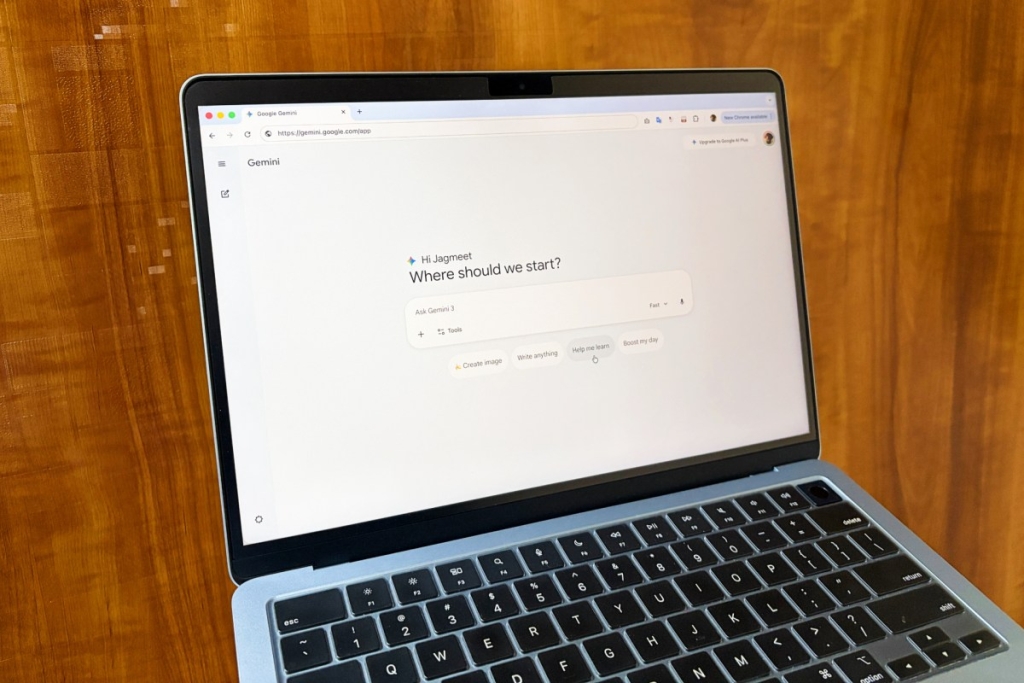
India has emerged as Google’s most critical testing ground for educational AI, and for good reason. With over a billion internet users, the country now leads globally in Gemini usage for learning, according to Chris Phillips, Google’s vice president and general manager for education. But this dominance isn’t just about numbers—it’s about confronting the messy, real-world complexities that most Silicon Valley companies have never had to face.
The scale is staggering. India’s school education system serves approximately 247 million students across nearly 1.47 million schools, supported by 10.1 million teachers. Its higher education system is equally massive, with over 43 million students enrolled in 2021-22—a 26.5% increase from 2014-15. This vast, decentralized ecosystem presents unique challenges that are forcing Google to fundamentally rethink how AI tools are designed and deployed.
One of the most significant lessons? AI in education cannot be a one-size-fits-all solution. In India, where curriculum decisions are made at the state level and government ministries play an active role, Google has had to completely reimagine its approach. Instead of pushing a standardized global product, the company is now designing tools that put control in the hands of local educators and administrators.
“We are not delivering a one-size-fits-all,” Phillips told TechCrunch. “It’s a very diverse environment around the world.”
This shift represents a fundamental departure from Silicon Valley’s traditional playbook. Rather than building products to scale globally with minimal customization, Google is learning to bend to the preferences and constraints of individual institutions. It’s a humbling lesson for a company accustomed to setting the terms of technological adoption.
The diversity of India’s educational landscape is also reshaping how Google thinks about AI-driven learning itself. The company is witnessing faster adoption of multimodal learning approaches in India, combining video, audio, and images alongside text. This reflects the need to reach students across different languages, learning styles, and levels of access—particularly in classrooms that aren’t built around text-heavy instruction.
Perhaps most surprisingly, Google has decided to design its AI for education around teachers, rather than students, as the primary point of control. The company is focusing on tools that assist educators with planning, assessment, and classroom management, rather than bypassing them with direct-to-student AI experiences.
“The teacher-student relationship is critical,” Phillips emphasized. “We’re here to help that grow and flourish, not replace it.”
This approach acknowledges a fundamental truth that many tech companies have overlooked: in education, relationships matter as much as technology. AI tools that attempt to replace human teachers often fail, while those that empower educators to be more effective tend to succeed.
Google is also confronting the harsh realities of digital inequality. In parts of India, AI in education is being introduced in classrooms that have never had one device per student or reliable internet access. The company is encountering schools where devices are shared, connectivity is inconsistent, or learning jumps directly from pen and paper to AI tools.
“Access is universally critical, but how and when it happens is very different,” Phillips noted, pointing to environments where schools rely on shared or teacher-led devices rather than one-to-one access.
These early learnings from India are already being translated into concrete deployments. Google has launched AI-powered JEE Main preparation through Gemini, a nationwide teacher training program covering 40,000 Kendriya Vidyalaya educators, and partnerships with government institutions on vocational and higher education, including India’s first AI-enabled state university.
But Google isn’t the only tech giant eyeing India’s education market. OpenAI has begun building a local leadership presence focused on education, hiring former Coursera APAC managing director Raghav Gupta as its India and APAC education head and launching a Learning Accelerator program. Microsoft has expanded partnerships with Indian institutions, government bodies, and edtech players to support AI-based learning and teacher training.
This intensifying competition underscores how education is becoming a key battleground as AI companies seek to embed their tools into public systems. However, it’s not all smooth sailing. India’s latest Economic Survey flags risks to students from uncritical AI use, including over-reliance on automated tools and potential impacts on learning outcomes.
Citing studies by MIT and Microsoft, the survey noted that “dependence on AI for creative work and writing tasks is contributing to cognitive atrophy and a deterioration of critical thinking capabilities.” This serves as a reminder that the race to enter classrooms is unfolding amid growing concerns over how AI shapes learning itself.
The implications extend far beyond India. As GenAI moves deeper into public education systems worldwide, the pressures now visible in India are likely to surface in other countries as well. Issues around control, access, and localization—now obvious in India—will increasingly shape how AI in education scales globally.
What makes India’s experience particularly valuable is that it’s forcing companies to confront these challenges early, before AI becomes deeply embedded in education systems elsewhere. The lessons being learned—about the importance of local control, multimodal approaches, teacher empowerment, and equitable access—are likely to become the blueprint for responsible AI deployment in education worldwide.
Google’s India playbook may well become the model for how AI companies approach education globally. But whether other companies follow suit, or whether the lessons from India’s complex educational landscape will be heeded, remains to be seen. What’s clear is that as AI continues its march into classrooms around the world, the most important lessons aren’t coming from Silicon Valley’s labs—they’re coming from the real classrooms of India.
Tags & Viral Phrases:
- Google’s AI education revolution
- Why India is the ultimate test for classroom AI
- Silicon Valley learns hard lessons from Indian schools
- AI in education: The billion-user challenge
- How Google is redesigning AI for real classrooms
- The teacher-student relationship in the age of AI
- India’s massive education system: A proving ground for tech giants
- AI multimodal learning: The future of education?
- OpenAI vs Google: The battle for India’s classrooms
- Microsoft’s education AI push in India
- The dark side of AI in education: Cognitive atrophy concerns
- Why one-size-fits-all AI doesn’t work in education
- Digital inequality meets artificial intelligence
- Google’s Gemini takes on India’s toughest entrance exams
- 40,000 teachers trained: Google’s massive AI education initiative
- India’s first AI-enabled state university
- The global implications of India’s AI education experiment
- How tech giants are reshaping public education systems
- The future of learning: AI, teachers, and the human touch
,

Leave a Reply
Want to join the discussion?Feel free to contribute!