
Interlune digs into the development of an excavator for helium-3 and construction projects on the moon
Moon Mining Startup Interlune Secures NASA Funding to Build Lunar Excavation Tech That Could Power the Artemis Era
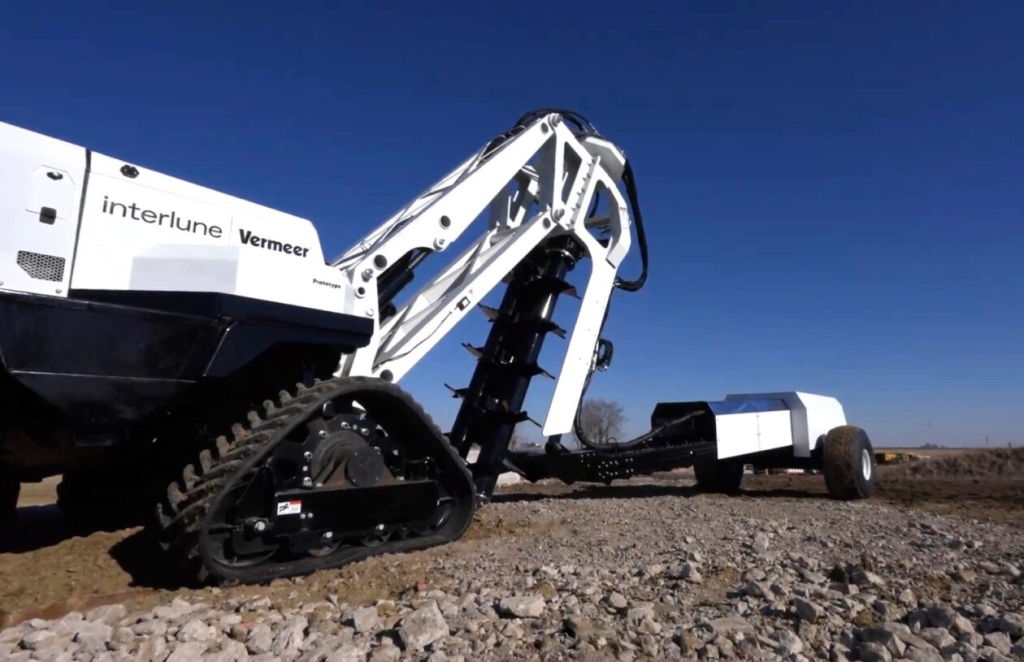
Seattle-based space startup Interlune is making serious moves to dig up the moon—and it’s not just about chasing helium-3 riches. With a fresh $150,000 NASA contract, the company is advancing lunar excavation tech that could lay the groundwork for roads, radiation berms, and even buried nuclear reactors on the moon.
Led by aerospace veteran Rob Meyerson, a former president of Blue Origin, Interlune is partnering with the Colorado School of Mines to optimize its Scalable Implement for Lunar Trenching (SILT)—a high-powered excavator capable of processing 100 metric tons of lunar soil per hour. While the primary mission is to extract helium-3—a rare isotope valued at up to $20 million per kilogram—the company sees its tech as a critical piece of the broader lunar infrastructure puzzle.
“We’re looking at some other tools that would move regolith around, or prepare a site for making a road or building a radiation berm, burying a certain piece of infrastructure like a nuclear reactor,” Meyerson told GeekWire. “We’re very interested in participating in the Artemis program in broader ways, and we think the technology we’re developing for helium-3 extraction can support that.”
Why Helium-3?
Helium-3 is a game-changer. It’s used in quantum computing, medical imaging, nuclear detection, and potentially fusion energy. Earth produces just 1 kilogram per year through tritium decay—but the moon is loaded with it, deposited over billions of years by solar wind. Interlune plans to extract 10 kilograms annually from its first harvesting operation in the 2030s. That’s enough to power a city the size of Seattle for a year—if fusion ever scales.
Not Just NASA—Big Money From Everywhere
Interlune’s ambitions are backed by a wave of government and private investment:
- Texas Space Commission: $4.8M grant for a Houston facility developing realistic lunar soil simulants with embedded solar wind elements.
- AFWERX (Air Force): $1.25M to develop helium-3 separation tech for quantum computer cooling.
- NASA TechFlights: $348K for reduced-gravity testing of regolith-processing systems.
- National Science Foundation: $246K for soil-sorting innovations.
From Moon Rocks to Moon Roads
Interlune isn’t stopping at helium-3. Once established, the company plans to evolve its operations to produce water, liquid oxygen, liquid hydrogen, metals, rare earths, and silicon—all critical for sustaining a permanent lunar presence. Meyerson envisions Interlune as a cornerstone of the in-space economy, providing excavation, construction, and resource processing services.
“Once we get established on the moon, and we have all this infrastructure—excavating and sorting and extracting and separating—we can then start to evolve and add capability,” Meyerson said. “Those are all important adjacent services that will help to build the in-space economy. And we think that is going to be huge.”
The Team and the Vision
Founded in 2020, Interlune’s leadership includes Apollo 17 moonwalker Harrison Schmitt and a growing team of 25 based in Seattle, Houston, and Washington, D.C. The company has raised $18 million in seed funding and recently secured additional capital through a Simple Agreement for Future Equity (SAFE).
A multispectral camera developed with NASA’s Ames Research Center could begin surveying the moon for helium-3 deposits as early as this summer. Interlune says it already has over half a billion dollars in purchase orders and government contracts.
With Artemis aiming to return humans to the moon in the coming years, Interlune is positioning itself not just as a resource extractor—but as a lunar construction and logistics powerhouse. The moon’s first roads, bases, and power systems might just be dug by machines built by this Seattle startup.
Tags: lunar mining, moon excavation, Artemis program, helium-3, space economy, NASA contracts, Interlune, lunar infrastructure, space startups, Blue Origin, Harrison Schmitt, regolith processing, quantum computing, fusion energy, space construction, moon roads, radiation berms, in-space economy, space resources, lunar soil, space tech, moon business, NASA TechFlights, AFWERX, Colorado School of Mines, Vermeer Corp.
Viral Sentences:
- “Interlune is digging up the moon—and it’s not just about helium-3.”
- “This Seattle startup could build the first roads on the moon.”
- “Helium-3 sells for $20 million per kilogram—and it’s sitting on the moon.”
- “Apollo astronaut Harrison Schmitt is backing the future of lunar mining.”
- “NASA just funded the tech that could power the Artemis era.”
- “10 kilograms of helium-3 could power Seattle for a year.”
- “The moon’s first nuclear reactor might be buried by Interlune’s excavator.”
- “Space mining isn’t sci-fi anymore—it’s a $500M+ business.”
- “Interlune’s lunar tech could build the in-space economy from the ground up.”
- “Moon dirt processing at 100 tons per hour—welcome to the new space race.”
,


Leave a Reply
Want to join the discussion?Feel free to contribute!