
INTERPOL Operation Red Card 2.0 Arrests 651 in African Cybercrime Crackdown
In a sweeping international crackdown that has sent shockwaves through the cybercriminal underworld, law enforcement agencies from 16 African nations have dismantled a sprawling network of online scammers, leading to 651 arrests and the recovery of over $4.3 million in stolen assets. Codenamed Operation Red Card 2.0, this eight-week initiative—conducted between December 8, 2025, and January 30, 2026—marks one of the most significant coordinated efforts to combat cybercrime on the African continent.
Orchestrated under the African Joint Operation against Cybercrime (AFJOC) and led by INTERPOL, the operation targeted high-yield investment scams, mobile money fraud, and deceptive loan applications that have plagued millions across Africa and beyond. The participating countries—Angola, Benin, Cameroon, Côte d’Ivoire, Chad, Gabon, Gambia, Ghana, Kenya, Namibia, Nigeria, Rwanda, Senegal, Uganda, Zambia, and Zimbabwe—pooled resources, intelligence, and technical expertise to expose a criminal ecosystem responsible for over $45 million in financial losses and 1,247 identified victims.
This wasn’t just a numbers game. The operation struck at the heart of organized cybercrime syndicates that weaponize technology to exploit the vulnerable. Authorities confiscated 2,341 devices, took down 1,442 malicious IPs, domains, and servers, and exposed the intricate web of phishing campaigns, identity theft rings, and fake digital asset investment schemes. The scale and sophistication of these operations underscore a grim reality: cybercrime in Africa is no longer the domain of lone hackers but a multi-million-dollar industry run by highly organized criminal enterprises.
One of the most striking cases emerged from Nigeria, where authorities dismantled a high-yield investment fraud ring that recruited young individuals as foot soldiers in their cyber-enabled crimes. Using a toxic mix of phishing, social engineering, and fake digital asset schemes, the syndicate lured victims with promises of astronomical returns. Investigators uncovered over 1,000 fraudulent social media accounts used to spread the scam, highlighting how social platforms have become fertile ground for digital deception.
In another audacious scheme, Nigerian law enforcement arrested six members of a cybercrime syndicate that breached the internal platform of a major telecommunications provider. By exploiting compromised staff login credentials, the group siphoned off “significant volumes of airtime and data” for illegal resale—a stark reminder of how insider threats can amplify the damage caused by external hackers.
Kenya’s case revealed the psychological warfare waged by scammers. Authorities arrested 27 individuals behind a fraud operation that weaponized messaging apps and social media, using fictitious testimonials to lure victims into fake investment schemes. Victims were shown bogus account statements and dashboards, creating an illusion of legitimacy. When they attempted to withdraw their supposed earnings, they were blocked—trapped in a digital maze designed to extract every last cent.
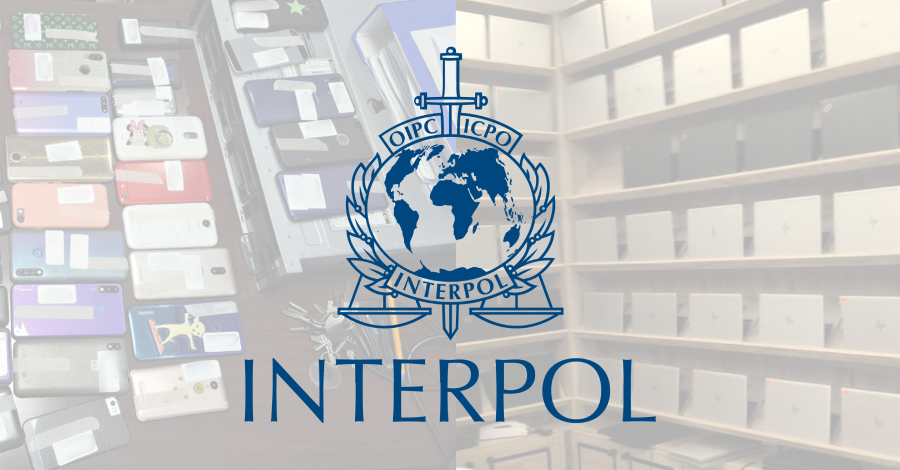
Perhaps the most predatory operation was uncovered in Côte d’Ivoire, where 58 suspects were arrested for running a mobile loan fraud scheme that targeted the most vulnerable populations. Using fake mobile applications and messaging services, the syndicate promised unsecured loans, only to trap victims with hidden fees, abusive debt-collection practices, and outright theft of sensitive personal and financial data. Authorities seized 240 mobile phones, 25 laptops, and over 300 SIM cards in the bust—a treasure trove of evidence exposing the machinery of exploitation.
Neal Jetton, INTERPOL’s director of the Cybercrime Directorate, didn’t mince words about the impact of these syndicates. “These organized cybercriminal syndicates inflict devastating financial and psychological harm on individuals, businesses, and entire communities with their false promises,” he said. “Operation Red Card highlights the importance of collaboration when combating transnational cybercrime. I encourage all victims of cybercrime to reach out to law enforcement for help.”
This operation is more than a law enforcement victory—it’s a clarion call for global cooperation in the digital age. Cybercrime knows no borders, and neither can its adversaries. The success of Operation Red Card 2.0 builds on the momentum of its predecessor, which in 2024-2025 led to 306 arrests and the seizure of 1,842 devices. Together, these operations signal a turning point in Africa’s fight against cybercrime, but they also serve as a sobering reminder of the scale of the threat.
As technology evolves, so too do the tactics of those who seek to exploit it. From AI-driven phishing to deepfake-enabled fraud, the arsenal of cybercriminals grows more sophisticated by the day. Yet, Operation Red Card 2.0 proves that with collaboration, innovation, and relentless determination, the forces of justice can—and will—strike back.
For the victims of these scams, the arrests and recoveries offer a glimmer of hope. But the battle is far from over. As INTERPOL and its African partners celebrate this victory, they remain vigilant, knowing that for every operation concluded, new threats loom on the horizon. The digital frontier is vast, and the fight to secure it is unending.
Tags: #OperationRedCard #CybercrimeCrackdown #AfricanLawEnforcement #INTERPOL #OnlineScams #DigitalFraud #HighYieldInvestmentScams #MobileMoneyFraud #CyberSecurity #TransnationalCrime #JusticeServed #TechNews #DigitalSafety #ScamAwareness #CybercrimeFighters #GlobalCooperation #TechVigilance #DigitalJustice #ScamBusters #CyberHeroes
Viral Sentences:
- “651 arrests, $4.3 million recovered—Operation Red Card 2.0 just delivered justice at scale!”
- “From Nigeria to Kenya, Africa’s cybercrime syndicates just met their match.”
- “Fake promises, real consequences—scammers beware, the digital dragnet is tightening.”
- “1,247 victims identified, 2,341 devices seized—this is how you fight back against online fraud.”
- “The future of cybercrime is organized, but so is the fight against it.”
- “Operation Red Card 2.0: When collaboration meets cybercrime, justice wins.”
- “Scammers used AI, law enforcement used intelligence—guess who came out on top?”
- “From phishing to fake loans, Africa’s cybercrime underworld just got exposed.”
- “This isn’t just a crackdown—it’s a message: the digital world has guardians.”
- “Operation Red Card 2.0 proves that in the fight against cybercrime, unity is the ultimate weapon.”
,


Leave a Reply
Want to join the discussion?Feel free to contribute!