
iPhone Air Review: Four Months Later, is Apple’s Thinnest iPhone Worth $999?
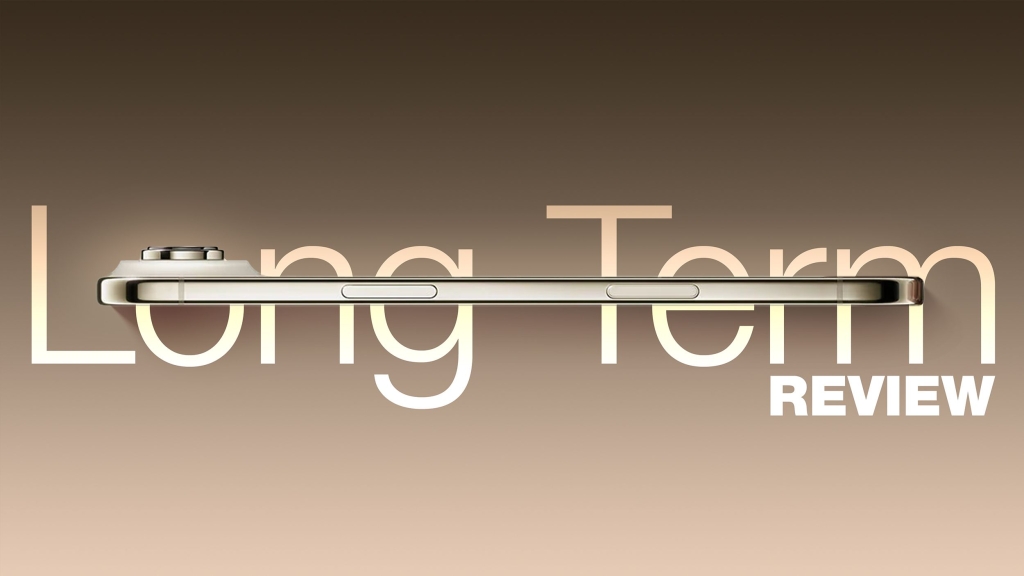
Apple’s iPhone Air: A Thin Dream That’s Struggling to Find Its Audience
Four months after its debut, Apple’s iPhone Air isn’t exactly flying off the shelves. In fact, reports suggest that sales have been so underwhelming that the company is rethinking its plans for a second-generation model. What was supposed to be Apple’s bold reinvention of the iPhone—its thinnest and lightest yet—has instead become a fascinating case study in design ambition versus market reality.
When Apple unveiled the iPhone Air, it promised a device that would redefine what a smartphone could be. At just a whisper-thin profile and featherlight in the hand, it was engineered for those who value portability above all else. But as MacRumors videographer Dan Barbera discovered during his four-month daily use, the iPhone Air is a device of contradictions—brilliant in some ways, baffling in others.
A Design That Still Turns Heads
Months after its release, the iPhone Air’s design remains its most compelling feature. The ultra-thin chassis is more than just a marketing gimmick—it fundamentally changes how the phone feels in your hand. It’s dramatically lighter than the iPhone 17 and iPhone 17 Pro, making it Apple’s most comfortable one-handed device to date. Hand it to someone who’s never seen one, and their eyes widen. “Is that an iPhone?” they ask, running their fingers along the impossibly slim edges.
The frosted glass back isn’t just for show. It’s practical, resisting fingerprints in a way that the glossy finishes of other iPhones simply can’t match. The titanium frame adds a premium feel while contributing to its surprising durability. Unlike some glass-backed phones that feel like they’re about to slip out of your hand, the iPhone Air has enough grip to be used confidently without a case. And honestly, slapping a case on this phone feels almost sacrilegious—it’s like putting a winter coat on a runway model.
That said, the iPhone Air is still very much a glass phone. Drop it, and you’re looking at a potentially expensive repair. AppleCare+ isn’t just recommended here—it’s practically essential.
Battery Life: Better Than You’d Think
When Apple revealed that the iPhone Air would have the smallest battery in the iPhone 17 lineup, collective groans echoed across the internet. How could a phone this thin possibly last through a full day? The answer, surprisingly, is: quite well.
For typical daily use—scrolling through social media, watching YouTube videos, navigating with maps, or using CarPlay in your car—the iPhone Air’s battery holds up admirably. Dan Barbera reports no major issues getting through a full day, even with moderate use. The efficiency of Apple’s A17 chip clearly helps here, squeezing every possible minute out of that slim battery.
However, power users should think twice. If you’re into mobile gaming, video editing, or any other battery-intensive tasks, you’ll likely find yourself hunting for a charger before bedtime. The iPhone Air is optimized for the everyday user, not the power user.
The Camera Compromise That Breaks the Deal
Here’s where the iPhone Air starts to lose altitude. In a year when even the standard iPhone 17 comes with a dual-camera system, Apple’s “budget flagship” (if you can call a $999 phone that) makes a baffling choice: it includes just one rear camera.
For casual photographers who primarily use the standard 1x wide lens, this might not be a dealbreaker. But for everyone else, it’s a significant limitation. There’s no ultra-wide lens for dramatic landscapes or group shots. No telephoto lens for that optical zoom goodness. No macro mode for close-up shots of flowers or products. And if you’re someone who loves capturing wide-angle architecture or cramped indoor spaces, the lack of a 0.5x zoom option will frustrate you constantly.
It’s particularly puzzling because you can get a dual-camera iPhone 17 for $200 less, or a triple-camera iPhone 17 Pro for just $100 more. The camera system isn’t just a feature on modern smartphones—it’s often the primary reason people upgrade. By stripping this down to a single lens, Apple asked customers to pay premium prices for a device that feels compromised in one of its most important aspects.
Audio: Fine for Quiet Rooms, Not Much Else
The iPhone Air features a single downward-firing speaker, a notable step down from the stereo setup found on other iPhone 17 models. In a quiet bedroom or office, it’s perfectly adequate for video calls, YouTube videos, or casual music listening. But take it into a slightly louder environment—say, a kitchen while cooking, or yes, that shower you mentioned—and you’ll find yourself straining to hear.
For a device positioned at the premium end of the market, this feels like another corner cut. In 2026, a single speaker on a $999 phone feels like a regression, not a design choice.
The Price Problem
At the heart of the iPhone Air’s struggles is a simple, brutal fact: it’s expensive for what it offers.
Priced at $999, the iPhone Air sits in a weird spot. For $200 less, the iPhone 17 gives you a dual-camera system, nearly identical performance, and only a marginal increase in thickness. For just $100 more, the iPhone 17 Pro delivers a triple-camera system, the faster A18 Pro chip, and Apple’s most advanced display technology. The only thing you’re really paying extra for with the Air is its thinness—and it turns out, most people aren’t willing to pay a premium for that.
This pricing strategy seems to have misjudged what customers value in a smartphone. While there’s certainly a market for ultra-thin, ultra-light devices, it appears to be smaller than Apple anticipated. The iPhone Air isn’t a bad phone—far from it. But in a lineup where every other model offers more features for less money (or only slightly more money), it’s hard to justify the cost.
What’s Next for the iPhone Air?
Given these challenges, it’s no surprise that Apple is hitting the pause button on the next-generation model. Originally rumored for a fall 2026 release, the second-generation iPhone Air has reportedly been delayed as Apple reevaluates its strategy.
The most likely path forward involves addressing the Air’s biggest weaknesses. A second rear camera seems almost mandatory at this point—the single-lens setup is too limiting in a market where even budget phones offer multiple cameras. Display improvements are also on the table, possibly including a smaller Dynamic Island to reduce the visual footprint of the front-facing camera and Face ID sensors.
If these changes materialize, we might see a new iPhone Air launch in spring 2027 rather than the originally planned fall 2026 timeframe. Apple needs to give developers and suppliers time to implement these improvements while also giving the market time to forget the lukewarm reception of the first model.
The Verdict: A Bold Experiment That Missed the Mark
The iPhone Air is a fascinating device. It’s a bold attempt to create something genuinely different in a smartphone market that often feels stagnant. The thinness, the lightness, the premium materials—they all contribute to a phone that feels special in a way that few devices do anymore.
But special isn’t always enough. In focusing so intensely on creating the thinnest iPhone possible, Apple seems to have lost sight of what makes an iPhone worth buying. The camera system is too limited, the speaker is underwhelming, and the price doesn’t match the value proposition. It’s the kind of phone that engineers and designers love but that average consumers, faced with more practical alternatives, pass over.
The iPhone Air isn’t a failure in the traditional sense—it’s a learning experience. It proves that there’s a market for ultra-premium, ultra-portable devices, but also that this market has limits. For Apple to succeed with future ultra-thin iPhones, it will need to find a way to deliver that magical thinness without asking customers to compromise on the features they’ve come to expect.
For now, the iPhone Air remains a beautiful curiosity—a phone that impresses everyone who holds it but convinces almost no one to actually buy it. And in the brutal world of smartphone sales, that might be the most damning verdict of all.
Tags: iPhone Air review, Apple’s thinnest iPhone, iPhone Air sales problems, iPhone Air battery life, single camera iPhone, ultra-thin smartphone, iPhone Air price too high, Apple rethinking iPhone Air, iPhone Air vs iPhone 17, titanium iPhone, frosted glass iPhone, iPhone Air speaker issues, delayed iPhone Air 2, Apple’s design gamble, iPhone Air durability, one-handed iPhone, premium smartphone value, Apple’s thinnest phone fails, iPhone Air camera compromise, smartphone market trends
Viral Phrases: “too thin to succeed,” “Apple’s beautiful mistake,” “paying $1000 for one camera,” “the iPhone that nobody asked for,” “light as a feather, expensive as gold,” “Apple’s thinnest flop,” “when thinness isn’t enough,” “the $999 compromise,” “Apple’s design hubris,” “a phone for showing off, not using,” “the experiment that didn’t fly,” “Apple’s thinnest lesson,” “form over function disaster,” “the iPhone that time forgot,” “beauty that doesn’t justify the price,” “Apple’s most polarizing iPhone,” “thinness at any cost,” “the phone that proves specs still matter,” “Apple’s $1000 question mark,” “when premium means less,” “the iPhone Air paradox.”
,
Leave a Reply
Want to join the discussion?Feel free to contribute!