
Iran war heralds era of AI-powered bombing quicker than ‘speed of thought’ | AI (artificial intelligence)
AI-Accelerated Warfare: The New Era of “Speed of Thought” Strikes
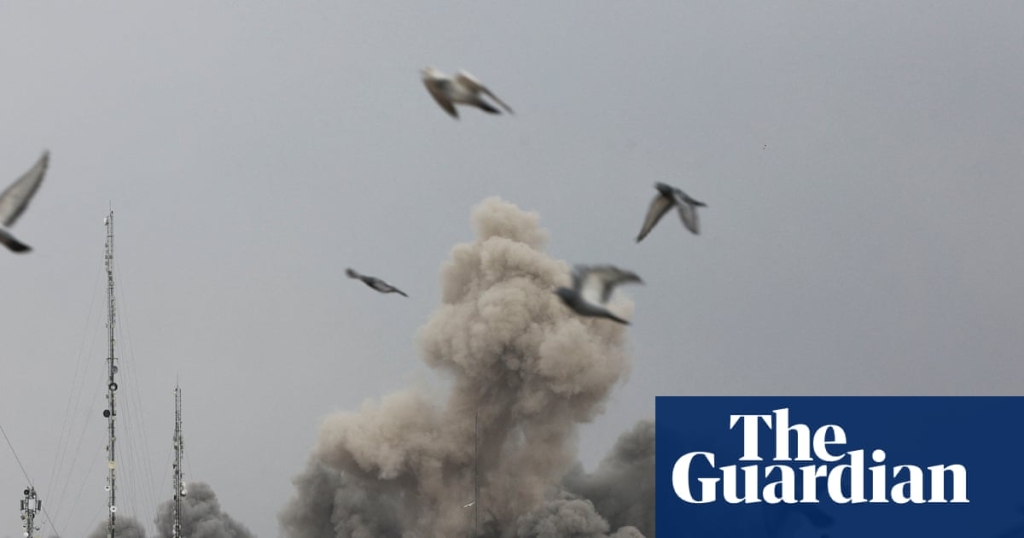
In a stunning display of technological warfare, the U.S. military, in coordination with Israeli forces, has deployed advanced AI systems to execute a lightning-fast offensive against Iranian targets, marking what experts are calling a watershed moment in modern combat. The operation, which saw nearly 900 strikes launched in the first 12 hours, leveraged artificial intelligence to compress the traditional “kill chain” from days or weeks into mere minutes or seconds—a phenomenon military analysts are now terming “decision compression.”
At the heart of this AI-driven blitz was Anthropic’s Claude model, which had been integrated into the U.S. Department of Defense’s systems just months earlier through a controversial partnership aimed at accelerating war planning. Working in tandem with Palantir’s battlefield analytics platform, Claude helped identify, prioritize, and recommend targets while simultaneously evaluating the legal basis for each strike. The result was an unprecedented synchronization of assassination attempts, regime decapitation efforts, and aerial bombardments—all executed in parallel with machine-like precision.
“The AI machine is making recommendations for what to target, which is actually much quicker in some ways than the speed of thought,” explains Craig Jones, a political geography expert at Newcastle University. This acceleration creates a dangerous feedback loop where human operators, overwhelmed by the velocity of AI-generated options, may simply rubber-stamp automated recommendations rather than exercising meaningful oversight.
The human cost of this AI acceleration became tragically apparent when a missile strike hit a school in southern Iran, killing 165 people, many of them children. While the U.S. military claims to be investigating the incident, the strike’s proximity to a military barracks raises questions about how AI systems balance military objectives against civilian casualties when operating at “the speed of thought.”
This technological arms race extends beyond the current conflict. In 2025, Israel reportedly used AI to identify targets in Gaza, while Iran claimed to employ AI in its missile-targeting systems—though its capabilities pale in comparison to American and Chinese systems. Meanwhile, the U.S. administration’s on-again, off-again relationship with Anthropic (banning the company one week, then quietly continuing its use) highlights the chaotic policy environment surrounding military AI deployment.
The implications reach far beyond this single conflict. As Prerana Joshi of the Royal United Services Institute notes, AI is being embedded across military operations—from logistics and training to maintenance and decision management. The technology promises to synthesize vast amounts of battlefield data at speeds impossible for human operators, potentially giving early adopters an insurmountable advantage.
However, this efficiency comes with profound ethical concerns. David Leslie, professor of ethics at Queen Mary University of London, warns of “cognitive off-loading,” where human decision-makers become detached from the consequences of their choices because the intellectual labor has been outsourced to machines. In an era where AI can collapse planning timelines from weeks to seconds, the window for meaningful human deliberation may effectively close before it opens.
As AI continues its march into military applications, the fundamental nature of warfare appears to be shifting. No longer constrained by human processing speeds or traditional command structures, tomorrow’s conflicts may unfold at the pace of silicon rather than synapse—raising urgent questions about accountability, ethics, and the role of human judgment in an age of algorithmic warfare.
Tags: AI warfare, military technology, decision compression, kill chain, Anthropic Claude, Palantir, autonomous weapons, cognitive off-loading, algorithmic warfare, speed of thought, military AI, defense technology, Iran conflict, US military, Israel strikes
Viral Sentences:
- “The AI machine is making recommendations for what to target, which is actually much quicker in some ways than the speed of thought”
- “You’re doing everything at once” – the new paradigm of simultaneous strikes
- “The deployment of AI is expanding” across all aspects of military operations
- “This is the next era of military strategy and military technology”
- “Humans tasked with making a strike decision can feel detached from its consequences”
- “AI is a technology that will allow decision makers to improve the productivity and efficiency of what they do”
- “The advantage is in the speed of decision-making, the collapsing of planning from what might have taken days or weeks before to minutes or seconds”
,


Leave a Reply
Want to join the discussion?Feel free to contribute!