
It’s Not Just You. Trump’s State of the Union Triggered Siri on iPhone Users’ Phones
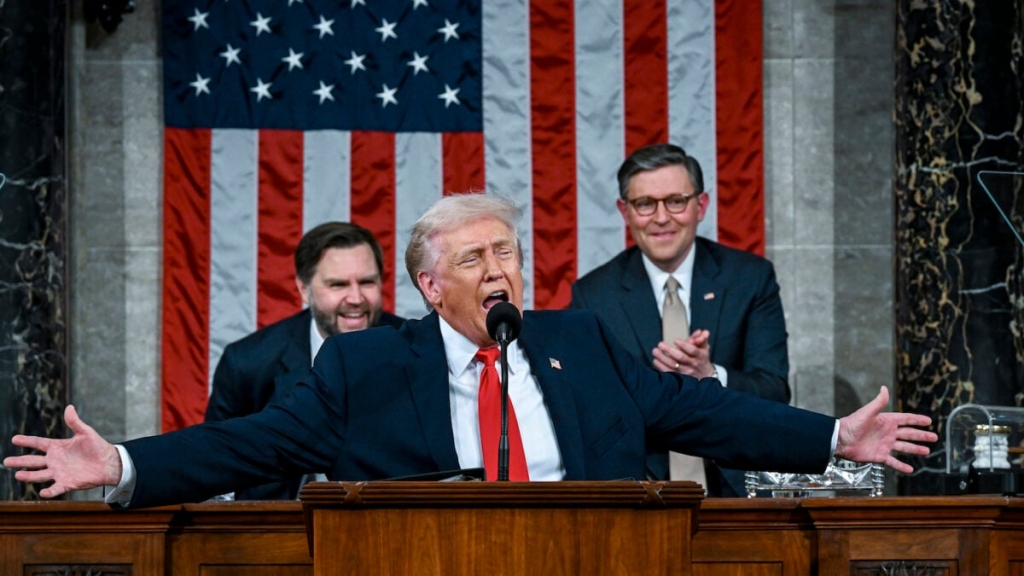
iPhone Users Report Siri Activation During Trump’s State of the Union Address
In an unexpected technological hiccup during President Donald Trump’s State of the Union address, numerous iPhone users across the United States reported that their devices’ virtual assistant, Siri, was inadvertently triggered during the emotionally charged speech.
The incident occurred during a particularly gripping segment of the address when President Trump recounted the harrowing battlefield experience of Chief Warrant Officer Eric Slover. As the President detailed Slover’s injuries sustained during a military operation, many iPhone users found their devices springing to life, responding to what Siri apparently interpreted as its activation phrase.
According to reports compiled by Gizmodo, the Siri trigger appeared to happen during Trump’s description of Slover’s injuries: “While preparing to land, enemy machine guns fired from every angle and Eric was hit very badly in the leg and hip, one bullet after another. He absorbed four agonizing shots, shredding his leg into numerous pieces.”
The timing of these activations suggests that Siri may have been triggered by words such as “searing,” “serious,” or possibly even “was hit very,” though the exact trigger phrase remains unclear. What is certain is that the virtual assistant began responding during this specific portion of the speech, causing confusion and surprise among viewers who had their iPhones nearby with voice activation enabled.
This technological quirk highlights the sophisticated yet sometimes unpredictable nature of modern voice recognition software. Apple’s Siri, like other virtual assistants, has evolved to recognize increasingly nuanced voice patterns and contextual cues. The feature, which once required users to say “Hey Siri” for activation, now responds to the simpler command of just “Siri,” making it more sensitive to potential false triggers.
Social media platforms quickly became flooded with accounts from users who experienced this phenomenon. Matt Novak of Gizmodo first brought widespread attention to the issue, and numerous other users confirmed similar experiences. One Bluesky user, Jill Twiss, shared that she too had her Siri activated during the address. Another user on X (formerly Twitter) suggested that the word “serious” rather than “searing” might have been the culprit, though the timing of their post aligns with the moment when most users reported the activation.
The incident serves as a fascinating intersection of technology and politics, demonstrating how even the most carefully planned political events can be disrupted by the unintended consequences of our increasingly connected world. It also raises questions about the sensitivity settings of voice-activated assistants and how they might be improved to better distinguish between intentional commands and coincidental speech patterns.
Interestingly, some users reported that their activated Siri pulled up search results related to the content of Trump’s speech, including information about bullets and leg injuries. This suggests that not only was Siri triggered, but it also attempted to provide relevant information based on the context of the speech it overheard.
The timing of this incident is particularly noteworthy given that Apple is reportedly planning significant updates to Siri’s functionality. According to recent reports, Apple had been working on enhanced Siri capabilities that were expected to be released next month. However, these updates have reportedly been delayed due to concerns about the system being “slow and inaccurate.”
This delay in Siri’s development might be seen in a new light in the wake of this State of the Union incident. The fact that Siri was triggered by speech that was not intended as a command highlights the ongoing challenges in perfecting voice recognition technology. It underscores the delicate balance that must be struck between making virtual assistants responsive enough to be useful while not so sensitive that they become a nuisance.
For many viewers, the unintended Siri activation provided a moment of levity during what was otherwise described as a “rough” political address. In an era where political speeches often carry heavy emotional weight and can be divisive, the shared experience of having one’s phone unexpectedly respond to the President’s words created a moment of communal amusement and connection among technology users.
This incident also serves as a reminder of the pervasive nature of technology in our daily lives. Even during formal political events like the State of the Union, our devices are listening, ready to respond at a moment’s notice. It raises interesting questions about privacy, the role of technology in our civic engagement, and how we navigate the increasingly blurred lines between our digital and physical worlds.
As we move forward, incidents like this will likely become more common as voice-activated technology becomes more sophisticated and ubiquitous. They serve as important case studies for tech companies in refining their products and for society in understanding the implications of living in an always-on, always-listening world.
For now, iPhone users can take solace in the fact that they were part of a unique moment in tech-political history, where the President’s words inadvertently activated millions of devices across the nation, creating an unexpected chorus of Siri responses during one of the most watched political events of the year.
Tags: Siri activation, State of the Union, Trump speech, iPhone glitch, voice assistant, technology fail, Apple Siri, political technology, virtual assistant, smartphone features, voice recognition, tech news, digital assistant, iOS features, speech-to-text, unintended activation, political event technology, modern communication, smart devices, tech humor, presidential address, gadget news, consumer technology, AI assistants, digital privacy, speech recognition errors, tech culture, smartphone quirks, voice command issues, political tech intersection
,

Leave a Reply
Want to join the discussion?Feel free to contribute!