
I’ve done extensive testing on the Galaxy S26 Ultra’s 8-bit display, and it isn’t a big problem, but it could be
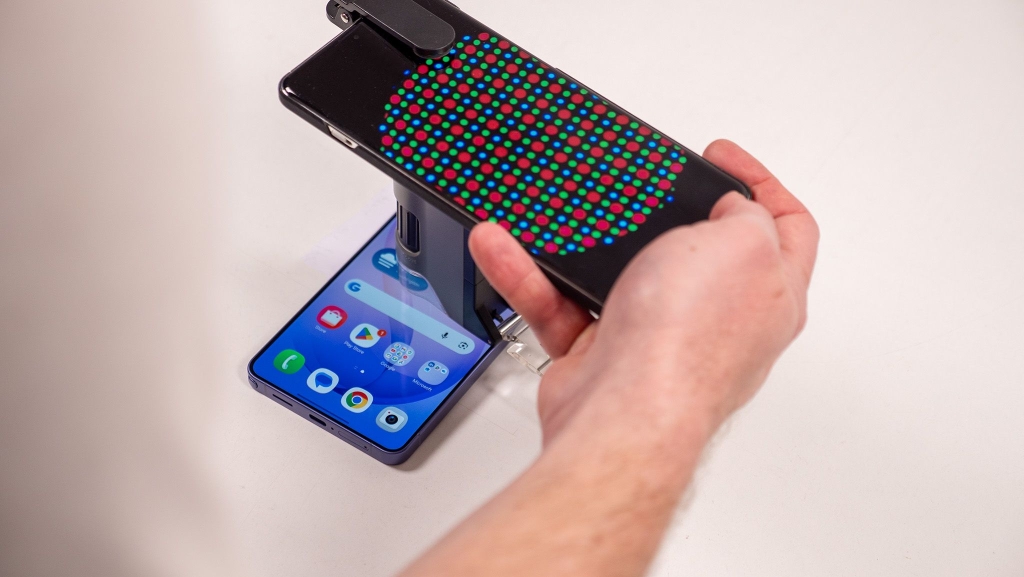
Samsung Galaxy S26 Ultra Display: 8-Bit Panel, 10-Bit Trickery, and the FRC Controversy
When Samsung unveiled the Galaxy S26 Ultra at the late-February Galaxy Unpacked event, the tech world was buzzing about two major display claims: the revolutionary Privacy Display feature and the supposed upgrade to true 10-bit panels capable of displaying over a billion colors. However, what Samsung delivered was far more complicated than initially advertised.
The 10-Bit Deception: What Samsung Actually Delivered
Samsung confirmed to Android Authority that the Galaxy S26 Ultra’s display is technically an 8-bit panel (capable of 16.7 million colors), not the 10-bit (1.07 billion colors) panel that was heavily marketed. This revelation echoes Apple’s 2008 lawsuit over similar claims about laptop display capabilities, raising serious questions about marketing transparency in the tech industry.
The company’s solution? Frame Rate Control (FRC), also known as temporal dithering—a technique that rapidly alternates between two colors to create the illusion of a color that “doesn’t exist” on the hardware. While this method effectively eliminates color banding in many scenarios, it introduces a different set of problems that affect a significant portion of users.
My Deep Dive Testing: The Galaxy S26 Ultra’s Display Is Built Different
I’ve spent days subjecting the Galaxy S26 Ultra’s display to every test in my arsenal, including extensive flicker and dithering analysis. Here’s what I discovered:
The color banding issue that plagued previous Samsung flagships appears to be solved. When watching a 4K HDR YouTube video featuring Costa Rican wildlife, the green snake scene at the 8-second mark—notorious for exposing color banding—shows a smooth gradient on the S26 Ultra where the S25 Ultra displayed stark color separation.
However, this “solution” comes with a caveat: the display is still fundamentally an 8-bit panel using software tricks to simulate 10-bit color depth.
The FRC Mystery: Samsung’s Secret Sauce
What makes the Galaxy S26 Ultra’s implementation fascinating is that it doesn’t appear to use traditional FRC methods. Under microscopic examination at 480fps, I observed no pixel flickering or “dancing” that characterizes typical dithering techniques. This suggests Samsung has developed a novel approach to temporal color manipulation.
I’ve reached out to Samsung multiple times for clarification on their methodology, but they have not responded with specifics about what makes their technique different from conventional FRC.
Why This Matters: The Dithering Dilemma
Temporal dithering isn’t just a technical curiosity—it’s a serious accessibility issue. While the technique successfully creates smoother color gradients, it causes debilitating symptoms in flicker-sensitive individuals:
- Mild symptoms: headaches, eye strain, dizziness
- Severe reactions: nausea, migraines, vertigo
- Documented cases: extensive forum discussions on LEDstrain and Reddit’s r/PWM_Sensitive community
One affected user, Mark, explained that Microsoft’s introduction of dithering in Windows 11 has rendered the operating system “completely unusable” for him and others with similar sensitivities. He fears for his job security as modern systems increasingly mandate these display techniques without providing alternatives.
The Industry-Wide Problem
The Galaxy S26 Ultra controversy highlights a broader issue in consumer electronics: companies implementing visual enhancement techniques without adequate research into their effects on human health. This mirrors the low-frequency PWM dimming controversy that made many displays unusable for sensitive individuals.
The solution seems straightforward—either use true 10-bit panels or provide options to disable dithering—but the industry has been slow to adopt either approach. Operating systems rarely allow users to force 8-bit color modes, and even when they do, individual applications may override these settings.
The Bottom Line
Samsung’s approach with the Galaxy S26 Ultra is arguably more sophisticated than traditional FRC methods, showing no visible pixel movement under microscopic examination. However, the fundamental issue remains: without transparency about what techniques are being used and why users cannot disable them, many people are being excluded from using cutting-edge technology.
As someone personally sensitive to PWM dimming but not affected by FRC dithering, I recognize that the opposite is true for many others. This highlights the need for customizable display options that accommodate the full spectrum of human visual processing differences.
I hope Samsung and other manufacturers are listening: true innovation shouldn’t come at the cost of user comfort and accessibility.
viral tags and phrases:
Samsung Galaxy S26 Ultra display controversy
10-bit vs 8-bit display deception
Frame Rate Control FRC temporal dithering
display flicker sensitivity issues
color banding solution Samsung
accessibility problems modern displays
PWM dimming controversy
temporal dithering health effects
Samsung display technology secrets
flicker-sensitive users problems
display accessibility features
true 10-bit panel rarity
Samsung marketing transparency questions
display technology health concerns
visual enhancement techniques controversy
operating system dithering problems
display customization needs
hardware vs software color depth
Samsung Galaxy S26 Ultra review
display technology accessibility crisis
,

Leave a Reply
Want to join the discussion?Feel free to contribute!