
James Webb Takes Long, Hard Look Inside Uranus
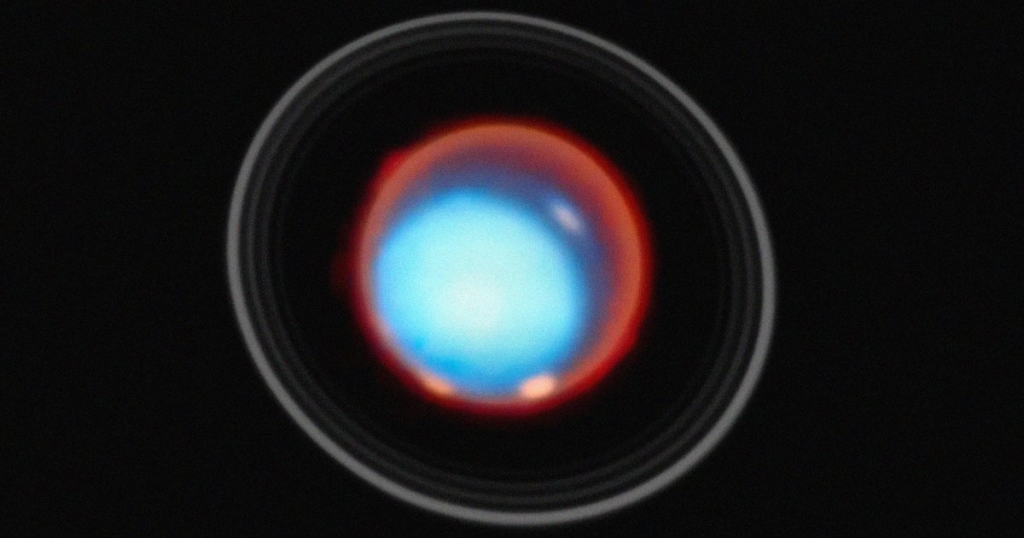
Uranus Revealed in Stunning 3D Detail: James Webb Telescope Unveils the Ice Giant’s Mysterious Auroras and Magnetic Secrets
In a groundbreaking leap for planetary science, NASA’s James Webb Space Telescope (JWST) has delivered the most detailed, three-dimensional portrait yet of Uranus’s upper atmosphere—unlocking secrets hidden for decades since Voyager 2’s fleeting flyby in 1986. What was once a “drab” blue orb is now a vibrant, dynamic world of glowing auroras, complex magnetic fields, and atmospheric mysteries, all captured in unprecedented clarity.
A New Window into the Ice Giant’s Secrets
For the first time, astronomers have mapped the vertical structure of Uranus’s upper atmosphere, revealing how temperature and charged particles vary with height across the planet. Using JWST’s Near-Infrared Spectrograph (NIRSpec), an international team detected faint glows from molecules high above the planet’s cloud tops, offering a 3D view of energy movement and magnetic field interactions.
“This is the first time we’ve been able to see Uranus’s upper atmosphere in three dimensions,” said Paola Tiranti, PhD student at Northumbria University and lead author of the study published in Geophysical Research Letters. “With Webb’s sensitivity, we can trace how energy moves upward through the planet’s atmosphere and even see the influence of its lopsided magnetic field.”
Auroras Like Nowhere Else in the Solar System
Uranus’s auroras are a cosmic spectacle unlike anything seen on Earth. While our auroras dance around the poles, Uranus’s are wildly different due to its extreme tilt—97.77 degrees off its orbital plane. This means its auroras appear as glowing orange and red patches that extend far beyond what Voyager 2 could see, sweeping across the planet in complex, unpredictable patterns.
“Uranus’s magnetosphere is one of the strangest in the Solar System,” Tiranti explained. “It’s tilted and offset from the planet’s rotation axis, which means its auroras sweep across the surface in complex ways.” These auroral bands, detected near Uranus’s magnetic poles, are direct manifestations of the planet’s internal magnetic field—something we can’t probe remotely without a spacecraft in situ.
A Cooling Mystery Continues
The new data also support a long-standing theory: Uranus’s upper atmosphere is still cooling, a trend first observed in the early 1990s. This cooling, combined with the planet’s bizarre magnetic field, makes Uranus a unique laboratory for understanding how ice giants distribute energy in their upper layers.
Why This Matters: Beyond Our Solar System
Understanding Uranus isn’t just about satisfying curiosity—it’s a crucial step toward characterizing giant planets beyond our Solar System. As JWST continues to revolutionize our view of the cosmos, these findings could inform future missions and even help us identify habitable worlds among the stars.
The Road Ahead: Will We Return to Uranus?
Despite these stunning revelations, the future of Uranus exploration remains uncertain. Budget cuts and shifting priorities have endangered interplanetary missions, leaving the dream of a dedicated Uranus orbiter or probe in limbo. But with JWST’s latest discoveries, the case for a return visit has never been stronger.
Tags: Uranus, James Webb Space Telescope, JWST, auroras, magnetic field, ice giant, planetary science, NASA, space exploration, 3D mapping, upper atmosphere, charged particles, magnetosphere, Voyager 2, Northumbria University, Geophysical Research Letters, Heidi Hammel, space mysteries, cosmic phenomena, infrared spectroscopy, solar system, exoplanets, space news, viral science, trending space stories
Viral Sentences:
- “Uranus just got a glow-up—JWST reveals its auroras in stunning 3D detail!”
- “The ice giant’s magnetic field is so weird, its auroras don’t even know where to go.”
- “Uranus is cooler than we thought—literally and figuratively.”
- “JWST just proved that Uranus is the most misunderstood planet in the solar system.”
- “Forget Mars—Uranus is the next big thing in space exploration (if we can afford it).”
- “Auroras on Uranus? More like a cosmic light show you’ve never seen before.”
- “Uranus’s magnetic field is so tilted, it’s basically the planet’s version of a bad hair day.”
- “JWST’s new images of Uranus are so detailed, they’re practically 4K.”
- “Uranus is cooling down, but its mysteries are just heating up.”
- “The James Webb Space Telescope just gave Uranus the close-up it deserves.”
,

Leave a Reply
Want to join the discussion?Feel free to contribute!