
Jensen Huang just put Nvidia’s Blackwell and Vera Rubin sales projections into the $1 trillion stratosphere
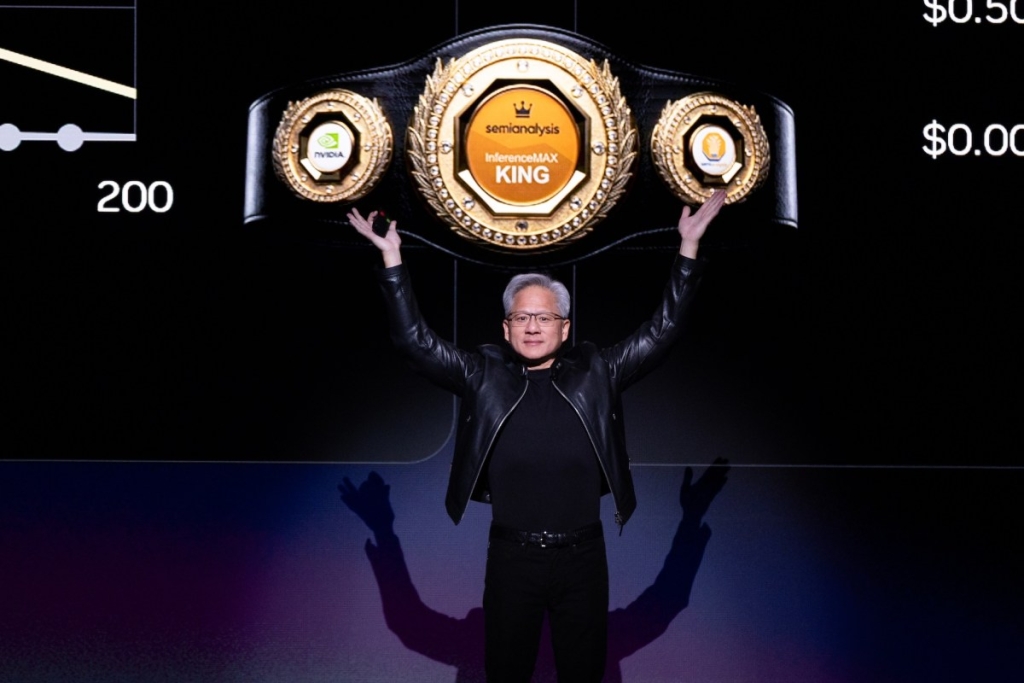
NVIDIA CEO Jensen Huang Projects $1 Trillion in Chip Orders Through 2027, Doubling AI Demand in Record Time
By Daniel Carter | TechCrunch Senior Technology Correspondent
SAN JOSE, CA — In a keynote address that electrified the tech world and sent Wall Street analysts scrambling for their calculators, NVIDIA CEO Jensen Huang delivered a staggering financial projection that underscores the explosive growth of artificial intelligence hardware. During his Monday morning keynote at the annual GTC Conference in San Jose, California, Huang revealed that demand for NVIDIA’s cutting-edge Blackwell and Vera Rubin chip architectures has doubled in just one year, reaching an unprecedented $1 trillion in orders through 2027.
The announcement came approximately one hour into Huang’s highly anticipated presentation, where he had already walked through numerous technical specifications and performance metrics. However, it was this single financial figure that captured the attention of investors, industry analysts, and AI developers worldwide.
“Last year at this time, we saw about $500 billion in demand for our Blackwell and upcoming Rubin chips through 2026,” Huang told the packed auditorium. “Now, I don’t know if you guys feel the same way, but $500 billion is an enormous amount of revenue. Well, I’m here to tell you that right here where I stand—a few short months after GTC DC, one year after last GTC—I see through 2027, at least $1 trillion.”
This exponential growth trajectory represents more than just impressive sales figures; it signals a fundamental shift in how rapidly the AI industry is scaling and the critical role NVIDIA plays in enabling this transformation. The $1 trillion projection encompasses both the current Blackwell architecture and the upcoming Vera Rubin platform, which NVIDIA has positioned as the next generation of AI computing excellence.
The Blackwell Foundation and Vera Rubin Evolution
To understand the significance of this projection, it’s essential to examine the technological foundation upon which it’s built. Blackwell, NVIDIA’s current-generation AI processor architecture, has already proven itself as the industry standard for large-scale AI model training and inference. However, Huang and his team have been clear that Vera Rubin represents not just an incremental improvement but a fundamental leap forward in AI computing capabilities.
First announced in 2024, Vera Rubin has been characterized by Huang as representing the state of the art in AI hardware. The architecture is designed to significantly outperform its Blackwell predecessor across multiple performance metrics. When NVIDIA officially began production of Vera Rubin in January 2026, the company revealed performance specifications that left even seasoned industry observers impressed.
According to NVIDIA’s official announcements, Vera Rubin will operate 3.5 times faster than Blackwell on model-training tasks and an impressive 5 times faster on inference tasks. These improvements translate to practical performance gains that could reshape how AI developers approach their work. The architecture is capable of reaching speeds as high as 50 petaflops, a measure of computing performance that represents one quadrillion floating-point operations per second.
Market Implications and Industry Impact
The $1 trillion order projection carries profound implications for multiple sectors of the technology industry and beyond. For investors, it represents a clear signal of continued confidence in NVIDIA’s market position and the broader AI ecosystem’s growth trajectory. The doubling of demand in just 12 months suggests that AI adoption is accelerating rather than maturing, with organizations across industries rushing to deploy more sophisticated models and applications.
For competitors, the projection serves as both a challenge and a wake-up call. While companies like AMD, Intel, and various AI chip startups continue to develop their own architectures, NVIDIA’s lead appears to be expanding rather than contracting. The scale of demand Huang described suggests that even if competitors introduce compelling alternatives, the market’s appetite for AI computing power may be large enough to accommodate multiple players.
The projection also has significant implications for the semiconductor supply chain, cloud computing providers, and data center operators. A $1 trillion order book through 2027 represents an enormous manufacturing challenge and opportunity. It suggests that NVIDIA and its manufacturing partners will need to scale production capabilities dramatically, potentially straining global semiconductor manufacturing capacity.
Production Timeline and Market Readiness
NVIDIA has indicated that it expects to ramp up production of Vera Rubin chips in the second half of 2026. This timeline aligns with the company’s historical pattern of introducing new architectures on an approximately annual cadence, allowing for a smooth transition between product generations while maintaining momentum in the market.
The production ramp-up will be critical to meeting the projected demand. Given the complexity of modern AI chips, which can contain billions of transistors and require sophisticated packaging techniques, scaling from current production levels to meet trillion-dollar demand will require significant investment in manufacturing infrastructure, talent, and supply chain optimization.
Financial Context and Industry Comparison
To put the $1 trillion figure in perspective, it’s worth considering what this level of demand represents in the broader technology industry. The entire global semiconductor market was valued at approximately $600 billion in 2023, according to industry analysts. NVIDIA’s projection suggests that demand for just two of its chip architectures could exceed the total value of the entire semiconductor market within two years.
This comparison highlights both the extraordinary growth of AI-specific computing and NVIDIA’s dominant position within that segment. While traditional computing applications continue to evolve, the AI revolution appears to be driving demand at a pace that far exceeds historical technology adoption curves.
Huang’s Leadership and NVIDIA’s Vision
Jensen Huang’s presentation style and technical depth have become hallmarks of NVIDIA’s corporate identity. His ability to translate complex technical concepts into compelling business narratives has helped position NVIDIA not just as a hardware supplier but as a thought leader in the AI revolution. The $1 trillion projection, delivered with characteristic confidence and technical precision, exemplifies this approach.
Under Huang’s leadership, NVIDIA has successfully navigated multiple technological transitions, from graphics processing to general-purpose computing to AI acceleration. The company’s ability to maintain technological leadership while scaling operations to meet unprecedented demand speaks to the strength of its organizational capabilities and strategic vision.
Looking Forward: The AI Computing Landscape
As the AI industry continues to evolve, several trends are likely to shape how the $1 trillion in projected demand materializes. First, the increasing complexity and size of AI models suggests that computing requirements will continue to grow exponentially, potentially validating even optimistic projections like Huang’s.
Second, the geographic distribution of AI computing demand is likely to shift, with emerging markets and industries beyond technology adopting AI capabilities at scale. This diversification could help sustain demand even as specific applications mature.
Finally, the energy and infrastructure requirements for supporting trillion-dollar-scale AI computing will become increasingly important considerations. Data centers, power grids, and cooling systems will need to evolve to support the next generation of AI applications.
Conclusion: A Milestone Moment for AI Computing
NVIDIA’s $1 trillion projection represents more than a financial milestone; it marks a pivotal moment in the evolution of artificial intelligence and computing technology. The scale of demand described by Huang suggests that we are still in the early stages of an AI revolution that could reshape industries, economies, and societies in ways we are only beginning to understand.
As production of Vera Rubin begins and Blackwell continues to power current-generation AI applications, the technology industry will be watching closely to see if NVIDIA can deliver on this ambitious projection. Regardless of the ultimate outcome, the fact that such demand exists and is growing at this pace provides a clear indication that the age of AI computing has truly arrived.
For now, investors, competitors, and technology enthusiasts alike will be analyzing every detail of Huang’s presentation, searching for insights into how this trillion-dollar opportunity will unfold and what it means for the future of technology. One thing is certain: the AI computing race has entered a new phase, and NVIDIA has just raised the stakes significantly.
Tags:
NVIDIA Blackwell Vera Rubin AI chips $1 trillion orders Jensen Huang GTC Conference artificial intelligence hardware semiconductor demand
Viral Phrases:
“at least $1 trillion” “right here where I stand” “one quadrillion floating-point operations per second” “state of the art in AI hardware” “explosive growth of artificial intelligence hardware” “fundamental leap forward” “reshaping how AI developers approach their work” “dominating position within that segment” “AI revolution appears to be driving demand” “age of AI computing has truly arrived”
,


Leave a Reply
Want to join the discussion?Feel free to contribute!