
Jensen Huang says Nvidia is pulling back from OpenAI and Anthropic, but his explanation raises more questions than it answers
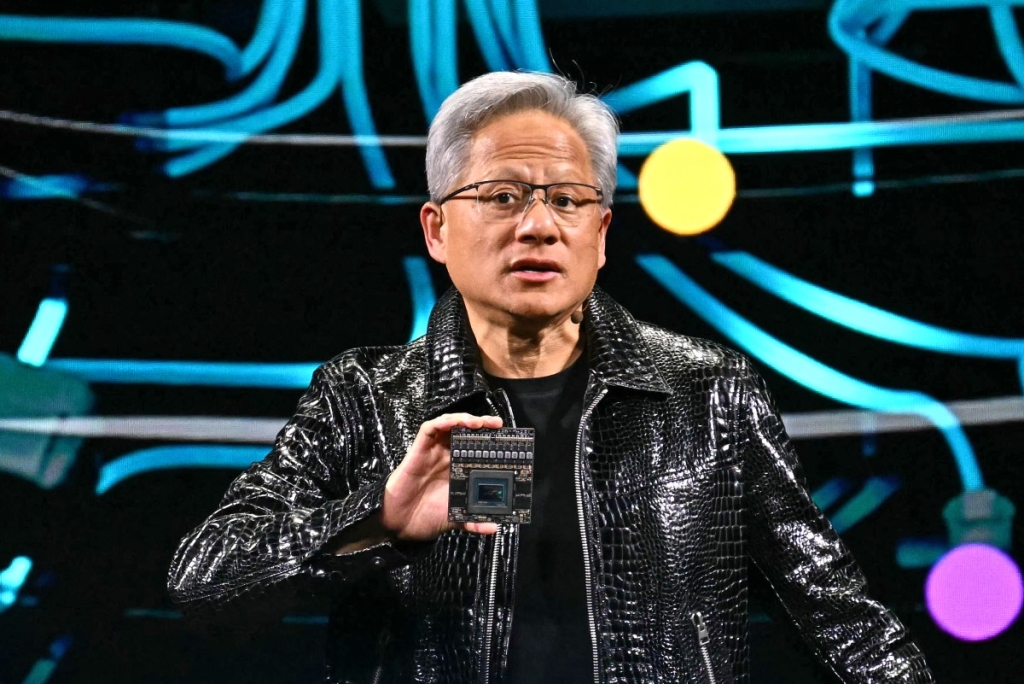
NVIDIA’s Strategic Retreat: Why the Chip Giant May Be Done Betting on OpenAI and Anthropic
At the Morgan Stanley Technology, Media and Telecom conference in downtown San Francisco this week, Nvidia CEO Jensen Huang delivered a statement that sent ripples through Silicon Valley: the company’s recent investments in OpenAI and Anthropic are likely to be its last in both firms, with Huang suggesting that once these AI powerhouses go public later this year, the opportunity for such strategic investments will effectively close.
On the surface, this rationale seems straightforward. Tech companies often continue investing in promising startups right up until their IPO, sometimes even participating in the offering itself to maximize returns. But Nvidia’s position is unique—the company is already minting money by selling the high-performance chips that power both OpenAI’s ChatGPT and Anthropic’s Claude. Unlike traditional venture investors who need to juice returns through continued capital deployment, Nvidia’s core business model already captures tremendous value from these partnerships.
When pressed for clarification following Huang’s remarks, Nvidia’s communications team pointed TechCrunch to comments made during the company’s fourth-quarter earnings call. There, Huang explained that all of Nvidia’s investments are “focused very squarely, strategically on expanding and deepening our ecosystem reach”—a goal that the initial stakes in both companies have arguably already achieved.
However, several other factors may be driving this apparent strategic retreat, and they paint a more complex picture than simple market mechanics.
The Circular Investment Conundrum
When Nvidia first announced its intention to invest up to $100 billion in OpenAI last September, MIT Sloan professor Michael Cusumano offered a pointed observation to the Financial Times: this arrangement was “kind of a wash.” His analysis suggested that Nvidia was essentially investing $100 billion in OpenAI stock while OpenAI committed to purchasing $100 billion or more in Nvidia chips—a circular arrangement that benefits both parties but raises questions about true economic value creation.
This circular dynamic has led some industry observers to worry about the formation of an AI investment bubble. The numbers themselves tell a revealing story: the investment Nvidia finalized just last week as part of OpenAI’s massive $110 billion funding round came in at $30 billion—significantly less than the original pledge. While Huang has dismissed speculation about tensions between the companies as “nonsense,” the scaling back of investment commitments suggests other forces may be at work.
Anthropic: From Partner to Pariah?
Nvidia’s relationship with Anthropic has arguably been even more complicated than its OpenAI partnership. Just two months after announcing a $10 billion investment in November, Anthropic CEO Dario Amodei delivered a stunning critique at Davos, comparing U.S. chip companies selling high-performance AI processors to approved Chinese customers to “selling nuclear weapons to North Korea.” While Amodei didn’t name Nvidia directly, the implication was clear and the timing—coming so soon after the investment announcement—raised eyebrows across the industry.
The situation has deteriorated further in recent weeks. The Trump administration recently blacklisted Anthropic, barring federal agencies and military contractors from using its technology after the company refused to allow its models to be used for autonomous weapons or mass domestic surveillance. This designation as a supply chain risk represents a significant blow to Anthropic’s government and enterprise prospects.
The Pentagon Divide
The geopolitical complications deepened dramatically within hours of Anthropic’s blacklisting. OpenAI announced it had struck its own deal with the Pentagon—a move that Anthropic’s leadership has called “mendacious” and that appears to have resonated poorly with the public. The timing and juxtaposition of these announcements created a stark contrast between the two AI leaders’ approaches to government partnerships and military applications.
The market responded almost immediately to this divergence. Within 24 hours of the back-to-back announcements, Anthropic’s Claude app shot to the top of the free-app rankings on Apple’s U.S. App Store, overtaking ChatGPT. At the end of January, Claude was outside the top 100 according to Sensor Tower data, making this surge particularly dramatic and suggesting that public sentiment may be shifting in Anthropic’s favor despite—or perhaps because of—its more cautious approach to government partnerships.
A Strategic Exit from Complexity
Where this leaves Nvidia is in a uniquely complicated position: holding significant stakes in two companies that are now pulling in very different directions, potentially dragging customers, partners, and even governments along for the ride. The chip giant finds itself caught between Anthropic’s principled stance on military applications and OpenAI’s willingness to engage with the Pentagon.
Whether Jensen Huang anticipated this level of complexity when building Nvidia’s web of AI partnerships is impossible to know. His stated reason for likely ending future investments—that the IPO window closes the door on this kind of deal—doesn’t fully align with how late-stage private investing typically works. Companies routinely invest in firms right up until and even through their public offerings.
What increasingly appears to be the case is that Nvidia is executing a strategic exit from a situation that has become extraordinarily complicated, extraordinarily fast. The chip maker may be recognizing that its interests are best served by maintaining strong relationships with both companies as customers while avoiding the political and ethical entanglements that come with deeper financial stakes in organizations taking fundamentally different approaches to AI development and deployment.
As the AI landscape continues to evolve at breakneck speed, Nvidia’s pivot away from direct investment in its largest customers represents a fascinating case study in corporate strategy, geopolitical risk management, and the challenges of maintaining neutrality in an increasingly polarized technological ecosystem. The chip giant’s decision to step back from the investment game while continuing to supply the essential hardware these companies need may prove to be one of the savviest moves in the ongoing AI arms race.
Tags: NVIDIA, OpenAI, Anthropic, Jensen Huang, AI investments, chip industry, Silicon Valley, tech partnerships, Pentagon deals, AI bubble, supply chain risk, geopolitical tech, ChatGPT, Claude, App Store rankings, tech strategy
Viral Sentences:
- “Nvidia is investing $100 billion in OpenAI stock, and OpenAI is saying they are going to buy $100 billion or more of Nvidia chips.”
- “Selling nuclear weapons to North Korea” – Anthropic CEO’s veiled criticism of Nvidia
- Anthropic’s Claude overtakes ChatGPT in App Store rankings within 24 hours
- Trump administration blacklists Anthropic over military and surveillance concerns
- OpenAI strikes Pentagon deal as Anthropic faces government restrictions
- “The IPO window closes the door on this kind of deal” – Huang’s official rationale
- Circular investments creating AI bubble concerns
- Nvidia’s strategic retreat from direct AI company investments
- Chip giant caught between Anthropic’s principles and OpenAI’s pragmatism
- The $30 billion investment that fell short of the original $100 billion pledge
,


Leave a Reply
Want to join the discussion?Feel free to contribute!