
Jupiter Is Not The Size And Shape We’ve Long Thought It Was : ScienceAlert
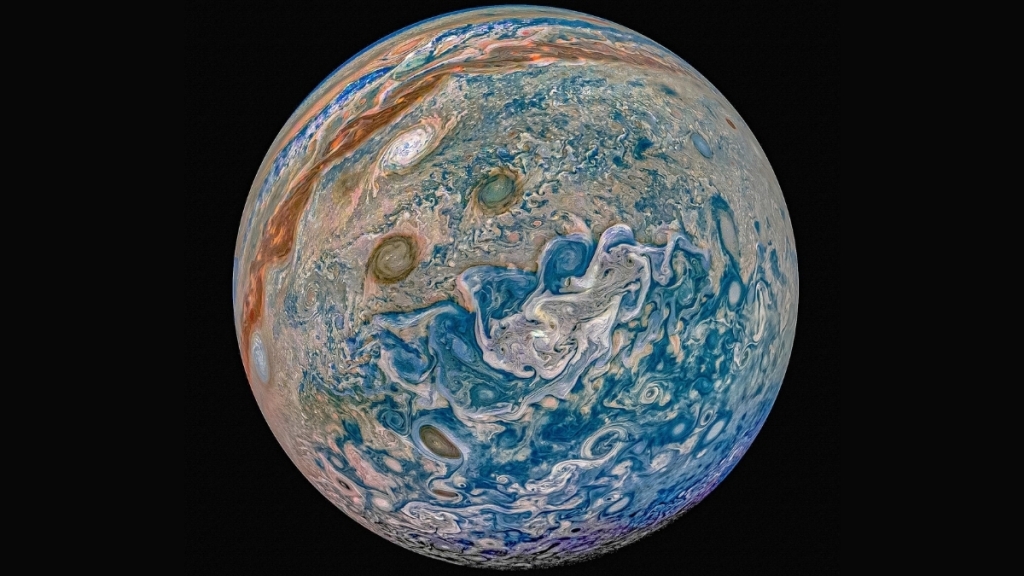
Jupiter Just Got a Little Smaller—And Scientists Are Buzzing
Jupiter, the largest planet in our Solar System, has officially been measured more precisely—and the results are turning heads across the scientific community. While the gas giant hasn’t physically shrunk, new data shows that our previous estimates of its size were just a bit off. And in planetary science, even a few kilometers can make a big difference.
The Numbers Just Got More Accurate
According to the latest measurements, Jupiter’s equatorial radius is now calculated at 71,488 kilometers (44,421 miles)—that’s 4 kilometers (2.5 miles) narrower than we previously thought. The planet also rises 66,842 kilometers from its center to its north pole, making it 12 kilometers flatter at the poles than earlier estimates suggested.
It’s not a dramatic change, but as planetary scientist Eli Galanti from the Weizmann Institute of Science in Israel explains:
“These few kilometers matter. Shifting the radius by just a little lets our models of Jupiter’s interior fit both the gravity data and atmospheric measurements much better.”
Why the Old Measurements Were Off
For decades, our understanding of Jupiter’s size and shape was based on data from NASA’s Voyager and Pioneer missions in the 1970s. These probes used a technique called radio occultation (RO), where radio signals bend as they pass through a planet’s atmosphere. By measuring how much the signals refracted, scientists could estimate the planet’s size.
But there was a catch: only six RO measurements were ever made back then. That’s a tiny sample size for a planet as complex as Jupiter.
Juno’s Game-Changing Orbit
Enter NASA’s Juno spacecraft. In 2021, mission controllers adjusted Juno’s orbit so that it passed behind Jupiter—from Earth’s perspective. This gave scientists the chance to collect regular, high-precision RO measurements for the first time, combined with cutting-edge data-processing techniques.
Maria Smirnova, also from the Weizmann Institute, described the breakthrough:
“We tracked how the radio signals bend as they pass through Jupiter’s atmosphere, which allowed us to translate this information into detailed maps of Jupiter’s temperature and density, producing the clearest picture yet of the giant planet’s size and shape.”
Factoring in the Winds
Jupiter is famous for its powerful, swirling winds—including the iconic Great Red Spot. Previous size estimates had to ignore these atmospheric dynamics because they weren’t well understood. But recent studies have mapped these winds in detail, allowing Galanti and his team to factor them into their new calculations.
This holistic approach—combining gravity, atmospheric, and wind data—has given us the most accurate picture of Jupiter yet.
Why It Matters
You might wonder: does a difference of a few kilometers really matter? In the world of planetary science, the answer is a resounding yes. These refined measurements help scientists better understand not just Jupiter, but also gas giants in other solar systems. The more precise our models, the better we can predict the behavior, composition, and evolution of these distant worlds.
As our tools and techniques improve, even the biggest planets in the Solar System continue to surprise us.
Tags: Jupiter, Juno, NASA, planetary science, radio occultation, gas giant, Solar System, Weizmann Institute, Voyager, Pioneer, Great Red Spot, atmospheric winds, space exploration
Viral Phrases: Jupiter just got smaller, Juno’s orbit breakthrough, most accurate Jupiter measurements ever, gas giant surprise, planetary science revolution, Jupiter’s true size revealed, NASA’s latest discovery, space mysteries solved, Jupiter’s hidden details, cosmic precision, giant planet’s slimmer profile, radio signal secrets, Jupiter’s winds matter, Solar System’s biggest mystery, space data revolution
,

Leave a Reply
Want to join the discussion?Feel free to contribute!