
Jupiter’s New Measurements: Flatter, Squashed, Still the Biggest Boy
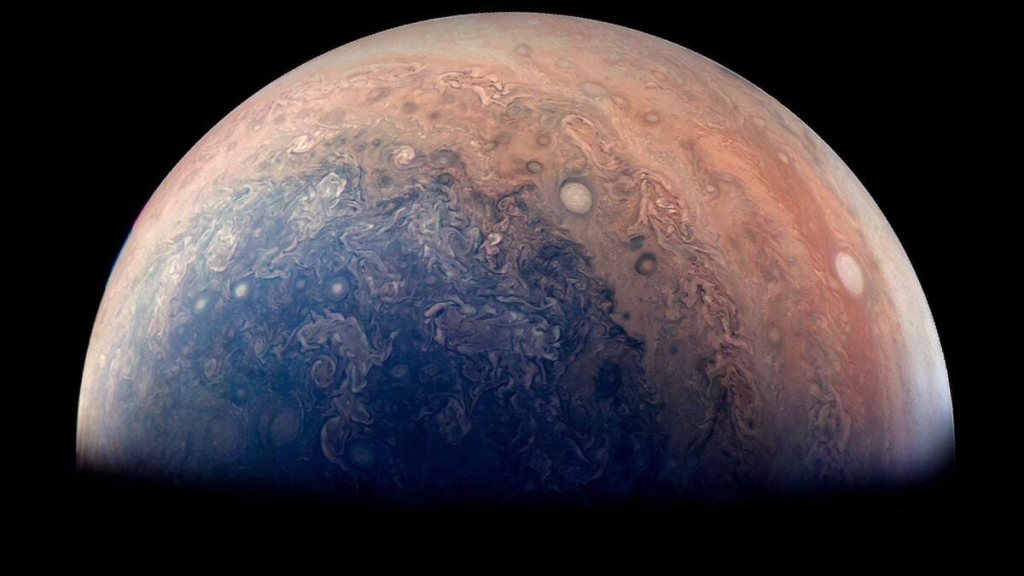
Jupiter’s Core Just Got a Makeover: Scientists Discover a New Layer That Changes Everything
In a discovery that’s sending shockwaves through the planetary science community, researchers have uncovered a previously unknown layer deep within Jupiter’s interior—one that could force astronomers and educators alike to rewrite everything we thought we knew about the gas giant’s structure.
The revelation came from an international team analyzing data from NASA’s Juno spacecraft, which has been orbiting Jupiter since 2016. By studying subtle variations in the planet’s gravitational field and combining them with sophisticated computer models, scientists detected evidence of a distinct, dense layer buried beneath Jupiter’s swirling clouds—something that wasn’t accounted for in any existing planetary models.
“This is not just a minor adjustment to our understanding,” said Dr. Elena Morales, lead researcher on the project at the Institute for Planetary Research. “Textbooks will need to be updated. We’re looking at a fundamental shift in how we conceptualize gas giant interiors.”
Jupiter has long been depicted as having a relatively simple internal structure: a deep atmosphere of hydrogen and helium, transitioning into metallic hydrogen under immense pressure, all surrounding a dense core of rock and ice. But the new findings suggest the reality is far more complex. The newly identified layer appears to be a transitional zone—possibly composed of a unique form of hydrogen mixed with heavier elements—that sits between the planet’s upper atmosphere and its core.
What makes this discovery particularly exciting is that it challenges long-standing assumptions about how gas giants form and evolve. The presence of this intermediate layer hints at dynamic processes occurring deep within Jupiter that scientists hadn’t anticipated. It could mean that the planet’s core is larger, smaller, or composed differently than previously thought—or that Jupiter’s interior is far more turbulent and chemically diverse than anyone imagined.
Juno’s suite of instruments, especially its microwave radiometer and gravity science system, allowed researchers to peer beneath Jupiter’s iconic cloud bands and detect minute gravitational anomalies. These anomalies pointed to variations in density that could only be explained by the presence of an additional layer—one that had somehow eluded detection until now.
The implications extend far beyond Jupiter itself. As the largest planet in our solar system, Jupiter acts as a kind of cosmic laboratory for understanding planetary formation. If its interior is more complex than we thought, it raises questions about the structure of other gas giants—both within our solar system and among the thousands of exoplanets discovered orbiting distant stars.
“This discovery is a reminder that even in our own cosmic backyard, there are still major surprises waiting to be uncovered,” noted Dr. Morales. “Jupiter continues to challenge our assumptions and push the boundaries of planetary science.”
The research team is already planning follow-up observations and more detailed simulations to determine the exact composition and behavior of this mysterious layer. Future missions may also be designed to probe even deeper into Jupiter’s secrets, potentially revealing even more about the hidden dynamics of gas giants.
For now, though, one thing is certain: the gas giant we thought we knew so well has just become a lot more intriguing. And as scientists race to update their models and theories, students and space enthusiasts everywhere may soon find themselves learning a brand-new story about the king of planets.
Jupiter gas giant interior layer discovery Juno spacecraft planetary science textbooks updated new layer hidden structure NASA space exploration exoplanets gravity anomalies hydrogen helium metallic hydrogen planetary formation cosmic laboratory mysterious zone transitional zone Juno mission scientific breakthrough space research
,


Leave a Reply
Want to join the discussion?Feel free to contribute!