
Kalshi files lawsuit against Utah officials over threat to prediction markets
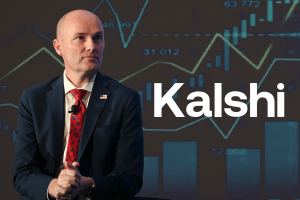
Kalshi Takes Utah to Court in High-Stakes Battle Over Prediction Markets
In a bold legal maneuver that could reshape the future of prediction markets in the United States, Kalshi—the federally regulated derivatives exchange—has filed a federal lawsuit against Utah’s top elected officials, accusing them of threatening to shut down its innovative business model under the guise of gambling enforcement.
The case, filed Monday in the U.S. District Court for the District of Utah, pits federal regulatory authority against state sovereignty in a constitutional showdown that could determine whether prediction markets can operate nationwide without facing a patchwork of conflicting state laws.
The Federal vs. State Power Struggle
At the heart of this dispute lies a fundamental question of American federalism: who gets to regulate novel financial products that blur the lines between traditional derivatives trading and gambling?
Kalshi maintains that as a federally designated Contract Market under the Commodity Futures Trading Commission’s oversight, its event contracts fall exclusively under federal jurisdiction. The company argues that any attempt by Utah to block its operations would violate the U.S. Constitution’s Supremacy Clause, which establishes that federal law takes precedence over conflicting state regulations.
“This isn’t just about Kalshi,” said legal analysts following the case. “This is about whether the United States will have a unified regulatory framework for prediction markets or whether each state can create its own rules, potentially killing an emerging industry before it can mature.”
Utah Officials’ Aggressive Stance
The lawsuit details a series of public statements from Utah Governor Spencer Cox and Attorney General Derek Brown that Kalshi characterizes as threats to its business operations. Governor Cox has been particularly vocal, declaring on social media that prediction markets are “illegal in Utah and will continue to be so.”
In a now-famous exchange with CFTC Chairman Mike Selig, Cox dismissed the federal agency’s authority over prediction markets, sarcastically questioning whether the CFTC had jurisdiction over “LeBron James rebounds.” His comments reflect a broader skepticism among some state officials about whether federally approved event contracts should be treated differently from traditional sports betting.
“We’re ready to defend our laws in court and protect Utahns from companies that drive addiction, isolation, and serious financial harm,” Cox stated in a February 19 post that has since gone viral among both supporters and critics of prediction markets.
Attorney General Derek Brown has similarly positioned himself as a defender of Utah’s anti-gambling laws, publishing an op-ed that specifically mentioned Kalshi by name and outlined his intention to address prediction markets in the state.
Kalshi’s Constitutional Argument
Kalshi’s legal team is making a two-pronged argument. First, they contend that the Commodity Exchange Act explicitly grants the CFTC “exclusive jurisdiction” over trading on federally regulated exchanges. When Congress created the CFTC in 1974, lawmakers specifically sought to prevent the “total chaos” that would result from fifty different states creating conflicting regulations for derivatives trading.
Second, even if some event contracts resemble gambling, Kalshi argues that federal law delegates to the CFTC alone the authority to determine whether such contracts are “contrary to the public interest.” The company points to recent CFTC statements telling federal courts that “due to federal preemption, event contracts never violate state law when they are traded on a DCM” like Kalshi.
The company’s complaint emphasizes that it has attempted to engage constructively with Utah officials, reaching out to the Attorney General’s Office after Governor Cox’s public statements. However, Kalshi says it received no response, leaving it in legal limbo and vulnerable to potential enforcement actions.
The Stakes for Innovation
This case represents more than just a regulatory dispute—it’s a referendum on whether America will embrace or stifle financial innovation. Prediction markets have shown promise in aggregating information about future events, from election outcomes to economic indicators, in ways that could benefit both traders and society at large.
Industry experts argue that allowing states to individually ban federally regulated prediction markets would create an untenable situation where companies would need to navigate fifty different regulatory regimes. This could effectively prevent such markets from achieving the scale necessary to function efficiently and provide accurate price signals about future events.
“Prediction markets work best when they have deep liquidity and broad participation,” explained one financial technology analyst. “Fragmenting the market across state lines would undermine these fundamental characteristics.”
Legal Precedents and Potential Outcomes
The case will likely hinge on how courts interpret the scope of federal preemption in the context of novel financial products. While the CFTC clearly has authority over traditional commodity futures, prediction markets represent a newer category that didn’t exist when many state gambling laws were written.
Legal scholars note that courts have generally been reluctant to find federal preemption of state law, particularly in areas traditionally regulated by states like gambling. However, the specific language of the Commodity Exchange Act and the CFTC’s designation of Kalshi as a Contract Market could provide strong grounds for preemption.
If Kalshi prevails, it could establish a precedent that protects other federally regulated prediction markets from state interference. If Utah prevails, it could open the door for other states to block similar businesses, potentially fragmenting the market and limiting innovation.
The Broader Context
This lawsuit comes amid growing interest in prediction markets from both retail and institutional investors. Companies like Kalshi have expanded beyond traditional economic indicators to offer contracts on political events, entertainment awards, and other outcomes that attract public interest.
The debate also reflects broader tensions in American governance, as states increasingly push back against federal authority in various domains. Utah’s aggressive stance mirrors similar efforts in other areas where states have sought to assert their rights against perceived federal overreach.
What’s Next
Kalshi is seeking both declaratory relief—a court determination that Utah cannot legally block its operations—and injunctive relief to prevent any enforcement actions while the case proceeds. The company has indicated it may seek an emergency temporary restraining order given the immediacy of the threat it perceives.
The case is likely to move quickly given the stakes involved and the public statements already made by Utah officials. Both sides appear prepared for a protracted legal battle that could ultimately reach higher courts and set important precedents for the regulation of financial innovation in America.
As this high-stakes legal drama unfolds, all eyes will be on the federal courthouse in Utah, where the future of prediction markets—and perhaps the balance between federal and state regulatory power—may be decided.
Tags & Viral Phrases:
- Federal vs. State Power
- Prediction Markets Legal Battle
- Kalshi vs Utah
- CFTC Authority
- Gambling or Innovation?
- Constitutional Showdown
- Financial Technology Regulation
- State Sovereignty vs Federal Oversight
- Prediction Market Future
- Legal Precedent Setting Case
- Emerging Financial Products
- Regulatory Framework Battle
- Innovation Under Threat
- Utah Takes on Federal Agency
- Gambling Laws vs Financial Markets
- Exclusive Jurisdiction Debate
- Trading Platform Legal Fight
- Event Contracts Controversy
- State Bans on Financial Products
- Federal Preemption Argument
- Novel Financial Instruments
- Market Liquidity Concerns
- Regulatory Patchwork Problem
- Financial Innovation at Risk
- Legal Battle for Prediction Markets
,


Leave a Reply
Want to join the discussion?Feel free to contribute!