
Kalshi self-certifies CFTC sports event contract tied to draft lottery odds
Kalshi Takes Bold Step Into Sports Futures, Self-Certifies Draft Lottery Contracts with CFTC
In a move that could reshape the intersection of prediction markets and professional sports, Kalshi—the federally regulated event trading platform—has officially self-certified a new slate of contracts tied to NBA draft lottery outcomes. The New York-based exchange filed paperwork with the U.S. Commodity Futures Trading Commission (CFTC) earlier this month, signaling both an expansion of its product line and a bold test of the agency’s evolving stance on sports-linked derivatives.
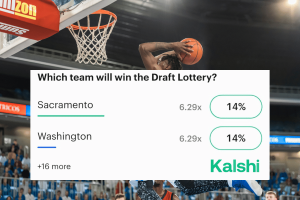
The contracts at the center of the filing allow traders to bet on which NBA team will win the annual draft lottery—a high-stakes event that determines the selection order for incoming rookies. Kalshi is also offering contracts based on pre-draw odds, giving market participants the ability to trade probabilities before the ping-pong balls are even drawn. By leveraging the CFTC’s self-certification pathway, Kalshi has positioned these products as compliant commodity derivatives, avoiding the need for prolonged regulatory approval.
“We believe these contracts are consistent with the Commodity Exchange Act and fall squarely within the CFTC’s jurisdiction over event contracts,” Kalshi stated in its filing. The self-certification route, which allows designated contract markets to list new products unless the CFTC objects within a set timeframe, has become a favored tool for the company as it pushes the boundaries of what qualifies as a federally regulated market.
This isn’t Kalshi’s first foray into sports. In early 2025, the company expanded into college basketball markets, and now, with the NBA draft lottery, it’s venturing deeper into territory traditionally dominated by sportsbooks. The timing is no coincidence: the CFTC, under new Chairman Michael S. Selig, has signaled a dramatic shift in how it approaches event contracts.
Selig, who took the helm in 2025, has moved the agency away from the restrictive posture of his predecessor. In recent weeks, the CFTC withdrew a controversial proposed rule that would have imposed sweeping limits—or outright bans—on event contracts involving sports and politics. In a pointed statement, Selig criticized the prior administration’s approach as “a frolic into merit regulation” and pledged to pursue “responsible innovation” in line with Congressional intent.
The agency has also rescinded a 2025 staff advisory that had urged caution around sports-related contracts amid ongoing litigation. Selig emphasized that the advisory “inadvertently created confusion and uncertainty for our market participants,” and has directed CFTC staff to work with the Securities and Exchange Commission to clarify the line between commodity derivatives and security-based instruments.
For Kalshi, the shift is a welcome development. The company has long argued that its markets are not sports betting, but rather federally regulated derivatives—an argument that has put it at odds with state regulators in New Jersey, Nevada, and Ohio. Cease-and-desist orders in those states have questioned whether Kalshi’s contracts amount to illegal gambling, and litigation is ongoing. Some federal courts have sided with Kalshi, recognizing the CFTC’s authority to preempt certain state actions, but the legal battles are far from over.
Industry advocates have cheered the CFTC’s new direction. The Coalition for Prediction Markets, a pro-innovation industry group, praised Chairman Selig’s remarks, stating, “We applaud Chairman Selig’s statements that the CFTC has ‘the expertise and responsibility to defend its exclusive jurisdiction’ over event contracts.”
But not everyone is convinced. Critics warn that tying contracts to draft lottery outcomes blurs the line between financial hedging and pure games of chance. They argue that expanding into this territory could open the door to manipulation and undermine state oversight of gambling markets.
As Kalshi prepares to launch its NBA draft lottery contracts, all eyes will be on the CFTC to see whether it allows the markets to proceed—and what that decision means for the future of prediction markets in the United States. With sports betting now legal in dozens of states and a growing appetite for event-linked derivatives, the stakes have never been higher.
Tags: Kalshi, CFTC, prediction markets, sports betting, NBA draft lottery, event contracts, commodity futures, federal regulation, gambling, innovation, Michael Selig, self-certification, legal battles, state oversight, market manipulation
Viral phrases: “bold step into sports futures,” “reshaping prediction markets,” “federal vs. state showdown,” “the future of event trading,” “CFTC’s dramatic shift,” “Kalshi vs. the states,” “innovation or gambling?,” “high-stakes ping-pong balls,” “trading probabilities before the draw,” “the line between hedging and chance”
,


Leave a Reply
Want to join the discussion?Feel free to contribute!