
Kana emerges from stealth with $15M to build flexible AI agents for marketers
Kana’s AI Revolution: Silicon Valley Veterans Unveil Game-Changing Marketing Platform That’s About to Disrupt the $350 Billion Industry
In a move that’s sending shockwaves through the marketing technology landscape, San Francisco-based startup Kana has emerged from stealth mode with a bold promise: to fundamentally transform how brands connect with consumers in the AI era. Armed with $15 million in fresh seed funding led by Mayfield, this isn’t just another marketing tool entering an already crowded space—it’s the culmination of 25 years of Silicon Valley expertise, wrapped in cutting-edge artificial intelligence.
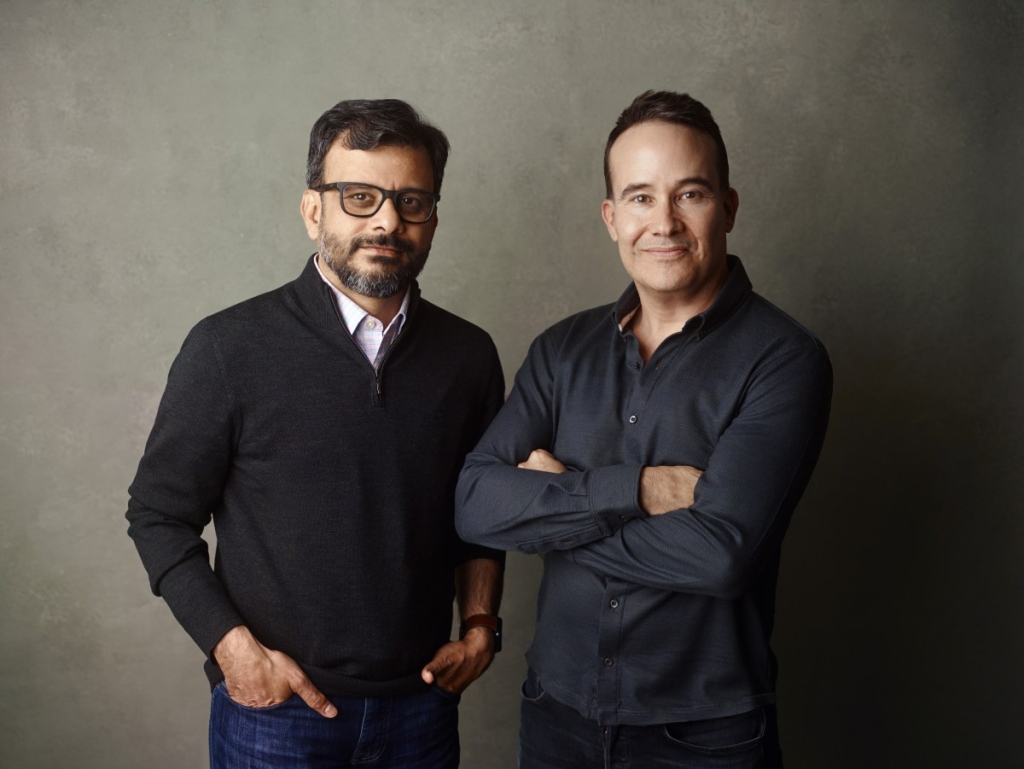
The timing couldn’t be more critical. As marketers drown in a sea of AI-powered solutions from tech giants and startups alike, Kana’s founders Tom Chavez and Vivek Vaidya are betting their fourth successful venture that flexibility, not just intelligence, will be the ultimate differentiator.
Silicon Valley Royalty Returns to the Battlefield
When you’ve already built and sold three companies to Microsoft and Salesforce, the fourth time isn’t just practice—it’s a statement. Chavez and Vaidha aren’t newcomers playing in the AI sandbox; they’re veterans who’ve been “wallowing in this space arguably a little too long,” as Chavez himself admits, with a track record that includes Rapt (acquired by Microsoft in 2008), Krux (purchased by Salesforce in 2016), and the startup studio super{set}.
This isn’t their first rodeo, and that experience shows in Kana’s approach. While competitors rush to bolt AI onto existing platforms, Kana has architected something fundamentally different: a constellation of “loosely coupled” AI agents that can be tailored on the fly, integrated with legacy systems, and deployed across multiple marketing operations simultaneously.
The Secret Sauce: AI Agents That Actually Understand Marketing
Here’s where Kana diverges from the pack. Most marketing AI tools today are essentially sophisticated automation wrapped in a chatbot interface. Kana’s agents are different—they’re designed to think like marketers, not just execute commands.
Imagine uploading a media brief and watching as Kana’s agents immediately spring into action: analyzing your campaign goals, hunting down the perfect audience segments, pulling real-time market data, and synthesizing it all into actionable strategies. The platform handles autonomous campaign tracking, optimization, and reporting—but crucially, keeps humans firmly in control with approval workflows and feedback mechanisms.
“It’s not about replacing marketers,” Chavez emphasizes. “It’s about giving them superpowers.”
Synthetic Data: The Hidden Weapon
One of Kana’s most intriguing features is its synthetic data generation capability. In an era where third-party data is becoming increasingly scarce and expensive, Kana’s agents can create realistic synthetic datasets to augment existing sources for market research and audience targeting.
This isn’t just a cost-saving measure—it’s a strategic advantage. Marketers can run faster tests across multiple platforms, identify winning strategies more quickly, and iterate without burning through precious real data budgets. It’s like having an infinite testing ground at your fingertips.
The Flexibility Moat: Why Big Tech Can’t Compete
While tech giants like Google, Meta, and Microsoft are pouring billions into AI marketing tools, Kana’s founders believe their greatest advantage isn’t technology—it’s agility. “Larger companies just are never going to get there,” Chavez states bluntly. “We can move with insane speed that these big companies just cannot. And that’s our advantage.”
This flexibility manifests in Kana’s “build with” philosophy—a middle ground between building from scratch and buying off-the-shelf solutions. Customers aren’t just purchasing software; they’re entering a partnership where Kana’s platform can be rapidly customized to meet specific needs, deployed in real-time, and evolved as requirements change.
The Market Opportunity: Timing Is Everything
The marketing technology landscape is at an inflection point. Global digital ad spending is projected to hit $626 billion by 2024, but marketers are increasingly frustrated with fragmented tools, data silos, and the complexity of managing campaigns across dozens of platforms.
Kana’s solution addresses these pain points directly. By offering a unified platform where AI agents can work across the entire marketing stack—from data analysis to customer engagement to media planning—they’re promising to cut through the complexity that’s been building for decades.
What’s Next: Scaling the Dream Team
With $15 million in fresh capital, Kana is aggressively expanding its engineering, product, and go-to-market teams. The appointment of Mayfield’s Navin Chaddha to the board signals serious institutional backing for their vision.
But the real test will come in execution. Can Kana deliver on its promise of flexible, intelligent marketing automation when so many others have fallen short? Can they scale their agent-based approach while maintaining the customization that makes it unique?
The founders are betting everything on the answer being yes. After three successful exits, they’ve earned the right to be taken seriously.
Tags: #MarketingAI #ArtificialIntelligence #MarTech #StartupFunding #Kana #AIagents #DigitalMarketing #MarketingTechnology #VentureCapital #Mayfield #Salesforce #Microsoft #SiliconValley #AdTech #DataAnalytics #CampaignManagement #CustomerEngagement #MediaPlanning #SyntheticData #MarketingAutomation
Viral Sentences:
- “Kana isn’t just another AI marketing tool—it’s the culmination of 25 years of Silicon Valley expertise wrapped in cutting-edge artificial intelligence.”
- “While competitors rush to bolt AI onto existing platforms, Kana has architected something fundamentally different.”
- “It’s not about replacing marketers—it’s about giving them superpowers.”
- “Larger companies just are never going to get there. We can move with insane speed that these big companies just cannot.”
- “Global digital ad spending is projected to hit $626 billion by 2024, but marketers are increasingly frustrated with fragmented tools.”
- “Kana’s founders believe their greatest advantage isn’t technology—it’s agility.”
- “Customers aren’t just purchasing software; they’re entering a partnership where Kana’s platform can be rapidly customized.”
- “The marketing technology landscape is at an inflection point.”
- “Can Kana deliver on its promise of flexible, intelligent marketing automation when so many others have fallen short?”
- “After three successful exits, they’ve earned the right to be taken seriously.”
,


Leave a Reply
Want to join the discussion?Feel free to contribute!