
Kash Patel Admits the FBI is Buying Private Data on Americans
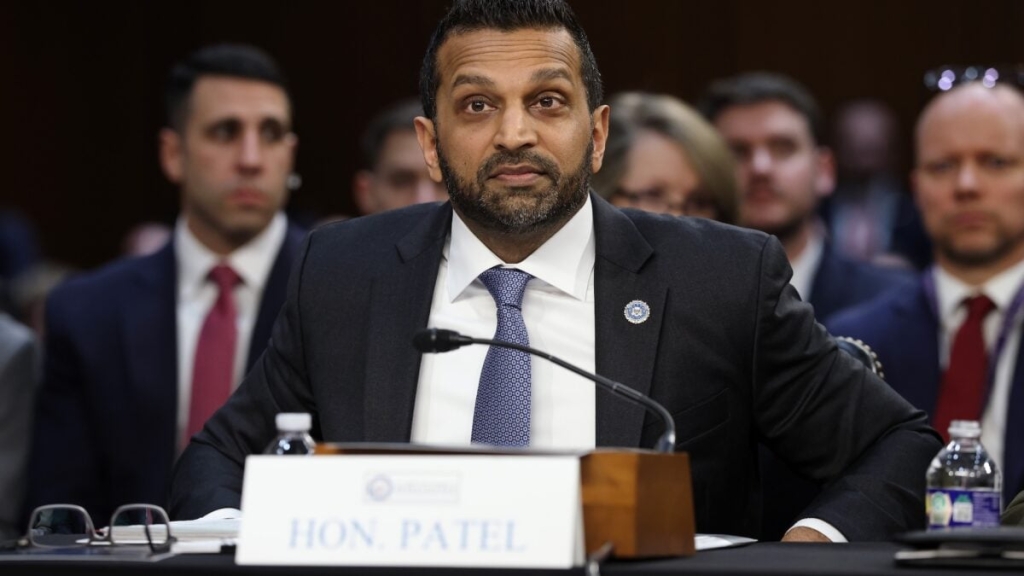
FBI Director Kash Patel Admits Agency Buys Americans’ Location Data
In a bombshell exchange during a Senate Intelligence Committee hearing on Wednesday, FBI Director Kash Patel openly acknowledged that the agency purchases commercially available location data on American citizens, sparking immediate outrage from privacy advocates and lawmakers alike.
The confrontation occurred when Senator Ron Wyden (D-OR) questioned Patel about the FBI’s data acquisition practices. Wyden specifically referenced testimony from Patel’s predecessor, Christopher Wray, who in 2023 stated the FBI did not purchase commercial database information containing location data derived from internet advertising.
When pressed directly by Wyden about whether this practice continued and if Patel would commit to stopping it, the FBI Director’s response sent shockwaves through privacy and security circles. Patel stated, “The FBI uses all tools, Senator, thank you for the question, to do our mission,” before elaborating that the agency purchases commercially available information consistent with the Constitution and the Electronic Communications Privacy Act.
Patel defended the practice, claiming it has “led to some valuable intelligence for us to be utilized with our private and partner sectors.” Wyden, clearly anticipating this response, pressed further: “So you’re saying that the agency will buy Americans’ location data? I believe that that’s what you’ve said in kind of intelligence lingo.”
The Oregon Senator didn’t mince words about the implications, declaring that collecting Americans’ location data “is an outrageous end run around the Fourth Amendment.” He specifically highlighted the dangers of combining this data collection with artificial intelligence capabilities, warning that AI could be used to comb through massive amounts of private information.
“This is Exhibit A for why Congress needs to pass our bipartisan, bicameral bill, the Government Surveillance Reform Act,” Wyden concluded, emphasizing the urgent need for legislative action to protect Americans’ privacy rights.
The Legal Loophole: How the Government Buys Your Data
What makes this revelation particularly concerning is that it’s currently legal for federal agencies to purchase Americans’ sensitive location data without a warrant. Third-party data brokers collect this information from various sources, including smartphone apps, smart devices, and online services, then sell it to the highest bidder—including government agencies.
The practice represents a significant privacy concern because it allows law enforcement and intelligence agencies to circumvent traditional warrant requirements. While the Fourth Amendment protects against unreasonable searches and seizures, courts have ruled that data freely given to third parties doesn’t receive the same constitutional protections.
Wyden’s mention of artificial intelligence wasn’t incidental. The U.S. Department of Defense recently designated Anthropic, the company behind the AI model Claude, as a supply chain risk after it refused to remove guardrails preventing its technology from being used for mass domestic surveillance. This designation has raised questions about the government’s intentions regarding AI and data analysis.
The AI Connection: Mass Surveillance at Scale
Privacy experts warn that combining commercially purchased location data with AI capabilities creates unprecedented surveillance potential. AI systems can analyze patterns, predict behaviors, and create detailed profiles of individuals at a scale impossible for human analysts.
Wyden articulated these concerns earlier this month, telling Gizmodo, “I’ve been warning for nearly a decade that data available for purchase from companies is just as sensitive as information the government collects directly. Creating AI profiles of Americans based on that data represents a chilling expansion of mass surveillance that should not be allowed, regardless of what the current, outdated laws on the books say.”
The implications are staggering. Location data can reveal intimate details about a person’s life—visits to medical facilities, attendance at political rallies, religious practices, and personal relationships. When combined with AI analysis, this information becomes even more revealing and potentially dangerous in the wrong hands.
Historical Context: A Pattern of Privacy Erosion
This revelation continues a troubling trend of expanding government surveillance capabilities. Under previous administrations, agencies have increasingly relied on commercially available data to conduct investigations and intelligence operations. The practice accelerated during the COVID-19 pandemic, as health agencies sought location data for contact tracing and other public health measures.
Privacy advocates have long warned that allowing commercial data collection creates a backdoor for government surveillance. Tech companies collect vast amounts of user data, often with vague or buried consent mechanisms. Once collected, this data becomes a valuable commodity that can be sold to anyone willing to pay—including government agencies.
The Political Dimension: Trump Administration’s Approach
Patel’s willingness to openly acknowledge these practices marks a departure from previous administrations’ more guarded approach. While Wray attempted to downplay or deny the FBI’s data purchasing practices, Patel appears more comfortable with transparency about the agency’s methods.
This shift reflects broader changes in the Trump administration’s approach to intelligence and law enforcement. The administration has consistently pushed for expanded surveillance capabilities and reduced privacy protections, arguing that these measures are necessary for national security and law enforcement effectiveness.
Legislative Solutions: The Government Surveillance Reform Act
Wyden’s proposed Government Surveillance Reform Act aims to close the legal loopholes that allow agencies to purchase Americans’ data without warrants. The bipartisan, bicameral legislation would require law enforcement agencies to obtain warrants before accessing Americans’ data from data brokers, closing what privacy advocates call a massive constitutional loophole.
The bill faces significant opposition from law enforcement agencies and some lawmakers who argue that these data sources are crucial for investigations and national security operations. However, privacy advocates maintain that the constitutional protections should apply regardless of how data is obtained.
Public Awareness and the Path Forward
The exchange between Wyden and Patel represents a critical moment in the ongoing debate over privacy rights in the digital age. By openly acknowledging these practices, Patel has forced a national conversation about the extent of government surveillance and the adequacy of current privacy protections.
Privacy advocates hope this increased awareness will build momentum for legislative reform. However, the path forward remains challenging, with powerful interests on both sides of the debate. The technology continues to evolve faster than the law, creating new challenges for privacy protection.
Tags
FBI surveillance, location data, privacy rights, Fourth Amendment, Kash Patel, Ron Wyden, government surveillance, data brokers, commercial data, AI surveillance, mass surveillance, electronic communications privacy, government surveillance reform act, constitutional rights, digital privacy, national security, intelligence gathering, data privacy, surveillance state, warrantless surveillance
Viral Phrases
“FBI buys Americans’ location data,” “end run around the Fourth Amendment,” “chilling expansion of mass surveillance,” “government surveillance loophole,” “AI-powered data analysis,” “commercial data brokers,” “constitutional protections in the digital age,” “warrantless data collection,” “privacy rights under attack,” “surveillance without limits,” “data privacy crisis,” “government overreach,” “electronic privacy violations,” “mass data collection,” “AI and surveillance,” “digital rights erosion,” “government transparency,” “privacy legislation needed,” “data collection without consent,” “surveillance state expansion”
Viral Sentences
“The FBI is legally buying your location data without a warrant,” “AI is being used to analyze Americans’ private information,” “Your smartphone data is being sold to the government,” “Privacy laws haven’t caught up with surveillance technology,” “The Fourth Amendment doesn’t protect data you give to companies,” “Government agencies are creating detailed profiles of citizens,” “Commercial data brokers are the new surveillance partners,” “Warrantless surveillance is now perfectly legal,” “Your location history is being tracked and sold,” “AI makes mass surveillance more powerful than ever,” “Privacy advocates warn of unprecedented surveillance capabilities,” “The government is exploiting legal loopholes for data collection,” “Americans’ constitutional rights are being violated,” “Data privacy laws are outdated and ineffective,” “The surveillance state is expanding rapidly,” “Your digital footprint is being monitored 24/7,” “Government agencies are combining AI with location data,” “Privacy advocates call for immediate legislative action,” “The FBI’s data practices are raising serious constitutional questions,” “Commercial data is the new frontier of government surveillance”
,
Leave a Reply
Want to join the discussion?Feel free to contribute!