
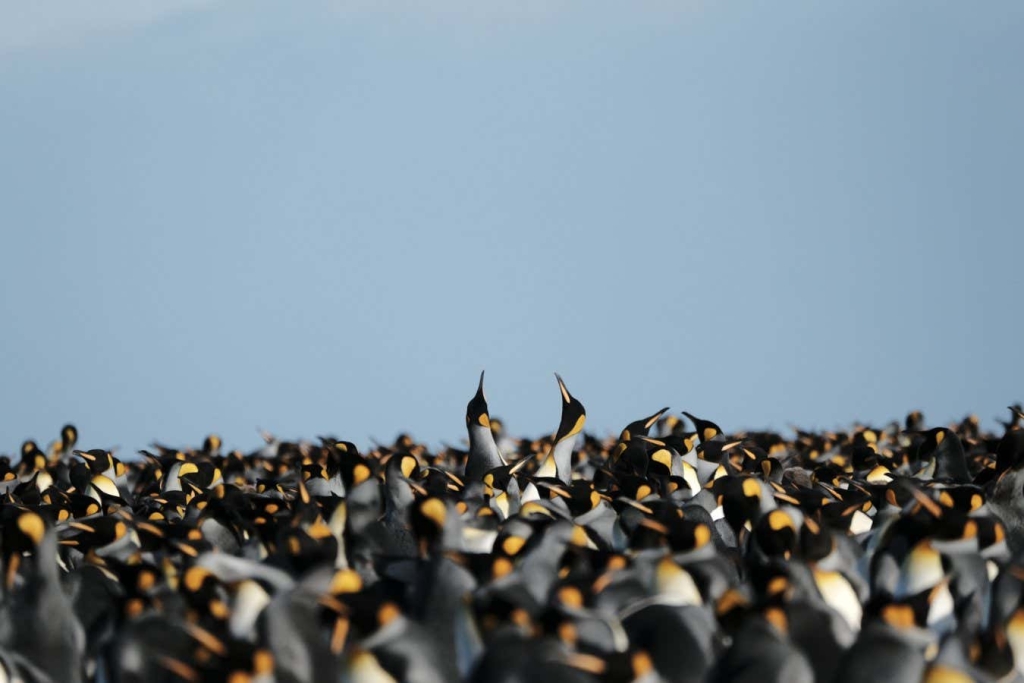
King penguins are thriving in a warmer climate, but it may not last
Here’s a rewritten, detailed version of the technology news article with a viral tone:
King Penguins Are Thriving in a Warming World – But Is It a Temporary Victory?
The Unexpected Winners of Climate Change
In a stunning twist of ecological fate, king penguins are not just surviving but flourishing as global temperatures rise in the sub-Antarctic. New research reveals that these charismatic black-and-white birds are experiencing unprecedented breeding success, with chick survival rates soaring to levels never before recorded. Yet beneath this apparent triumph lies a complex and potentially precarious future that has scientists both celebrating and sounding alarm bells.
The Numbers Don’t Lie: A Breeding Boom
According to groundbreaking research led by Gaël Bardon at the Monaco Scientific Center, king penguins on Possession Island—a remote French territory nestled between Antarctica and Madagascar—have dramatically altered their breeding patterns. Since 2000, these remarkable birds have advanced their breeding season by an astonishing 19 days, creating a longer window for chick development.
The results are nothing short of spectacular: chick survival rates have jumped from 44% in 2000 to a remarkable 62% in recent years. “This is unprecedented,” says Bardon. “We’re witnessing evolutionary adaptation happening in real-time, and the king penguins are writing the playbook.”
The Science Behind the Success
The secret to their success lies in the intricate dance between climate change and marine ecosystems. As ocean temperatures rise, the polar front—a crucial mixing zone where warm and cold currents create nutrient-rich upwelling—has become more productive than ever before.
These conditions have triggered a boom in lanternfish populations, the king penguins’ primary prey. “Warmer waters are essentially supercharging the marine food web,” explains Bardon. “More plankton means more lanternfish, which means more food for penguin chicks.”
The earlier breeding season gives chicks crucial extra weeks to fatten up before the brutal Antarctic winter sets in. Where previously many chicks would starve during the long months of parental absence, now the vast majority survive to adulthood.
A Climate Change Paradox
But here’s where the story takes a fascinating turn. While king penguins appear to be climate change winners today, researchers warn this could be a temporary victory. “What we’re seeing is a snapshot of a rapidly changing system,” cautions Céline Le Bohec, also of the Monaco Scientific Center. “The king penguins are adapting faster than almost any other polar species, but that’s also a warning sign of how extreme these changes are.”
The Tipping Point Looms
The very mechanism that’s helping king penguins today could become their greatest threat tomorrow. As waters continue to warm, the polar front is gradually shifting southward, potentially moving beyond the king penguins’ foraging range.
“These birds are essentially trapped,” explains Le Bohec. “There are no islands further south for them to colonize. If the polar front moves too far away, they’ll have to swim distances that make breeding unsustainable.”
Previous studies have shown that during unusually warm years, when the polar front retreats, king penguins must swim significantly farther to reach their feeding grounds. This extra effort translates directly into lower chick survival and population declines.
A Flexible Future?
Not all researchers share the same level of concern. Lewis Halsey from the University of Roehampton points to the king penguins’ remarkable dietary flexibility. “These aren’t one-trick birds,” he notes. “While lanternfish are their preferred prey, they also consume squid and other marine life closer to their breeding grounds.”
Halsey witnessed firsthand the population’s resilience after a devastating mini-tsunami in 2004, when the colony rebounded within just a few breeding seasons. “I don’t see a collapse,” he says. “I see a species that’s inherently very flexible and capable of adapting to changing conditions.”
The Bigger Picture
Tom Hart from Oxford Brookes University contextualizes the king penguin story within the broader narrative of penguin conservation. “When we look at penguin species globally, most are in decline,” he says. “The fact that king penguins are actually thriving is remarkable—it’s a rare win in a sea of losses.”
This success story comes at a time when other iconic species, like polar bears in the Arctic, face mounting challenges from climate change. While king penguins celebrate their temporary victory, their cousins in the north struggle with melting sea ice and shrinking hunting grounds.
The Viral Science Behind the Story
What makes this research particularly compelling is how it challenges our assumptions about climate change impacts. We’re accustomed to thinking of warming as uniformly negative, but king penguins demonstrate how complex and sometimes counterintuitive these effects can be.
The study also highlights the incredible adaptive capacity of wildlife when faced with rapid environmental change. While many species struggle to keep pace with climate shifts, king penguins are showing that some can not only survive but thrive—at least for now.
What This Means for Conservation
The king penguin story offers both hope and caution for conservationists. It demonstrates that some species may be more resilient than we expect, but it also underscores the importance of understanding the full complexity of climate impacts.
As researchers continue to monitor these remarkable birds, one thing is clear: the king penguins of Possession Island have become living laboratories for studying climate change adaptation in real-time.
#KingPenguins #ClimateChangeWinners #AntarcticAdaptation #MarineEcosystems #WildlifeConservation #ClimateScience #EvolutionaryBiology #OceanWarming #PolarResearch #Biodiversity #EnvironmentalSuccessStories #ClimateParadox #NatureAdapts #ScientificDiscovery #ViralScience #WildlifeResearch #ClimateWinners #AntarcticLife #MarineBiology #ConservationSuccess
Viral Tags & Phrases:
- King penguins thriving while other species decline
- Climate change creating unexpected winners
- The 19-day breeding shift that changed everything
- When warming waters become feeding grounds
- The tipping point no one saw coming
- Penguins adapting faster than polar bears
- Nature’s climate change paradox
- The success story hiding a warning
- Why king penguins might be climate change’s biggest winners
- The flexible species that could teach us about survival
- When good news about climate change is actually bad news
- The Antarctic birds beating the odds
- How warming created a penguin paradise
- The research that changed everything we thought we knew
- Why some species are winning while others lose
- The king penguins’ climate change playbook
- Nature finds a way: the king penguin story
- The unexpected beneficiaries of global warming
- When adaptation happens faster than expected
- The climate change winners we never saw coming
,


Leave a Reply
Want to join the discussion?Feel free to contribute!