
Launch day has arrived for NASA’s Artemis II mission—here’s what to expect
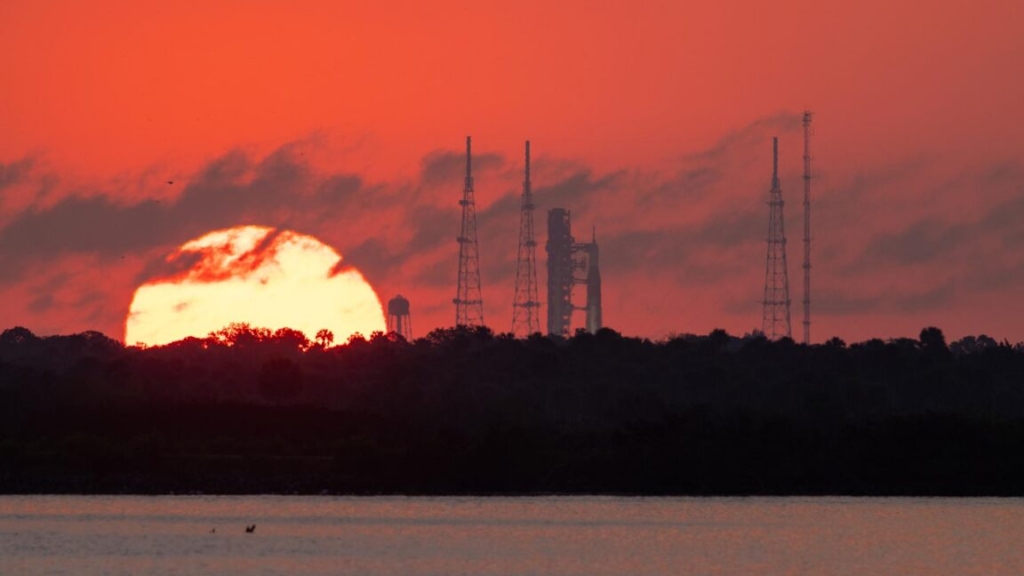
Artemis II: Humanity’s Return to Deep Space Begins Wednesday
KENNEDY SPACE CENTER, Fla.— In a moment that marks the first time humans will venture beyond low Earth orbit in over half a century, NASA’s Artemis II mission stands poised to rewrite the history books. Four astronauts—Reid Wiseman, Victor Glover, Christina Koch, and Canadian Space Agency’s Jeremy Hansen—are preparing to embark on a nine-day odyssey that will carry them farther from Earth than any humans have traveled since the Apollo era.
The journey ahead is nothing short of extraordinary. When the Orion spacecraft launches atop NASA’s Space Launch System rocket, it will carry these explorers on a quarter-million-mile voyage to the Moon and back—a distance so vast that if Earth were the size of a basketball, the Moon would be a tennis ball sitting 23 feet away. But this isn’t just about distance; it’s about velocity. Upon their return, the crew will experience speeds approaching 25,000 mph (40,000 km/hr), making them the fastest humans in history as they plunge through Earth’s atmosphere at temperatures reaching 5,000 degrees Fahrenheit.
The Day That Never Ends
For Victor Glover, who serves as Artemis II’s pilot, launch day represents what he describes as “an all-day undertaking.” The astronauts’ schedules are calibrated to the minute, beginning with wake-up calls approximately eight hours before liftoff. From there, a carefully choreographed sequence of suit-up procedures, communications checks, and final preparations unfolds like a precisely timed ballet.
“Everything is planned to the minute,” Glover explained. “We wake up about eight hours before launch, and there’s a pretty tight schedule of things to get out there.” This meticulous planning reflects decades of spaceflight experience compressed into a single, historic mission.
The crew’s composition itself represents a milestone in space exploration. Wiseman commands the mission from Orion’s cockpit, working in tandem with Glover at the controls. Koch, who already holds the record for the longest single spaceflight by a woman, brings her extensive experience to bear as mission specialist. Hansen, representing the Canadian Space Agency, completes this international quartet, underscoring Artemis’s collaborative nature.
A Spacecraft Born of Two Decades
Orion represents NASA’s most ambitious crewed spacecraft development in generations. Conceived in the early 2000s and continuously refined over two decades, this capsule embodies the agency’s vision for deep space exploration. Unlike the space shuttle or even the Apollo capsules, Orion was designed from the ground up for missions lasting weeks rather than days, capable of sustaining human life across the vast distances between Earth and other celestial bodies.
The spacecraft’s development has been a journey in itself, marked by technical challenges, budget considerations, and the ever-present need to push engineering boundaries. Now, after years of unmanned test flights and rigorous ground testing, Orion stands ready to prove its worth with human passengers aboard for the first time.
The Moon Rises on History
As the launch window opens at 6:24 pm EDT (22:24 UTC) on Wednesday, the full Moon will already be climbing above the eastern horizon at Kennedy Space Center. This celestial coincidence adds a poetic dimension to the proceedings—the destination already visible in the sky as the journey begins. The two-hour launch window provides flexibility for weather conditions and technical considerations, but the goal remains constant: sending humans back to the Moon’s vicinity for the first time since 1972.
NASA will broadcast the historic event live, with comprehensive coverage beginning well before the opening of the launch window. The agency’s commitment to transparency and public engagement means millions around the world will have the opportunity to witness this pivotal moment in space exploration history.
Beyond the Mission: Humanity’s Lunar Future
Artemis II represents far more than a single mission—it’s the opening chapter in NASA’s ambitious Artemis program, which envisions establishing a sustained human presence on the Moon. The long-term goal encompasses constructing a lunar base at the Moon’s south pole, where permanently shadowed craters may contain water ice that could be converted into drinking water, breathable oxygen, and rocket fuel.
This isn’t merely about planting flags and leaving footprints. The Moon serves as a proving ground for technologies and techniques that will be essential for eventual human missions to Mars. Learning to live and work on another world, to extract resources from alien soil, and to operate in environments where Earth is just a blue marble in the sky—these experiences will prove invaluable as humanity reaches for the Red Planet.
The Artemis program also represents a new model of international cooperation in space exploration. With partners from the Canadian Space Agency, European Space Agency, Japan Aerospace Exploration Agency, and others, Artemis demonstrates how space exploration can unite nations in pursuit of common goals that benefit all of humanity.
The Human Element
What makes Artemis II particularly compelling is the human story at its core. These four astronauts—Wiseman, Glover, Koch, and Hansen—represent the culmination of years of training, sacrifice, and dedication. They’ve spent countless hours in simulators, undergone extensive physical conditioning, and prepared mentally for the challenges that await them.
Their mission carries risks that can’t be entirely eliminated, despite NASA’s meticulous planning and engineering excellence. The speeds they’ll achieve, the distances they’ll travel, and the unknown challenges they might face all underscore the courage required to push the boundaries of human exploration.
Yet it’s precisely this human element that makes Artemis II so inspiring. In an era often characterized by division and uncertainty, the sight of humans venturing forth to explore the cosmos reminds us of our shared potential and the remarkable achievements possible when we work together toward common goals.
As the countdown clock ticks toward zero and the massive engines of the Space Launch System prepare to ignite, the world watches with anticipation. Artemis II isn’t just NASA’s mission—it belongs to all of humanity, representing our collective aspiration to reach beyond our current limits and discover what lies waiting in the vast expanse of space.
The Moon rises over Kennedy Space Center, and with it rises a new era of human space exploration. Wednesday’s launch could mark the beginning of humanity’s permanent expansion into the solar system, with all the promise and potential that such a future entails.
Tags: Artemis II, NASA Moon mission, Orion spacecraft, Space Launch System, Victor Glover, Reid Wiseman, Christina Koch, Jeremy Hansen, lunar exploration, deep space travel, human spaceflight, Kennedy Space Center launch, Artemis program, Moon return mission, space exploration history, SLS rocket, Orion capsule test flight, Canadian astronaut, NASA live stream, lunar orbit mission
Viral phrases: “fastest humans in history,” “quarter-million-mile voyage,” “first time beyond low Earth orbit in 50 years,” “two decades in development,” “full Moon rises as launch begins,” “lunar base at the Moon’s south pole,” “proving ground for Mars missions,” “international quartet of explorers,” “9-day odyssey to the Moon,” “25,000 mph return to Earth,” “humanity’s return to deep space,” “historic Artemis II mission,” “watch NASA’s live coverage,” “setting records for human spaceflight,” “sustained human presence on the Moon,” “opening chapter in lunar exploration,” “courage to push boundaries,” “collective aspiration to explore,” “new era of space exploration,” “destination already visible in the sky,” “meticulously planned to the minute,” “all-day undertaking,” “poetic celestial coincidence,” “remarkable achievements possible,” “vast expanse of space,” “blue marble in the sky,” “opening chapter in humanity’s expansion,” “witness this pivotal moment,” “rewriting history books,” “mission that belongs to all humanity,” “new model of international cooperation,” “technologies essential for Mars,” “water ice at lunar south pole,” “extract resources from alien soil,” “push the boundaries of exploration,” “inspiring reminder of shared potential,” “culmination of years of dedication,” “countdown clock ticks toward zero,” “massive engines prepare to ignite,” “world watches with anticipation,” “permanent expansion into the solar system,” “promise and potential of space,” “new meaning for the Moon,” “first crew mission for Artemis,” “test the Orion spaceship,” “setting another record,” “human passengers aboard for the first time,” “carefully choreographed sequence,” “brings her extensive experience,” “underlines Artemis’s collaborative nature,” “represents far more than a single mission,” “opening chapter in NASA’s ambitious program,” “vision for deep space exploration,” “continuous refinement over two decades,” “push engineering boundaries,” “rigorous ground testing,” “poetic dimension to proceedings,” “celestial coincidence adds poetry,” “transparency and public engagement,” “millions around the world,” “pivotal moment in space exploration,” “new model of international cooperation,” “unites nations in pursuit,” “common goals that benefit all,” “human story at its core,” “years of training and sacrifice,” “extensive physical conditioning,” “mentally prepared for challenges,” “risks that can’t be entirely eliminated,” “meticulous planning and engineering,” “courage required to push boundaries,” “inspiring in an era of division,” “sight of humans venturing forth,” “reminds us of shared potential,” “remarkable achievements possible,” “work together toward common goals,” “collective aspiration to reach beyond,” “discover what lies waiting,” “vast expanse of space,” “Moon rises over Kennedy,” “new era of human space exploration,” “beginning of humanity’s permanent expansion,” “promise and potential that entails.”
,


Leave a Reply
Want to join the discussion?Feel free to contribute!